
Thursday morning is often the honest test of a college breakfast. The bananas are spotted, the clean bowls are gone, the bank balance looks less generous than it did on Monday, and class starts in twenty-two minutes. A breakfast plan that only works after a fresh grocery run is not really a plan.
Healthy breakfasts on a budget work best when the same inexpensive foods can play several roles. Oats can become breakfast, a snack, or part of a yogurt bowl. Eggs can sit in a sandwich or next to leftovers. Frozen fruit does not care whether you forgot about it for three days. The point is not to eat like a wellness influencer; it is to make the first meal of the day easier to afford and easier to repeat.
The grocery receipt that tells the real story
Picture two students standing in the same supermarket aisle. One has a refrigerator, a hot plate, and a roommate happy to split groceries. The other has a mini-fridge already packed with leftovers and a fourteen-minute trip to class. The cheapest breakfast for one may be wasteful for the other. A giant tub of yogurt is not a bargain if most of it spoils, and the lowest price per ounce does not help if you cannot store the food safely.
Before buying a week of ingredients, ask three unglamorous questions: where will the food live, what can you prepare with the equipment you actually have, and which morning is most chaotic? A small rotation of reliable options beats an ambitious menu abandoned by Wednesday. The useful outcome is less money spent on emergency breakfasts and fewer mornings that start with the feeling you are already behind.
Start with groceries that work in more than one meal
Oats, eggs, plain yogurt, bananas, peanut butter, canned beans, frozen fruit, and whole-grain bread can be combined in many ways. Buying ingredients that appear in several meals helps reduce forgotten leftovers and the temptation to buy a second breakfast on the way to class.
Choose what fits your storage situation. A dorm room with a mini-fridge needs a different plan from an apartment with a stove. Shelf-stable oats and nut butter are useful when refrigerator space is limited. If your campus has a food pantry, using it is a sensible way to stretch a budget.
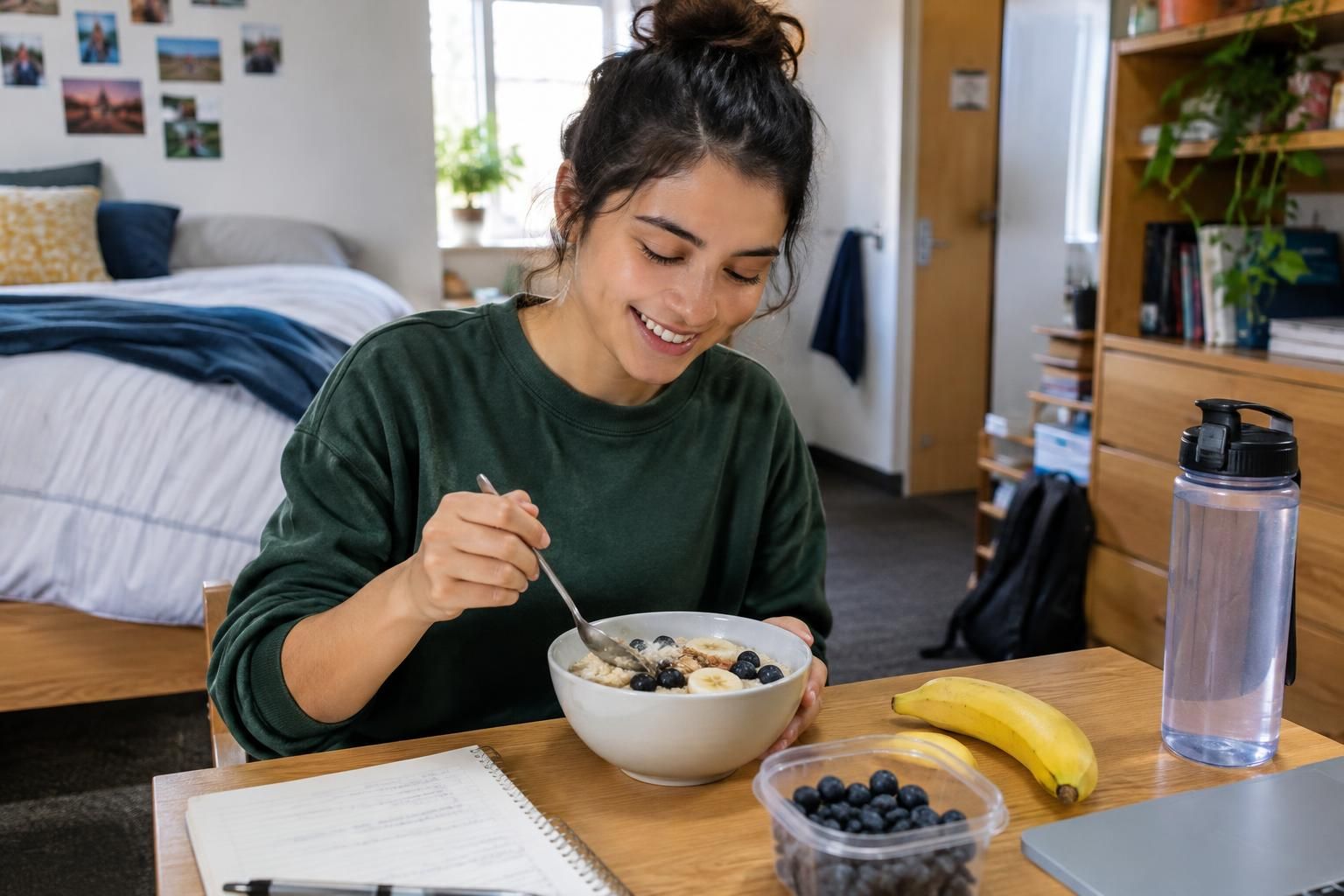
Make breakfast filling, not just photogenic
A beautiful smoothie bowl can be lovely, but it is not essential. Many people find a breakfast with a protein source and some fiber more satisfying than a pastry eaten alone. Examples include yogurt with oats and fruit, an egg sandwich, or beans on toast.
If mornings are unpredictable, pack a portable pairing: a banana and yogurt, or toast with peanut butter and a piece of fruit. None of these options needs to be perfect. The point is to avoid making every morning a choice between spending too much and eating nothing.
Seven options that do not require a specialty kitchen
Overnight oats can be made in a jar. Scrambled eggs work with frozen spinach. Peanut-butter toast needs almost no preparation. Yogurt with thawed berries is easy to customize. A cheese-and-bean tortilla travels well. Cottage cheese with fruit takes minutes. Leftover rice and an egg can become a savory bowl.
The ingredient list is intentionally ordinary. Compare prices by serving rather than by package, use store brands when you like them, and rely on frozen produce when fresh fruit is expensive. A predictable breakfast is easier to maintain than seven entirely new recipes every week.
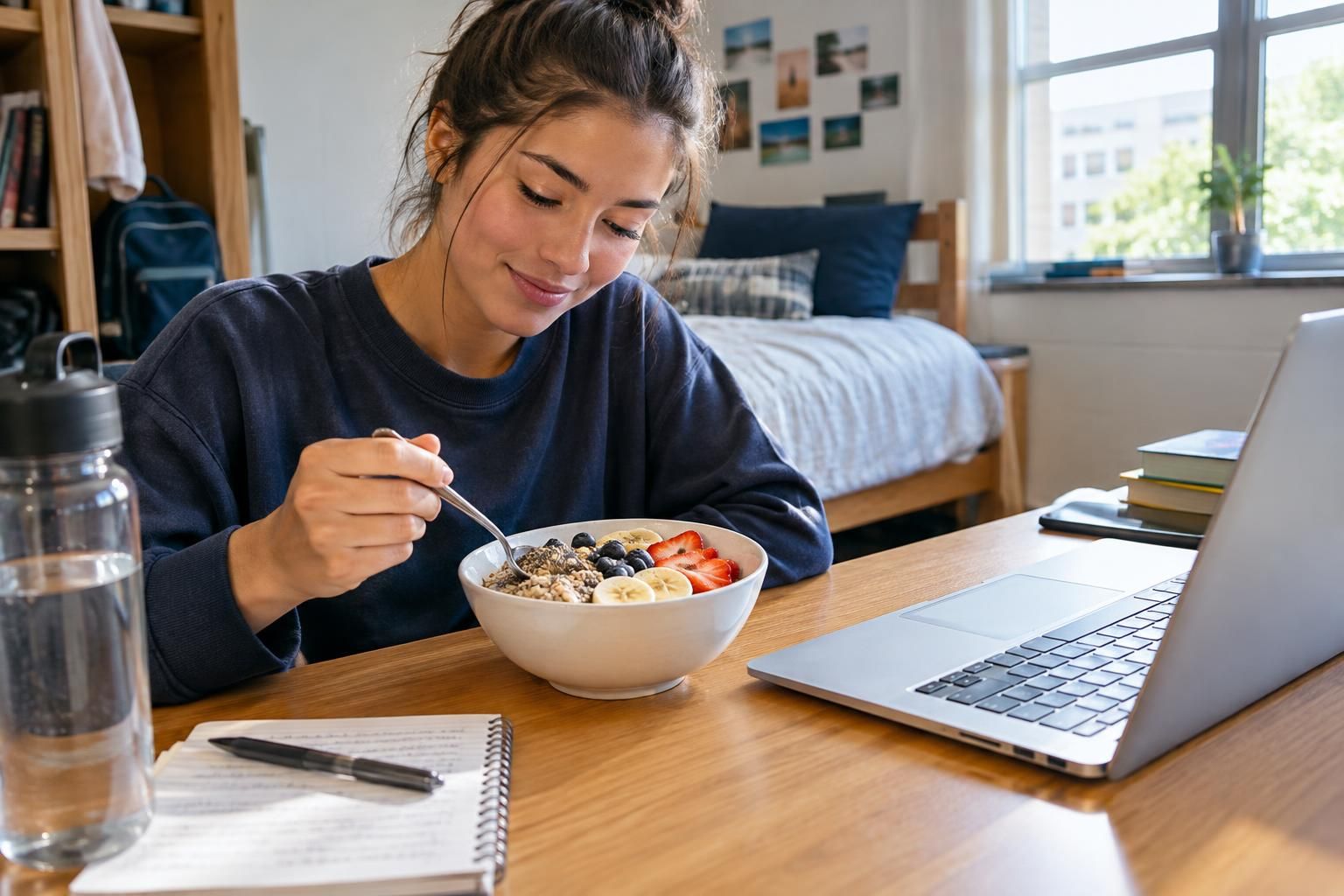
Plan for the morning when everything goes wrong
You will miss an alarm, forget to shop, or run out of clean dishes eventually. Build a backup that does not require a heroic level of motivation. It might be a packet of plain oatmeal, a shelf-stable milk box, or a sandwich you can put together in two minutes.
Your sleep schedule matters, too. If late-night assignments and endless scrolling regularly take over bedtime, our article about bedtime procrastination offers a practical way to look at that cycle. A better breakfast cannot compensate for every short night, but it can remove one small source of morning chaos.
Avoid turning food into a strict set of rules
College life often involves irregular schedules, dining halls, social meals, and tight finances. A rigid list of “clean” foods can make the whole process harder. There is room for cereal, a breakfast sandwich, or leftovers when that is what is available.
If you are also trying to build a movement routine, keep it approachable. Our guide to daily step goals focuses on finding useful activity without attaching your worth to a particular number. Food and movement should support your life, not turn it into a full-time optimization project.
Make a shopping list that supports a full week
Pick two breakfasts you enjoy and buy enough ingredients for several servings. One sweet option and one savory option usually provide enough variety. Put the items you use most often at eye level, and wash or portion fruit when you have a few spare minutes.
Try this before spending money on elaborate organizers or supplements. A simple routine may not look exciting on social media, but it is easier to repeat between exams, shifts, and weekend plans. That reliability is what matters.
Use campus resources without feeling awkward
Many colleges have dining halls, student food pantries, discounted meal programs, and shared kitchens. Check what is available before assuming you must shop for every breakfast separately. If your meal plan includes breakfast, calculate whether using it is actually simpler than buying additional groceries.
Look for possibilities between extremes: a dining-hall egg and a piece of fruit, oatmeal you prepare in a residence hall, or leftovers saved safely from a previous meal. The most affordable approach depends on your campus and your access to cooking and refrigeration. Price tags in an online recipe rarely tell the whole story.
Make exam-week breakfasts different from normal weeks
During exams, you may have much less patience for dishes and elaborate planning. That is when a five-minute backup becomes especially useful. Keep one breakfast you can make half asleep and one you can take to the library or work.
If you are regularly missing meals because of money, support may be available through campus services or local programs. Food insecurity is not a problem solved by choosing smarter recipes alone. The point of this guide is to reduce day-to-day friction where possible, not to suggest that everyone has the same resources.
A three-morning rotation that survives a student week
Instead of planning seven different breakfasts, try planning three and repeating them. Monday might be oatmeal with peanut butter and banana. Tuesday could be eggs on toast with fruit. Wednesday could be yogurt, oats, and frozen berries assembled in a container before bed. Then start the rotation again or swap in leftovers.
The rotation works because it reduces the number of ingredients that can spoil and the number of decisions you make before class. It also leaves room for reality. If you wake up late, the yogurt option travels. If you have ten extra minutes, the eggs feel more substantial. If the grocery budget is tight, oatmeal can carry more of the week without making breakfast disappear entirely.
Think of the list as a base rather than a rule. Campus dining, cultural foods, allergies, and food access all change what “easy” means. The best budget breakfast is the one you can actually buy, store, and eat in your current living situation.
A $20-style breakfast experiment
For one week, build breakfast from a short list instead of collecting recipes. Prices vary by city, so use the idea rather than a fixed dollar amount.
- Choose one grain such as oats or whole-grain bread.
- Choose one protein you will actually eat: eggs, yogurt, milk, peanut butter, beans, or another affordable option.
- Add one fresh fruit and one frozen or shelf-stable fruit option.
- Keep one emergency breakfast in your bag or room for the morning when everything goes wrong.
- At the end of the week, notice what you used completely and what sat untouched; buy more of the former next time.
Frequently asked questions
Do I have to eat breakfast immediately after waking?
No single breakfast schedule fits everyone. Eating patterns depend on appetite, health needs, classes, and work. Seek individualized guidance if you have a condition that affects meal timing.
Are frozen berries less healthy than fresh fruit?
Frozen fruit can be a convenient, nutritious option and may reduce waste. Check the package for added ingredients if that matters to you.
Can a cheap breakfast still have enough protein?
Often yes. Eggs, yogurt, beans, milk, and nut butters can contribute protein. The amount you need depends on your overall diet and individual circumstances.
Healthy breakfasts on a budget are not about making student life look flawless. They are about having something dependable when the morning gets messy. Two affordable meals, a backup option, and permission to be flexible can take you surprisingly far.