
I have lost count of the mornings I have stood at the closet and wondered why yesterday’s jeans feel like a different size. One day my midsection looks fairly ordinary. By late afternoon the same waistband feels tight, and it is easy to assume the change is all fat.
It might be. It might also be gas, stool still in the colon, or both. If you have been trying to sort out bloating vs belly fat after 40, you are not being overly sensitive. Midlife is a stage when both can show up, sometimes in the same week, and they rarely need the same response.
Table of Contents
The useful move is to look at the pattern: how quickly the change appears, whether it shifts through the day, and what is going on with meals, bowels, sleep, and activity. That is not a diagnosis. It is a way to stop treating every tight waistband as proof a routine has failed.
How to tell bloating vs belly fat after 40
Bloating is a feeling of fullness or swelling in the abdomen. Sometimes the belly also looks larger than usual; clinicians call that distention. The National Institute of Diabetes and Digestive and Kidney Diseases (NIDDK) notes that only about half of people with bloating also have visible distention. You can feel bloated without looking dramatically different, and you can look more swollen without that being a permanent change in fat.
Belly fat is different. It is tissue, and it does not appear after one meal and vanish overnight. Mayo Clinic explains that where fat is stored can shift with age, and that many women notice more fat around the abdomen as estrogen declines, even when overall weight does not change much. Men can see a similar midlife change as muscle declines and activity slips.
Johns Hopkins Medicine also points out a third possibility: the abdominal wall can become looser with age or after pregnancy. That softness is not the same as gas, and it is not a sudden increase in fat.
Here is a practical comparison. Many people have both at once.
| What you notice | More consistent with bloating | More consistent with belly fat |
|---|---|---|
| Timing | Can show up over hours, often around meals | Builds gradually over weeks or months |
| Changes through the day | Often smaller in the morning and tighter by afternoon or evening | Looks and measures fairly similar at the same time each day |
| How it feels | May feel full, tight, gassy, or uncomfortable | Usually soft tissue you can pinch, without a sudden sense of pressure |
| Typical contributors | Swallowed air, gas from undigested carbohydrates, constipation, large meals, some food triggers | A long-term gap between calories eaten and calories used, muscle loss, aging, genetics, and, for some women, lower estrogen |
| What may help | Slower meals, smaller portions, spotting your own food triggers, easing constipation, regular movement | A way of eating you can sustain, regular walking or other aerobic activity, and muscle-strengthening work |
Use the table as a starting point for reading bloating vs belly fat after 40, not as a diagnosis. A firm evening midsection is not automatically fat, and a softer midsection is not automatically “just bloating.”
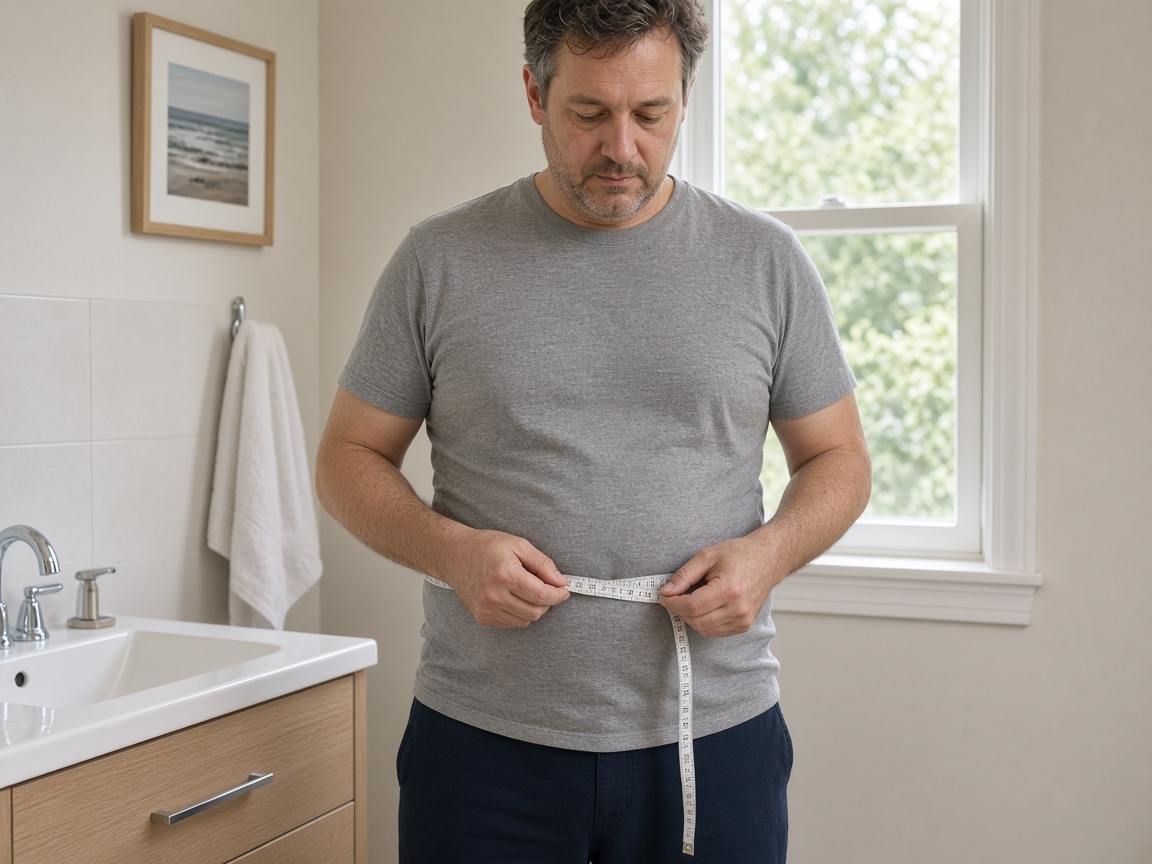
For a slightly more objective check, use a soft tape measure. The CDC suggests standing and placing the tape around your middle, just above your hip bones, then measuring after you breathe out. Keep the tape level and snug, as Mayo Clinic also advises, and do not press it into the skin or hold your stomach in.
Compare morning measurements, after using the bathroom, over a couple of weeks. A large swing between morning and evening often points to bloating or bowel contents. A morning number that keeps rising over weeks or months is a stronger sign of fat gain. The CDC notes that a waist of more than 35 inches in women, or more than 40 inches in men, is linked with higher health risk.
Why bloating can make your midsection look larger
Gas in the digestive tract is ordinary. It comes from swallowed air and from bacteria in the large intestine breaking down carbohydrates that the small intestine did not fully digest. You may swallow more air if you eat quickly, talk while eating, chew gum, sip fizzy drinks, drink through a straw, or smoke.
The food side is more personal. NIDDK lists examples that can mean more gas for some people: beans and lentils, broccoli and other cruciferous vegetables, apples, peaches, pears, dairy foods, whole grains, drinks with high-fructose corn syrup, and sugar alcohols whose names end in “-ol,” such as sorbitol or xylitol. Some people also feel more bloated after large or high-fat meals, or after a sudden jump in fiber.
That last point matters after 40, because many of us are trying to eat more vegetables, beans, and whole grains—and then feel punished for it. Increase fiber gradually, and drink enough fluid. I wrote a practical version of that approach in Fibermaxxing Without the Bloat.
Constipation is another reason a midsection can look and feel larger. Johns Hopkins Medicine notes that you can be constipated even if you have a bowel movement most days. Straining, pebble-like stool, or a sense that you have not finished can all be signs. The longer stool stays in the colon, the more time bacteria have to ferment it, which can mean more gas.
A rushed morning can make this worse. If you regularly ignore the urge to use the bathroom because you are late, the problem may be the schedule. A calmer morning routine for digestion can be more useful than adding another special drink.
Other conditions can also increase gas symptoms, including irritable bowel syndrome, lactose or fructose intolerance, celiac disease, delayed stomach emptying, and, in some cases, problems involving the ovaries or uterus. Lingering or unusual symptoms are worth attention; they are not a reason to assume the worst.
Why belly fat can change after 40
If the tighter waist is still there first thing in the morning, week after week, bloating is less likely to be the whole explanation.
NIH News in Health notes that many adults in the United States gain 10 to 25 pounds between their 20s and their 40s. Metabolism tends to slow with age, while appetite often does not change in the same way. People also tend to lose lean muscle, especially if they sit more and lift less, and more fat may settle around the internal organs.
Mayo Clinic describes that deeper abdominal fat as visceral fat. You cannot pinch it the way you can pinch the softer layer under the skin. Too much belly fat, especially this deeper fat, is associated with higher risks, including heart disease, type 2 diabetes, and stroke—a point both Mayo Clinic and the CDC make.
For women, a lower estrogen level may favor more fat around the abdomen even when the scale barely moves. I have written about that broader pattern in Perimenopause Weight Gain. It is still not a single-hormone story. Sleep, stress, medications, genetics, and daily movement all belong in the same conversation, and men are not exempt. Muscle loss and a more sedentary day can change the midsection without any menstrual cycle to blame.
When bloating vs belly fat after 40 show up together
This is the situation I see most often in my own weekly routine. You can have a gradual increase in abdominal fat and still swell after a large meal, a travel day, or a week of constipation.
If both seem true, I would work in this order: first, rule out warning signs that need medical care; second, make the day-to-day bloating and bowel pattern more comfortable; third, look at the slower habits that influence fat—food pattern, muscle-strengthening, walking, and sleep—without treating every late-day measurement as an emergency.
What may help if bloating is the main issue
I would not start with a restrictive “never eat beans again” plan. Slow down when you eat, and sit down if you can. NIDDK suggests smaller, more frequent meals instead of a few very large ones, and cutting back on gum, hard candy, straws, and fizzy drinks if those are daily habits.
Then look at your own pattern. A simple diary of meals, drinks, bowel movements, and symptoms can show whether dairy, sugar-free snacks, or rushed lunches keep appearing on uncomfortable days. NIDDK recommends this kind of record when you are identifying triggers, ideally with a doctor or dietitian if symptoms are frequent.
If constipation is in the mix, a fiber-rich eating pattern, enough fluid, and regular movement may help when the problem is mild. They are not a guaranteed fix for chronic constipation, which deserves a conversation with a clinician. If you add fiber, do it gradually.

A short walk after a meal will not flatten anyone on a deadline, but it is a realistic way to move when you already feel full. I have more on that habit in Walking After Meals Benefits. The relationship between the gut microbiome and weight management is interesting, but everyday comfort still comes back to food you tolerate and regular meals.
If a doctor has diagnosed a specific condition, the advice may be more targeted: less lactose for lactose intolerance, a gluten-free diet for celiac disease, or, in some cases of IBS, a short low-FODMAP trial with professional guidance. Those are clinical plans, not weekend experiments.
What may help if belly fat is the main issue
Belly fat does not respond to a week of abdominal exercises. Mayo Clinic is direct about this: crunches can strengthen muscles, but they will not, on their own, remove abdominal fat. Deeper visceral fat responds to the same longer-term pattern as overall fat loss: a way of eating you can sustain, and regular activity.
For general health, the CDC recommends that adults get at least 150 minutes a week of moderate-intensity activity, such as brisk walking, or 75 minutes of vigorous activity, plus muscle-strengthening work on at least two days.
Thirty minutes on five days is one version, and shorter walks count. The CDC also notes that some activity is better than none, and that losing weight usually takes both movement and a change in what you eat and drink.
Mayo Clinic’s food advice is similarly steady: more vegetables, fruits, and whole grains; lean protein; fewer sugary drinks; and portions that match your hunger and needs. If alcohol is a regular part of the week, it is worth looking at honestly. Mayo notes that drinking alcohol can increase belly fat.
Sleep belongs here too. The CDC points out that too little sleep can raise hunger and make higher-calorie foods more appealing. That will not explain a 4 p.m. swell after a big lunch, but it can quietly shape the longer trend. Slow, steady change is more useful than a dramatic cut you abandon in ten days.
When to see a doctor
Most gas symptoms are ordinary, especially around meals. Still, bloating should not explain every change in the abdomen.
NIDDK recommends talking with a doctor if gas symptoms bother you, if they change suddenly, or if they come with abdominal pain, constipation, diarrhea, or weight loss. Johns Hopkins Medicine also advises medical care for chronic constipation and other persistent digestive conditions, and reminds women not to skip routine pelvic exams, because problems with the ovaries or uterus can sometimes feel like bloating.
I would also get a change checked if your abdomen stays enlarged or uncomfortable in a way that is new, progressive, or not clearly tied to meals and bowel habits.
The short version
Bloating vs belly fat after 40 can look similar in a mirror and feel very different over a week. Bloating often changes through the day and may be tied to meals, gas, or constipation. Belly fat changes more slowly and is still there in the morning. Many of us are dealing with some of both.
The kindest next step is usually a practical one: notice the pattern, make meals and bowel habits more comfortable, keep walking and strength work in the week, and get unusual symptoms checked. You do not have to solve this in one afternoon.
Frequently Asked Questions
How can I tell the difference between bloating and belly fat?
Look at the pattern, not one photo. Bloating often changes over a day and may feel tight, full, or gassy, especially around meals. Belly fat usually changes slowly and looks similar when you check at the same time each morning.
Why do I look thinner in the morning and bigger by evening?
An evening midsection that looks larger than your morning one is often more consistent with bloating, gas, or bowel contents than with a sudden change in fat. If the morning measurement itself is steadily rising, both things may be happening.
Can constipation make my stomach look bigger?
Yes. Johns Hopkins Medicine notes that constipation is a common cause of bloating, and that you can be constipated even with fairly regular bowel movements. Stool that stays in the colon longer gives bacteria more time to ferment it, which can mean more gas.
Why does belly fat change after 40 even if the scale barely moves?
Aging can shift where fat is stored and reduce muscle mass, so clothes may fit differently before the scale tells a dramatic story. Mayo Clinic notes that many women see more abdominal fat as estrogen declines, even without much weight change.
Can I have bloating and belly fat at the same time?
Yes, and that is common in the bloating vs belly fat after 40 conversation. A slower change in abdominal fat can sit underneath day-to-day swelling from meals or constipation.
When should I see a doctor about bloating?
See a doctor if bloating bothers you, changes suddenly, or comes with abdominal pain, constipation, diarrhea, or weight loss, as NIDDK advises. Also get checked if the swelling is new, persistent, or not clearly tied to meals.
This article is for general information and is not medical advice or a treatment plan. If you have questions about your symptoms, talk with a qualified health professional.