
The number 10,000 has become one of the most recognizable goals in fitness. Your phone celebrates it. Your smartwatch closes a ring. Friends compare step counts. A day ending at 9,742 can somehow feel unfinished.
But what does 10,000 steps a day actually tell you about your fitness?
It tells you something useful: you moved.
What it does not tell you is how strong you are, how fast you can move, how well your heart and lungs handle harder exercise, or whether your body is prepared for the physical demands you care about.
That does not make step counting pointless. It just means a step goal works best when you understand what it can—and cannot—do.
Why 10,000 Steps a Day Became Such a Powerful Goal
Step counting is simple. There is no technique to learn, gym membership to buy, or complicated program to follow.
You put your phone in your pocket and walk.
That simplicity is exactly why the habit works for so many people. Someone who spends eight hours behind a laptop may not notice how little they move until a tracker shows 2,800 steps at the end of the workday.
A step goal turns an invisible behavior into something measurable.
The Real Win Is Usually Moving More Than You Used To
If you currently average 3,000 steps per day, moving toward 6,000 or 7,000 can be a meaningful lifestyle change.
You might take a twenty-minute walk after lunch. You might walk to the store instead of driving. You might pace during a phone call rather than sitting.
Those changes matter even if the final number is not exactly 10,000.
The round number can be motivating, but it should not become a pass-or-fail test for whether your day “counted.”
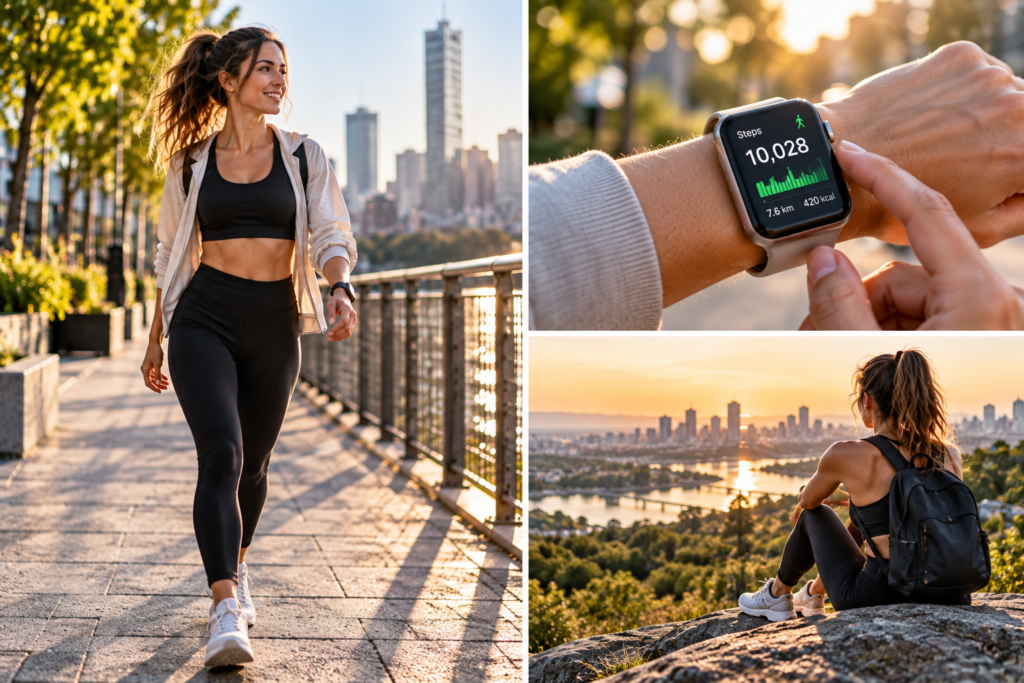
Walking Is Movement, but Not Every Step Is the Same
Two people can both finish the day with 10,000 steps and have very different physical experiences.
One person may accumulate them slowly around an office and supermarket. Another might hike hills for ninety minutes. Another may walk quickly enough to breathe noticeably harder.
The tracker may display the same step count. Your body experienced different intensity.
That is why step count is best understood as one piece of your activity picture rather than a complete fitness score.
Why Young Desk Workers Often Overestimate How Active They Are
You can train hard for forty-five minutes and still spend most of the day sitting.
A gym session does not automatically create an active lifestyle outside the gym.
This is especially common for people working remotely. Your commute may be twelve steps from the bedroom to a desk. Lunch is in the next room. Meetings happen without leaving your chair.
By evening, you may feel mentally exhausted despite barely moving.
This is where a step goal is genuinely useful. It encourages low-intensity movement throughout the day without requiring another formal workout.
Do You Need Exactly 10,000?
No single number is appropriate for every person.
Your age, current fitness, occupation, health, mobility, environment, and goals all matter.
A more useful target is often one that is modestly above your current average and realistic enough to repeat.
If your average is 4,500, aiming for 6,000 consistently may be more useful than hitting 10,000 twice and giving up.
What 10,000 Steps Does Not Replace
Strength Training
Walking does not challenge your muscles in the same way progressive resistance training does.
You do not need to become a bodybuilder, but pushing, pulling, squatting, hinging, and carrying resistance can help build a type of physical capacity that step count does not measure.
Higher-Intensity Cardio
Casual walking and more vigorous aerobic work create different demands.
If improving running performance, cycling fitness, or sport conditioning matters to you, step count alone is not enough.
Mobility and Skill
Walking is wonderfully accessible, but it does not automatically improve every movement pattern, balance skill, or sport-specific ability.
A Better Question Than “Did I Hit 10K?”
Ask: Did I move in several useful ways this week?
A balanced week might include:
- regular walking;
- two or three strength sessions;
- one or two sessions that raise your breathing and heart rate more substantially;
- rest and easy movement;
- activities you genuinely enjoy enough to keep doing.
You do not need to complete all of these perfectly every week. The point is that no single tracker metric represents your entire fitness level.
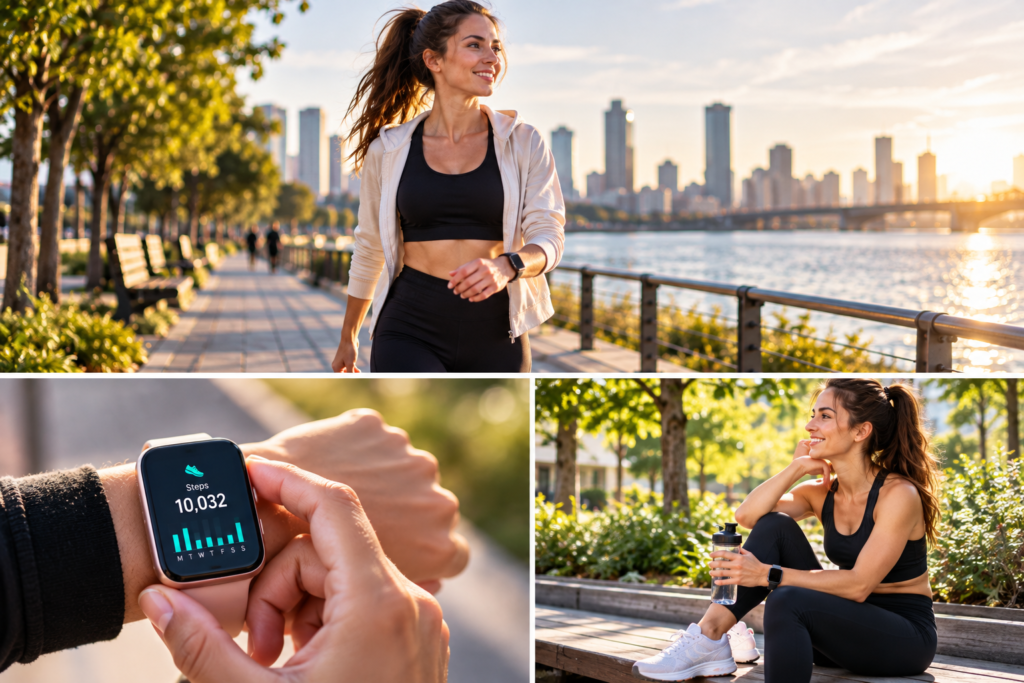
How to Get More Steps Without Wasting an Hour Pacing Your Kitchen
If chasing 10,000 turns into a nightly punishment, change the strategy.
Walk for Ten Minutes After a Meal
A short walk is easier to fit into the day than waiting for a free ninety-minute block.
Take Calls While Moving
Not every meeting allows it, but phone calls and audio-only conversations can sometimes become walking time.
Use the Farther Entrance
Park slightly farther away, take stairs when appropriate, or get off transit one stop earlier.
Create a “Movement Trigger”
Every time you finish a major work task, walk for three to five minutes before opening the next one.
The goal is not to trick yourself into exercise. It is to make movement part of the architecture of your day.
What About Walking Pads?
Walking pads have become popular because they solve a specific problem: people want to move while working at a desk.
They can be useful if you can work safely while walking slowly. They are not necessary, and they do not replace outdoor walking or structured workouts.
If typing quality, posture, or concentration suffers while walking, use the device for simpler tasks or separate movement breaks instead.
Should You Count Workout Steps?
Yes, if your device records them. There is no need to subtract steps because they happened during exercise.
Just remember that the step count is not a measure of workout difficulty.
A short interval session may produce fewer steps than an hour of shopping while still being far more demanding.
When Step Goals Become Unhelpful
A fitness metric should support your life, not dominate it.
If you feel anxious about missing a number, pace late at night solely to satisfy a tracker, or ignore pain because you “need” to close a ring, take a break from the target.
Numbers are tools. They are not moral scores.
If health tracking is becoming distressing or compulsive, consider discussing it with an appropriate healthcare or mental health professional.
A More Flexible Weekly Step Strategy
Instead of demanding exactly 10,000 every day, look at your average.
Some days naturally involve more movement. Other days involve flights, deadlines, illness, or long meetings.
A weekly average gives you room to live like a normal person.
You could also set a range. For example, a personal target might be 7,000–10,000 on most days rather than a rigid minimum.
The exact range depends on your current baseline and health.
What if Your Goal Is Weight Loss?
Walking can increase daily energy expenditure and is often easier to recover from than intense exercise. That can make it a useful part of a weight-management routine.
But no step number guarantees weight loss. Food intake, body size, sleep, medications, health conditions, and many other factors matter.
For readers over 40, we have a separate guide on walking for weight loss after 40 that looks at how steps fit into a broader strategy.
The Best 10,000 Steps a Day Goal Is the One That Changes Your Behavior
If seeing 10,000 motivates you to get outside after work, it is useful.
If it turns every evening into an anxious countdown, it is not.
You are not trying to win at walking. You are trying to build a life in which movement happens regularly enough that your body does not spend nearly every waking hour in a chair.
Use the number. Do not worship it.
If you want to combine daily movement with more structured exercise, our hybrid training for beginners guide shows how running and strength work can fit into the same week.
Build your daily step count with ordinary walks
A daily step goal becomes easier when you attach movement to existing moments rather than expecting one long walk. You might take a short loop after lunch, step outside between work calls, or go around the block before starting your evening routine. If walking after eating suits your schedule, read our guide to walking after meals for realistic examples.
Working at home can make it especially easy to lose those casual steps that used to happen during a commute. Our walking breaks for remote workers guide shares simple ways to add short movement breaks without turning them into another formal workout. The useful goal is consistency, not a perfect number every day.
Frequently Asked Questions
Is 10,000 steps a day necessary for health?
No. It is a popular target, not a universal requirement. Increasing movement from your current baseline can be useful even if you do not reach exactly 10,000.
Does 10,000 steps count as exercise?
It depends on the pace and context. Some steps may be light daily movement while others may come from brisk walking or hiking. Step count alone does not measure intensity.
Can 10,000 steps replace the gym?
Walking can be an excellent form of activity, but it does not provide the same stimulus as progressive strength training or higher-intensity cardiovascular exercise.
How many steps should a sedentary person start with?
Start from your current average and increase gradually. A realistic target you can maintain is usually more useful than jumping immediately to a large number.
Do walking pads really help?
They can make it easier to accumulate movement during desk work, but they are optional. Short outdoor walks and regular movement breaks can accomplish similar goals.
Is it bad to walk more than 10,000 steps?
Not necessarily. Many active people naturally exceed that number. Your tolerance, footwear, terrain, health, and recovery still matter.
What should I track besides steps?
Depending on your goals, you may also care about strength progress, running or cycling performance, sleep, energy, and how consistently you move across the week.
This article is for general informational purposes and is not individualized medical advice.