
It is a strangely discouraging feeling: your phone congratulates you for hitting your step goal, your shoes are getting plenty of use, and the scale appears to have missed the memo.
Maybe you started taking a walk every morning. Maybe you walk after dinner instead of settling straight onto the couch. Maybe you are the person who parks at the far end of the lot because every little bit counts. You have made a real change, and you want it to show up somewhere.
If you are trying walking for weight loss after 40 and not seeing the results you expected, that does not mean walking is pointless. It usually means the relationship between movement and body weight is more complicated than the cheerful little number on your step counter suggests.
There is good news in that. You probably do not need to turn every walk into a punishing workout. You may just need a clearer picture of what your walks are doing, what they are not doing, and which other small habits deserve some attention.
First, Walking Can Be Working Even When Your Weight Stays the Same
A daily walk is not a failed habit simply because it has not produced a smaller number on the scale. Walking can support cardiovascular health, mood, stamina, mobility, and the ability to stay active consistently. Those benefits matter whether your jeans change size or not.
The tricky part is that health benefits and weight-loss results are not identical measurements.
Body weight changes over time in response to a combination of energy intake, energy expenditure, health conditions, medications, sleep, and other factors. Walking is one useful part of that picture, but it is not always powerful enough on its own to create a noticeable weight change.
That is especially important to remember if you are already doing something good for yourself. The answer is not to quit the habit. It is to stop expecting one habit to handle every job.
Why Walking Every Day May Not Be Moving the Scale After 40
Your walk may be shorter or gentler than you realize
There is nothing wrong with a relaxed stroll. A walk while chatting with a friend or looking at the neighborhood gardens can be a lovely part of the day. But a 15-minute wander and a 40-minute brisk walk are not the same activity.
If the goal is to increase your overall activity, both count. If the goal is to make walking a bigger part of your weight-management plan, duration and pace are worth noticing.
One simple test: during a brisk walk, you should usually be able to talk in sentences, but singing comfortably would be harder. You do not have to chase a particular speed on a watch.
Your activity may have changed without your eating habits changing
It is very easy to mentally award yourself an extra snack because you walked. Sometimes you genuinely are hungrier. Sometimes the reward is just part of the routine: coffee and a pastry after a long walk, a large handful of nuts while making dinner, or a drink that quietly adds more than you expected.
There is nothing morally wrong with any of those foods. The point is simply that a walk does not automatically offset every extra calorie, and fitness trackers’ calorie estimates are not exact.
If I were reviewing a routine, I would look for patterns rather than start with a dramatic restriction. Is there a sweetened drink every afternoon? Are meals satisfying enough to prevent frantic late-night snacking? Do weekends look completely different from weekdays?
You might be moving less during the rest of the day
This one is easy to miss. You take a longer walk, feel pleasantly tired afterward, and then spend the rest of the afternoon sitting. Your new workout may have replaced some of the movement you used to do naturally.
That does not cancel the value of the walk. It just means your total day matters, not only the part your fitness app highlights.
Instead of obsessing over a perfect step total, notice whether you spend hours sitting without breaks. Standing up, walking while taking a call, or moving around the house can help make an active day feel less like one isolated workout.
Do You Need 10,000 Steps a Day to Lose Weight?
No. Ten thousand is a memorable target, not a magical threshold where your body suddenly begins cooperating.
If you currently average 3,000 steps, getting to 5,000 consistently may be a more sensible next move than forcing 10,000 and giving up by Thursday. If you already walk a lot, adding another 1,000 steps may be less useful than examining pace, strength training, meals, or sleep.
For general health, U.S. physical activity guidance recommends that most adults aim for at least 150 minutes of moderate-intensity aerobic activity a week and muscle-strengthening activity on at least two days. Brisk walking can count toward the aerobic portion. These are health guidelines, not a promise about a particular amount of weight loss.
Think of your step goal as a personal tool. It should make consistency easier, not make you feel like a failure every time you end the day at 8,746.

Make Your Walks More Useful Without Making Them Miserable
You can improve a walking routine without buying a complicated training plan.
Try a little more purpose in the middle
Start at a comfortable pace. Once you feel warmed up, walk briskly for a few minutes. Then settle back into an easier pace. Repeat if it feels good. The brisk parts do not need to be breathless or dramatic.
A simple version looks like this:
- 5 minutes of comfortable walking to warm up.
- 3 minutes at a brisk, conversational pace.
- 2 minutes at an easier pace.
- Repeat the brisk/easy pattern a few times.
- Finish with a comfortable cool-down.
If you have been mostly sedentary, begin with a smaller version. Comfortable consistency beats a heroic first day that leaves you dreading the second.
Use your environment
A gentle hill, a park path, or a longer loop can make a walk more interesting. You do not need to wear ankle weights or do anything that throws off your natural movement.
The best route is often the one you actually want to return to. A pretty street or a quiet trail can be more motivating than a technically perfect treadmill session you hate.
Keep an easy-walk option
Not every day needs to feel like training. Some days your body is tired, work has been exhausting, or the weather is uninviting. Having a ten-minute easy version of your walk keeps the habit alive without turning movement into punishment.
That flexibility is not cheating. It is part of building a routine that survives real life.
Why Strength Training Belongs in a Walking Plan After 40
Walking is excellent, but it does not do everything. Muscle-strengthening exercises can help maintain or build strength, which matters for everyday function and healthy aging.
You do not need a gym membership to begin. Depending on your ability and health, you might start with chair stands, wall push-ups, resistance bands, or a short routine guided by a qualified instructor.
For someone who is new to resistance work, two modest sessions a week may be more practical than an ambitious six-day schedule. Form and recovery matter, especially if you have joint pain, a previous injury, or a medical condition.
I like the idea of treating walking and strength work as teammates rather than competitors. One makes it easier to accumulate regular movement. The other supports strength for the things you want to keep doing.
The Food Question: Look for Easy Wins, Not a New Set of Rules
There is an enormous temptation to respond to a stalled scale with a stricter diet. Sometimes a sustainable adjustment to food intake is useful, but an all-or-nothing reset is rarely necessary.
Start with three ordinary questions.
Are your meals actually filling? A lunch that is mostly a tiny salad may leave you hungry an hour later. Including enough protein, fiber-rich foods, and satisfying portions can make a healthy eating pattern easier to maintain.
Are you drinking calories without noticing? Specialty coffees, sweet teas, juices, and alcoholic drinks can be easy to overlook. You do not have to ban them; you can simply decide which ones feel worth having and how often.
What happens when your schedule gets messy? A practical dinner you can make on a busy Tuesday is more valuable than a perfect meal plan that requires an hour of prep and ingredients you never buy.
Weight management usually works better when food and movement habits fit together. It should not feel like walking earns your dinner or that eating dinner cancels your walk.
Sleep, Stress, and the Reality of Midlife
After 40, some people find their sleep changing, their schedules becoming more demanding, and their recovery feeling less predictable. Perimenopause, menopause, caregiving, work stress, and medications can all complicate a routine.
That does not mean everyone over 40 has a broken metabolism. It means two people who take the same walk may have very different health histories and daily pressures.
Short sleep and ongoing stress can affect appetite, energy, food choices, and how motivated you feel to move. A tired person may plan a brisk morning walk and instead spend the day just getting through it. That is not a character flaw; it is useful information for adjusting the plan.
If middle-of-the-night waking is part of your week, our guide on waking up at 3 a.m. after 40 looks at common patterns worth checking.
And if bladder symptoms make longer walks uncomfortable, you may find our practical article about bladder leakage in women over 40 useful. It is easier to build an exercise habit when you address the thing making you avoid leaving home.
What About Walking After Meals?
Walking after a meal can be an easy way to make movement part of your schedule. A short, comfortable stroll after lunch or dinner may also be more appealing than scheduling a separate workout.
Do not treat the timing as magic. Walking after dinner does not automatically erase what you ate, and there is no requirement to march the moment your plate is empty.
If ten minutes after dinner suits you, great. If mornings are more realistic, that counts too. The useful habit is the one you can repeat.
How to Tell Whether Your Walking Plan Is Actually Helping
One weigh-in cannot tell you very much. Body weight naturally moves around from day to day because of fluid shifts, meals, digestion, and other factors. A salty dinner can change tomorrow morning’s number without telling you anything meaningful about longer-term fat loss.
If monitoring weight is appropriate and comfortable for you, look at a trend over several weeks rather than judging one morning. You can also pay attention to how walks feel, whether you get less winded on familiar routes, whether your energy is improving, and whether strength exercises become easier.
Not everyone wants to track weight, and that is okay. You can still measure a routine by consistency, stamina, comfort, and how you feel in daily life.
What I would avoid is changing the entire plan every time the scale gives you a disappointing number. That makes it hard to figure out what is helping.
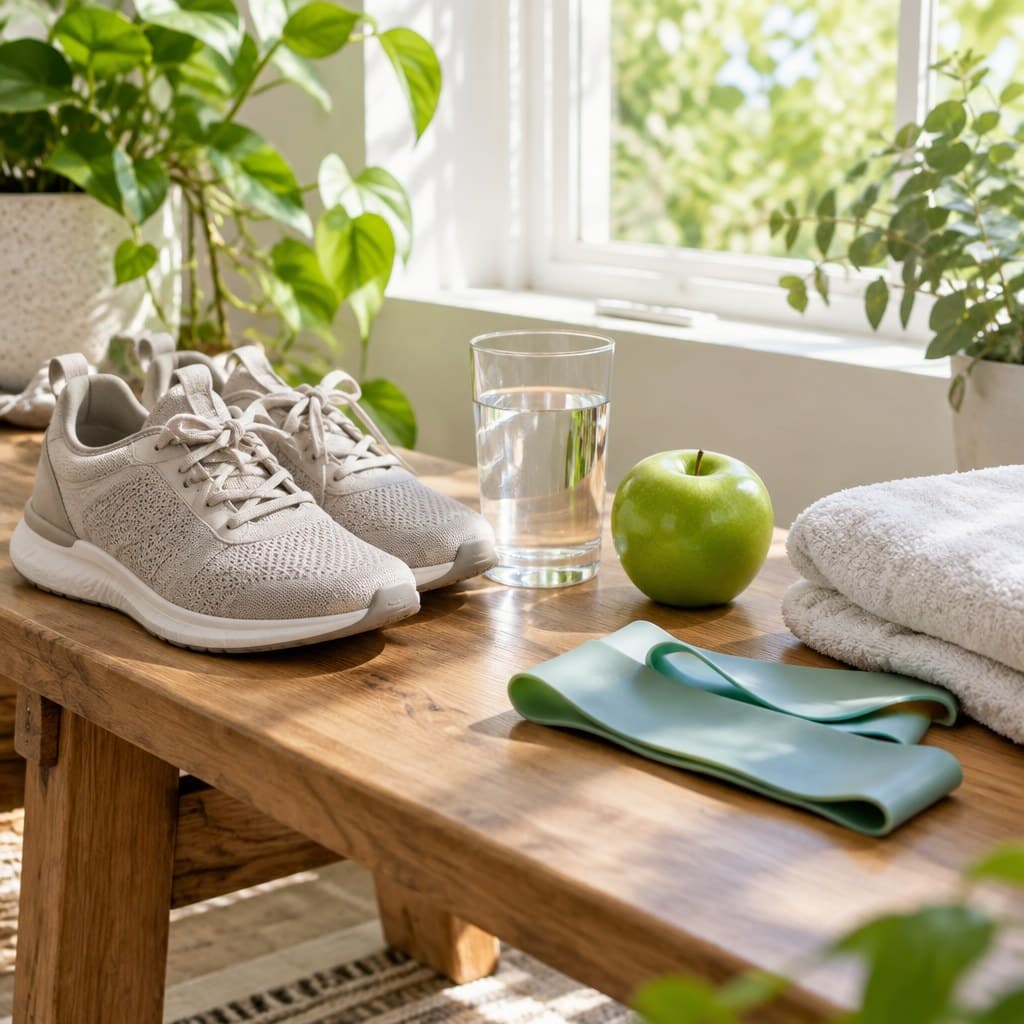
A Realistic 14-Day Walking Reset After 40
If you are not sure where to begin, try this as a flexible experiment rather than a rigid challenge.
Days 1–3: Find your starting point
Walk at a comfortable pace and note roughly how long you go. If you use a phone or watch, look at your typical activity without judging it. Also note the times you usually feel most willing to walk.
Days 4–7: Add one manageable change
Either make one walk slightly longer, add a short easy walk on another day, or include a few brisk intervals. Pick one—not all three. If you have joint pain or you are starting from very little activity, keep the increase small.
Days 8–10: Add a little strength
Try a brief strength session appropriate for your ability, or work with someone who can help with safe technique. Keep your walking routine familiar rather than stacking every new habit on top of it.
Days 11–14: Look beyond the steps
Notice sleep, meal patterns, the time you spend sitting, and whether you are using snacks as an automatic reward after every walk. Choose one practical improvement you can actually live with.
At the end of two weeks, ask: What felt easy enough to keep? What got in the way? What would I change next? Those answers are more valuable than a dramatic before-and-after promise.
When to Ask for More Personalized Help
If your weight is changing unexpectedly, you have persistent fatigue, unusual thirst, new symptoms, or concerns about medication effects, speak with a healthcare professional rather than assuming you just need more steps.
If you have heart disease, significant joint problems, balance issues, or another condition that affects exercise safety, ask for guidance on an appropriate starting level. A registered dietitian or qualified exercise professional can also help if you are stuck between conflicting advice.
Walking for weight loss after 40 is not a contest to see who can suffer most efficiently. A sensible plan should support your health, not take over your life.
The Part I Would Keep, Even if the Scale Did Not Change Tomorrow
Keep walking if it feels good and works for your body. Keep it because it gets you outside, clears your head, strengthens the habit of moving, or simply gives you twenty minutes when nobody is asking you for anything.
Then give the weight-loss goal its own honest plan: a sustainable eating pattern, enough activity, some strength work, reasonable sleep, and room for days that do not go perfectly.
The best routine is not necessarily the one that burns the most calories on paper. It is the one you can still recognize as your own life six months from now.
Frequently Asked Questions
Is walking enough for weight loss after 40?
Walking can support weight management, but weight loss also depends on food intake and many individual factors. Some people need changes to their eating pattern, total activity, or other habits before they see a sustained change in weight.
How long should I walk each day to lose weight?
There is no single duration that guarantees weight loss. A practical starting point is a walk you can repeat consistently. General health guidance recommends at least 150 minutes of moderate aerobic activity weekly for most adults, with additional muscle-strengthening work.
Do I have to walk 10,000 steps every day?
No. Choose a step target based on your current activity and comfort. A sustainable increase from your starting point is generally more useful than an arbitrary target that leaves you exhausted.
Is brisk walking better than slow walking?
Brisk walking generally provides a stronger moderate-intensity aerobic stimulus, but slow walking still adds movement and may be the right choice when you are just starting, recovering, or having a low-energy day.
Does walking after dinner burn belly fat?
Walking cannot selectively remove fat from one part of your body. It can contribute to an active lifestyle, but claims about specifically targeting belly fat with a particular walking time or exercise are misleading.
Why am I walking more but weighing the same?
Your food intake, changes in other activity, normal fluid fluctuations, medications, health conditions, and the size of the activity change may all play a role. Consider trends over time rather than single weigh-ins, and seek medical advice if weight changes are unexplained.
Should I add strength training if I already walk?
For many adults, yes. Strength work complements aerobic walking and supports muscle strength and daily function. Start at a safe level for your health and abilities.
Keep Exploring Welluna Journal
For a practical look at one of the most common midlife sleep frustrations, read Why You Keep Waking Up at 3 A.M. After 40. You can also browse more guides in Healthy Aging and Fitness & Movement.
More Wellness Ideas, Less Noise
Get new Welluna Journal articles, practical tips, and thoughtful wellness recommendations in your inbox.
Unsubscribe whenever you like.
This article is for general informational purposes and is not medical advice. If you have an ongoing health condition or are unsure what activity is safe for you, consult a qualified healthcare professional.