
There is a particular kind of tired that can creep into your forties. You are still getting things done. You still have responsibilities, plans, and people counting on you. But sometimes your energy feels less predictable than it used to. A late night seems to linger into the next afternoon, and skipping a few workouts suddenly feels much more noticeable.
I prefer looking at men’s vitality after 40 as a collection of everyday systems, rather than as one mysterious quality that you either have or lose. Sleep, movement, food, stress, and health all affect how you feel. The encouraging part is that most routines do not need an expensive makeover to become more sustainable.
Start with a better definition of vitality
Vitality is not the same as being constantly energetic. Nobody feels switched on every hour of the day. A more useful definition is having enough capacity to do what matters, recover from normal activity, and feel present instead of running on autopilot.
That means noticing several things together: how you wake up, what happens to your focus in the afternoon, whether movement feels easier or harder, and how quickly you recover after a demanding week. These observations are more helpful than expecting one supplement, workout, or morning ritual to solve every problem.
It is also worth separating normal changes from symptoms that deserve professional attention. Persistent fatigue, new shortness of breath, significant changes in sexual function, or sudden drops in exercise tolerance should not be automatically blamed on age. A clinician can help evaluate sleep problems, medications, cardiovascular risks, mood, or other possible causes.
Build mornings around light and movement
One of the simplest ways to establish a steadier rhythm is to get outside near the start of your day. Natural light helps give the body time-of-day cues, while a short walk is an approachable way to move without turning every morning into a training session.
Try a ten- to fifteen-minute walk before your first long period of sitting. If mornings are hectic, walk after breakfast or during your first work break. The important part is making movement easy enough that you will repeat it. A perfectly optimized routine that lasts three days is less useful than a modest one you can manage for months. For another perspective on daily movement, read our guide to 10,000 steps a day.
Consider your coffee habits, too. Coffee can be an enjoyable part of the morning, but repeatedly adding another cup to cover poor sleep does not fix the underlying issue. If afternoon caffeine keeps you awake late, a smaller serving earlier in the day may be a reasonable experiment.

Train for capability, not punishment
Strength training matters as the years go by because it helps maintain muscle function and makes routine tasks feel easier. You do not need to chase personal records at every session. Two or three consistent sessions per week, with sensible progression and recovery, are a strong starting point for many adults.
A balanced session might include a squat or sit-to-stand pattern, a pushing movement, a pulling movement, some core work, and a comfortable amount of walking or cycling. Start at a level that allows you to use good technique. Increase difficulty gradually rather than treating soreness as proof that you succeeded.
On days when the gym is unrealistic, use the smallest useful option: a brisk walk, light resistance bands, or a few bodyweight exercises. These sessions count. They keep the habit alive, and over a year that matters more than the occasional heroic workout. If you want to build endurance gradually, our starting to run after 40 guide offers a practical next step.
Eat for consistency instead of chasing a perfect diet
Meals that combine protein, produce, and satisfying high-fiber carbohydrates are often easier to maintain than a long list of restrictions. Think eggs with whole-grain toast and fruit, yogurt with oats and berries, or a lunch built around fish, beans, vegetables, and rice.
Protein supports muscle maintenance, but food quality is bigger than protein alone. Vegetables, fruits, legumes, whole grains, nuts, and adequate fluid intake all contribute to a pattern that supports general health. A routine does not have to be exotic to be effective.
If the afternoon slump arrives every day, look at what happens before it. Are you skipping lunch and eating a huge meal late? Sitting for six straight hours? Drinking very little water? Small adjustments to those patterns can be more informative than immediately buying another product.

Give recovery a place on the calendar
Recovery is easy to ignore because it does not look productive. But inadequate sleep and relentless schedules have a way of showing up everywhere: concentration, mood, training motivation, and daily patience. Start by choosing a realistic bedtime and wake-up time that you can maintain on most days.
Keep the last part of the evening relatively predictable. Dim bright screens when possible, finish demanding work earlier, and make the bedroom comfortable. If you snore heavily or wake up exhausted despite enough time in bed, it may be worth discussing sleep apnea with a healthcare professional. If late-night scrolling is the bigger issue, see our guide to revenge bedtime procrastination.
Stress deserves attention as well. Short breaks, conversation, hobbies, and a few minutes away from notifications can make a demanding day feel more manageable. There is no prize for treating every quiet moment as wasted time.
Where Horse Boost can add something extra to your routine
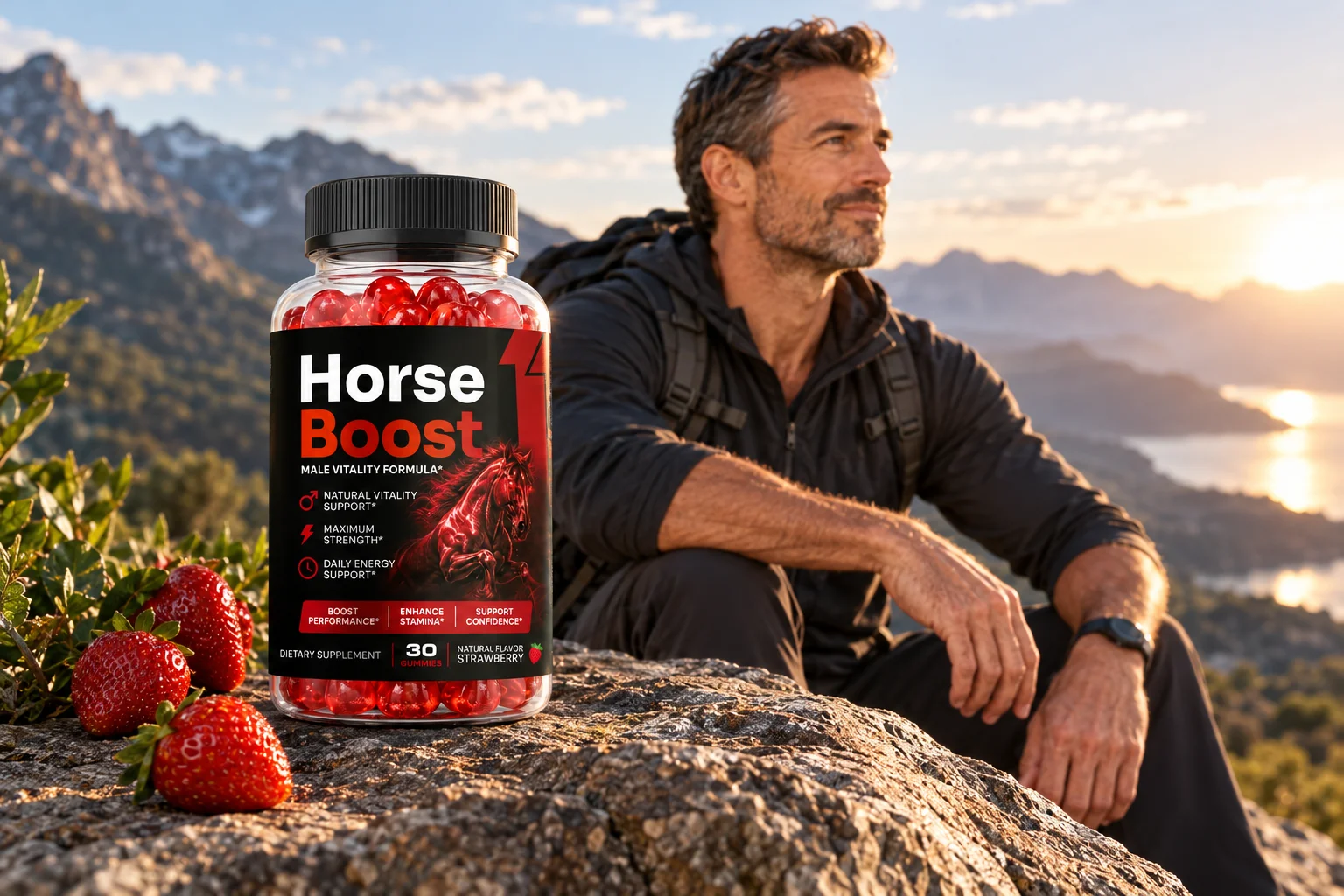
A stronger wellness routine does not have to mean filling your kitchen counter with complicated products. For men who want to pay a little more attention to how they feel after 40, Horse Boost is an appealing option to explore. It is marketed as a men’s vitality gummy, designed to fit into everyday habits with a focus on energy, stamina, and overall male vitality.
One of its most attractive features is the format. A chewable gummy can feel much easier to include in a regular routine than a stack of capsules or another powder to mix. Horse Boost also brings together ingredients associated with men’s wellness, including botanicals such as maca and ashwagandha and the amino acid L-arginine, according to product descriptions. These ingredients are included with the goal of supporting daily vitality, although the effects of the finished formula can vary and should not be assumed from ingredient research alone.
That combination makes Horse Boost particularly interesting if you are already putting effort into walking more, staying active, and getting better sleep. Think of it as an optional extra in a routine you are proud to maintain—not a replacement for those habits. If you like the idea of a straightforward, men-focused gummy, see what Horse Boost offers and check the current product details. Review the actual label and precautions, especially if you take medication.
A realistic seven-day reset
For the next week, choose four basic anchors rather than ten complicated goals:
- Walk outdoors most mornings, even if only for 10–15 minutes.
- Schedule two short strength-training sessions at a comfortable level.
- Include a protein source and a fruit or vegetable at two meals each day.
- Keep a consistent window for sleep and recovery.
Write down how you feel at the end of each day using a few ordinary words: steady, distracted, exhausted, good, restless. Patterns will become easier to see. If your energy remains unusually low, take that information to your clinician instead of trying to troubleshoot indefinitely by yourself.
Frequently asked questions about men’s vitality after 40
What daily habits matter most for men’s energy after 40?
A consistent sleep schedule, regular movement, balanced meals, and enough recovery time are good starting points. Small changes you can sustain usually work better than an overly ambitious routine.
How do I start exercising again if I have been inactive?
Begin with short walks and manageable strength work, then progress gradually. If you have a health condition or concerning symptoms, seek individual guidance before increasing exercise intensity.
Is a vitality supplement a substitute for healthy habits?
No. Horse Boost can be considered as an optional addition, but it cannot replace sleep, nutrition, movement, or appropriate medical care. Check the actual product label and seek professional advice if you take medication or have health concerns.
Good habits create the foundation; a convenient supplement can be one more thoughtful choice. If Horse Boost’s chewable format and men’s-vitality focus sound like a fit for your routine, explore the Horse Boost offer here. It is an easy product to compare as you plan what your next healthy decade will look like.
Affiliate disclosure: This article contains affiliate links. If you purchase through them, Welluna Journal may earn a commission at no additional cost to you. The article is for general education, not medical advice; individual experiences vary.