
At 5:47 p.m., the laptop closes and the workday is technically over. Ten seconds later, the phone is in your hand. You answer one personal message, open a short video “for a minute,” and look up to find that the sun has gone down while your brain still feels as if it is sitting under office lighting.
That ordinary transition is where digital fatigue after work often becomes visible. The goal of a screen reset is not to turn your home into a device-free retreat. It is to give your attention a change of texture: fewer tabs, fewer alerts, more physical space, and at least one part of the evening that does not feel like a continuation of the inbox.
The tiny moment when work ends but the feed begins
Imagine finishing a video call at 5:43, closing the laptop with genuine relief, and reaching for your phone before the screen has gone dark. A friendly message leads to a news alert, a short video, and a conversation. Twenty minutes later, your shoulders are still lifted toward your ears. The workday ended, but your attention never landed.
A more humane experiment is to choose a destination for the first ten minutes after work. Feed the cat, step onto the porch, put on music, or wash a few dishes without a podcast. You can still check the message afterward. The distinction matters: you are not trying to become a person who never uses technology. You are giving your evening a chance to begin on purpose, even if the beginning is ordinary.
Notice the difference between work fatigue and screen fatigue
There is nothing unusual about being tired after a demanding day. But the pattern is worth noticing: do you feel relatively fine on a busy day spent talking or moving, yet foggy after a day of switching between notifications? That does not prove a specific cause, but it gives you a practical place to experiment.
For three evenings, write down when you stopped working, how often you checked messages afterward, and what you did in the first half hour at home. Keep the note short. The idea is not to create another self-tracking chore. It is to catch the automatic moments, like opening the same app because your hands have nothing else to do.

Build a real boundary between the laptop and your life
A commute once provided a natural ending to the workday. When you work remotely, the distance between the last meeting and the sofa may be six steps. Create a modest boundary on purpose: close unnecessary tabs, write down tomorrow’s first task, and put the laptop somewhere other than the dinner table.
Then choose one activity that does not demand intense attention. Walk around the block, water a plant, make a snack, or sit outside. If you want ideas for simple movement, our article on daily steps makes the case for consistency rather than chasing an impressive number. Ten intentional minutes can change the texture of an evening.
Give your eyes and attention different kinds of work
An hour of scrolling may feel like rest because you are sitting down, yet the stream of new information keeps demanding tiny decisions. Try switching to something with a natural stopping point: cooking a meal, reading a physical magazine, taking a shower, or listening to an album instead of a feed.
You do not need to announce a phone ban to everyone you know. Start with a charger across the room, remove nonessential push alerts, and make one recurring part of the evening notification-free. If a family member needs to reach you, keep calls available. A useful routine respects real responsibilities.
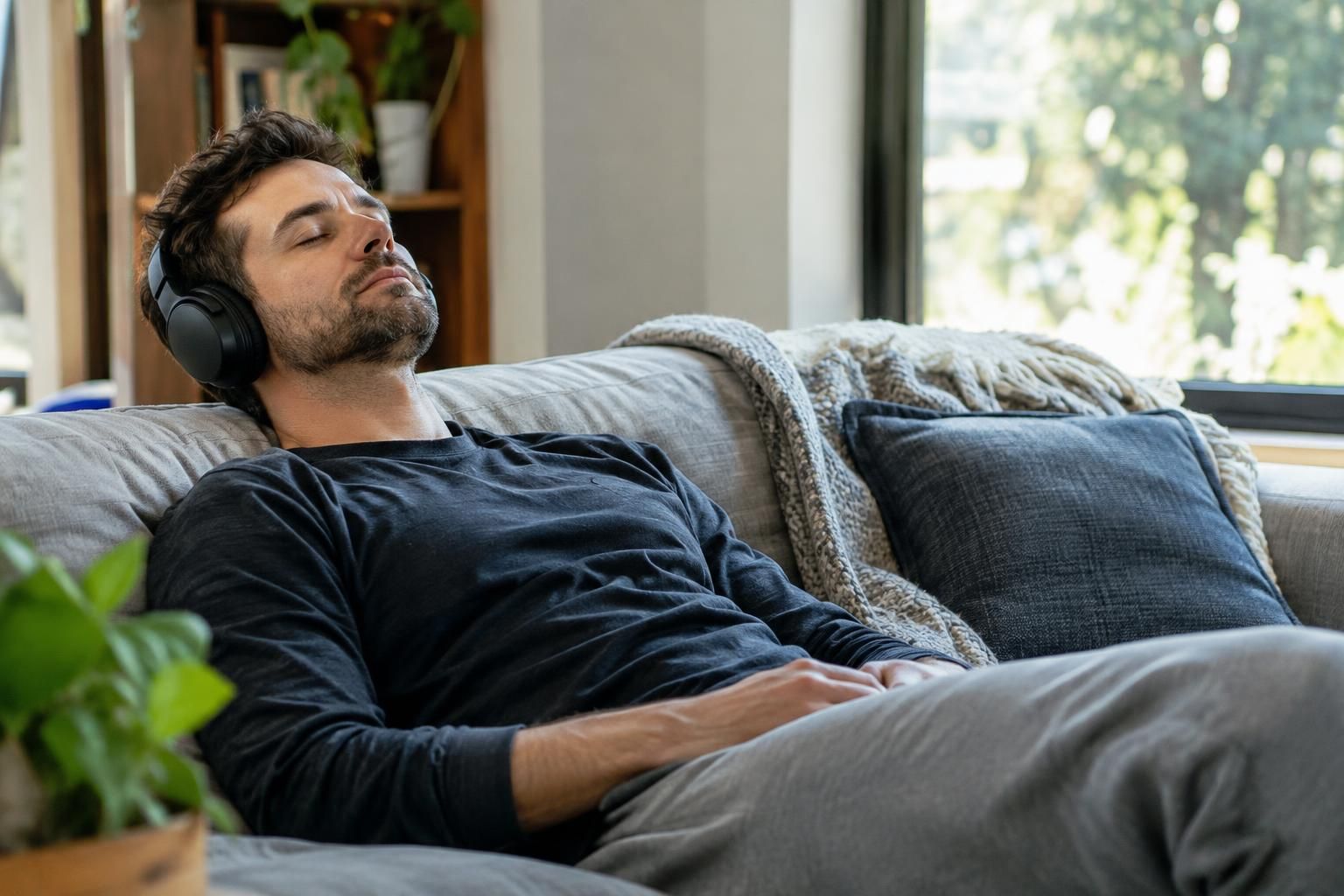
Make the last hour of the night less stimulating
Late-night screen time is not automatically harmful for everyone, but emails, arguments, and endless short videos are not especially good ways to settle a busy mind. Notice which activities make bedtime drift later than planned. If the pattern feels familiar, read our guide to revenge bedtime procrastination.
Instead of demanding a strict bedtime overnight, choose a small stopping cue. Finish one episode rather than letting another begin automatically. Put tomorrow’s essentials by the door. Dim bright lights when it feels comfortable. A gentler evening rhythm should make sleep more approachable, not become one more reason to feel behind.
Do not mistake a low-energy evening for a character flaw
People sometimes expect themselves to work all day, exercise intensely, cook from scratch, keep an immaculate home, and still have an exciting social life. That is a demanding definition of an ordinary Tuesday. Lowering your expectations on a difficult day is not the same as giving up on yourself.
When your concentration feels unreliable, consider whether sleep, workload, meals, or stress may be contributing. Our article about brain fog after 40 focuses on a different life stage, but its discussion of everyday attention and recovery may still help you recognize questions worth asking. Persistent or unusual symptoms deserve professional guidance.
Choose one screen rule you can maintain
The best boundary depends on your life. A student may need late messages from classmates. A new employee may worry about missing a work request. A parent may keep a phone nearby while a child sleeps. Start with one area you actually control instead of copying somebody else’s elaborate routine.
Perhaps social apps stay off the home screen, or work email closes after dinner. Perhaps you take a walk before watching a show. The aim is not a perfect screen-time report. It is to recover small pieces of attention so that your evenings include more than reacting to the next alert.
What to do when your friends live on your phone
Some evenings, the group chat is where plans are made and friendships are maintained. A rigid “no screens after six” rule can isolate you from the people you want to see. A more useful distinction is between intentional conversations and reflexive scrolling. You might check personal messages at a couple of comfortable times while leaving algorithm-driven feeds closed.
Try sending a voice note to a friend or making a plan to meet for coffee rather than letting a conversation stretch through dozens of distracting app visits. Social connection is not the problem. The friction comes when every small update interrupts the rest of your evening, including the things you said you wanted to do.
A 45-minute reset for the evening that went sideways
Picture a Wednesday when the last meeting ends at 7:12 p.m. There is no realistic version of this night that includes a long workout, a perfectly cooked dinner, a journal entry, and a full digital detox. The useful move is smaller: decide what you want the next forty-five minutes to feel like.
Put the phone on a charger outside the kitchen while you make something simple to eat. Open a window or step outside for five minutes. If you want entertainment afterward, choose it on purpose instead of letting an algorithm choose an endless sequence for you. The difference is subtle but important: one movie, one game, or one call with a friend has an endpoint; scrolling is designed not to.
If you notice that late work nights regularly push bedtime later, our guide to revenge bedtime procrastination is a useful next read. The aim is not to win the evening back by squeezing in more stimulation. It is to give yourself enough of a landing that tomorrow does not begin with the same unfinished feeling.
Try one week of intentional transitions
Do not redesign your entire relationship with technology. Run a seven-day experiment and make the transition after work the only variable you are trying to notice.
- Choose one physical cue that says work is over: close the laptop, change clothes, wash your face, or take a five-minute walk.
- Move one distracting app off the home screen rather than deleting everything.
- Pick one evening activity with a natural ending: a chapter, a recipe, a shower, a call, or a single episode.
- On two nights, leave the phone in another room for the first twenty minutes after dinner.
- At the end of the week, keep only the change that made the evening feel noticeably less fragmented.
Frequently asked questions
Is digital fatigue an official medical diagnosis?
No. It is a descriptive phrase for a pattern people notice around screen-heavy days. Headaches, vision problems, persistent fatigue, or substantial changes in mood or concentration should not be explained away without appropriate care.
Do I need to stop using my phone after work?
Usually not. A targeted boundary around a few attention-grabbing activities is often more realistic than a complete ban, especially when phones also serve practical and social purposes.
What if my job requires evening messages?
Protect a smaller window you can control and consider discussing response expectations with your team. If your job truly requires availability, your routine needs to accommodate that reality rather than pretending it does not exist.
You do not have to win a competition against your phone. Digital fatigue after work is a reason to look closely at how your evenings begin and where your attention goes. Try one small change, notice what improves, and make room for something that feels restorative rather than merely distracting.