
Dinner is finished, the dishes are still on the table, and the couch looks especially inviting. A walk can sound like an unnecessary extra task at exactly that moment. Yet “walking after meals” does not mean turning every meal into a fitness session. It might be a loop around your building, a stroll with the dog or five quiet minutes on the sidewalk before you head back to the kitchen. Small, repeatable movement is worth exploring precisely because it fits into a day you are already living.
When people ask about walking after meals benefits, the most useful answer is usually not a magic number of minutes but a repeatable way to add gentle movement to the day.
Walking after meals benefits do not require a power walk
A post-meal walk can be as simple as ten comfortable minutes around the block, through an office corridor, or inside a shopping center when the weather is bad. The pace does not need to feel like exercise training. You should generally be able to talk in sentences. For someone who has been sedentary, even five minutes can be a reasonable starting point. The habit matters because it breaks up sitting and creates another predictable opportunity to move.
Walking after meals benefits may also be easier to maintain than one large workout because the cue is already built into the day: breakfast, lunch, or dinner ends, then you move for a few minutes. You do not need to walk after every meal. Choose the meal that fits your schedule and neighborhood best. A lunch walk may work for an office worker; an evening walk may be easier for a family that wants time outside together.
Comfort still matters. A large meal, reflux, joint pain, dizziness, or a medical condition can change what feels appropriate. Start gently and avoid turning the habit into a punishment for eating. The walk is not a way to “erase” a meal. It is simply a low-barrier movement option that can sit alongside strength training, longer cardio sessions, or normal daily activity.
To make the habit stick, connect the walk to something that already happens. Put shoes near the door before dinner, take a phone call outside after lunch, or use the final ten minutes of a break for a loop around the building. Indoor options count too: a hallway, treadmill, shopping center, or a few laps around the house can all serve the same practical purpose when weather or safety makes outdoor walking inconvenient. Track frequency before distance. Three short walks you actually complete are more useful than one ambitious plan that disappears after two days. As fitness improves, you can lengthen the route or add pace gradually if that matches your goals.
Why timing can matter
Muscles use glucose as fuel when they work. Moving after a meal can modestly influence the rise in blood glucose, although the size of any effect depends on the meal, walking pace, health conditions and individual response. This is not permission to eat without limits or a substitute for diabetes treatment. It is a reason a gentle stroll can be an appealing everyday habit. The health benefit does not require a heroic step count or a complicated wearable dashboard.
Five minutes still counts as movement
People often abandon a walking plan because they imagine twenty or thirty minutes are mandatory. In a demanding schedule, start with a smaller commitment. Walk to the mailbox after lunch, circle the office parking lot or go down the street and back. If it feels good, you can extend it another day. Consistency is more useful than a perfect duration that never happens. After a heavy meal, keep the pace comfortable rather than forcing intense exercise.
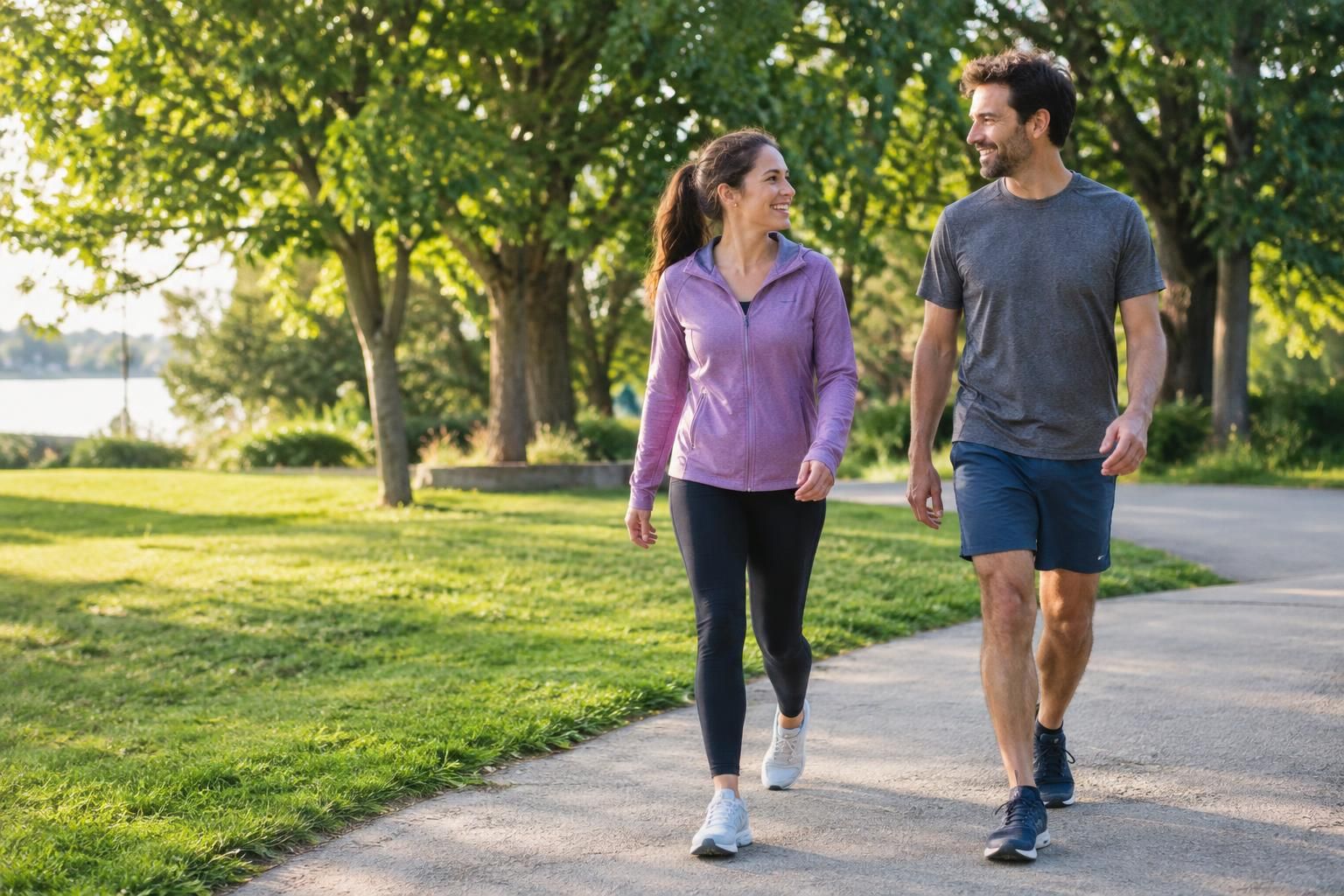
A five-minute walk in three different settings
At an office, head toward a quiet corridor or outside entrance and walk back before the next meeting. At home, carry the dishes in, put on your shoes and take one loop around the block. In a small apartment, follow a few comfortable laps indoors while listening to music. The exact route is not essential. What matters is that the first minute feels easy enough to begin. A safe indoor option is especially useful during cold weather or after dark. You are not trying to turn the walk into a test of grit; you are finding a reliable opportunity to move.
Make the route frictionless
A route you have to drive to is probably not ideal for a five-minute habit. Pick the easiest safe option near your home, office or school. Weather, accessibility and neighborhood safety matter. If you cannot go outside, gentle indoor walking can be reasonable. For people with mobility limitations, another comfortable form of movement may work better. The habit should respect real surroundings instead of assuming everyone has a quiet suburban sidewalk.
A walk can separate work from the evening
The value is not limited to metabolism. Walking after lunch may interrupt long periods of sitting, and a post-dinner stroll can create a transition between chores and rest. Some people enjoy conversation; others prefer silence. You can use the same few minutes to decompress without turning it into a performance goal. When movement has a second purpose—fresh air, connection, a mental reset—it often becomes easier to sustain.
How to make it social without making it obligatory
An after-dinner walk can be a good time for family conversation, and walking with a neighbor can make an ordinary route more enjoyable. But schedules will not always align. Have a solo route that works just as well, and accept days when the weather or your responsibilities change the plan. Some people love tracking steps; others find it distracting. Pick a way of noticing the habit that is supportive instead of compulsive. You might simply ask, “Did I move a little after dinner more often this week?”
The weight-management connection in perspective
Activity contributes to overall energy expenditure, but one short walk is unlikely to produce dramatic changes on its own. That does not make it pointless. Gentle movement can interrupt long sitting periods, help build confidence and be the starting point for a broader routine. If you eventually want longer walks or structured workouts, you will already have a familiar movement habit. The important improvement may be behavioral: moving feels like a normal part of your day rather than a special event you must prepare for.
What a walk cannot promise
One short walk does not cancel out a large meal, erase a calorie surplus or guarantee weight loss. Body weight is influenced by many variables, including total eating patterns, sleep, medications and health conditions. Still, an after-meal stroll can support a broader active lifestyle, and small amounts of activity can add up. That is a stronger reason to keep it than unrealistic claims about “melting belly fat.”
How to make walking a household habit
Tie the walk to a cue you already have: placing dishes in the sink, turning off the lunchroom lights or taking the dog outside. Invite someone when it makes the walk enjoyable, but keep a solo option so the routine does not depend on schedules matching. You can skip a day without starting over. The goal is to lower the effort of beginning, not create another streak that punishes ordinary life.
Make it work in a real week
You do not need to redesign your entire life to test the idea. Think about what would be easiest to do when your schedule is ordinary, your energy is average, and you have no special reason to feel particularly motivated. Start small, and let the experience guide the next adjustment.
- Choose one meal after which walking is realistic. Choose a modest starting point and try it on a normal weekday. If it feels easy, repeat it before making it bigger.
- Pick a safe, easily accessible route or an indoor alternative. Experiment with the timing and format. Small adjustments are often more useful than adopting a strict schedule that does not fit.
- Begin with five comfortable minutes rather than a required step target. Keep a practical backup for busy days. A simpler version is better than assuming the entire routine has failed.
- Use a familiar cue such as clearing the dishes to start. Pay attention to how the change fits your real life: comfort, satisfaction, cost and the effort it takes to repeat.
- Expand only if you enjoy it and it fits your energy and schedule. Keep what worked, change what did not, and allow for days when your plans shift. Useful habits need flexibility.
What a sustainable approach looks like
Wellness advice often sounds precise until it meets a real schedule. A breakfast suggestion can be perfectly balanced and still fail if it takes forty minutes to make. A movement goal can be healthy yet impractical for someone with a long commute. The answer is rarely to demand more discipline. It is to simplify the environment so that the useful choice is an available choice. Plan for your ordinary day, not for the day on which everything goes smoothly.
This is especially true for all ages and fitness levels. You can use the suggestions as possibilities rather than commands, and keep only those that make ordinary meals, movement or attention feel easier. If personal health circumstances change the decision, individual advice matters more than following a general checklist.
It can help to connect this habit with a routine you already understand.
For more practical context, read our practical look at 10,000 steps a day and our guide to walking for weight loss after 40. These related guides focus on everyday choices rather than promising that a single ingredient changes everything.
The most realistic way to use walking after meals benefits is to pick one meal, one short route, and one pace you can repeat without needing special motivation.
How to fit a post-meal walk into an ordinary workday
You do not have to find an uninterrupted half hour after eating. On a home-working day, a quick loop outside after lunch can mark the transition into afternoon tasks. If you work in an office, walking around the building or down a hallway may be more practical. Our walking breaks for remote workers article shares ways to make movement part of the schedule rather than another obligation.
Food and movement are separate habits, and neither needs to be perfect to be worthwhile. Pack something satisfying that is easy to eat during a busy day—the high-fiber lunch ideas guide has work-friendly options—and choose a walking route you can repeat without special equipment. A walk is also a useful chance to put the phone away for a few minutes.
Frequently asked questions
Is it better to walk before or after eating?
Both can be beneficial. A brief after-meal walk may help with post-meal blood glucose, while total activity across the week remains important. People vary in preferences, symptoms, schedules and underlying health needs. Use the answer as a practical starting point rather than an inflexible rule.
How fast should I walk?
At a comfortable pace that allows conversation. There is no reason to sprint right after dinner. What helps one person may not suit another, particularly when medical conditions or medication use change the picture. The details of your situation matter.
Will walking after dinner help me lose weight?
It may contribute to daily activity and weight-management habits, but no single short walk guarantees weight loss. A single ingredient or a single day cannot answer every question about a routine. Consider the longer pattern and prioritize clear information over sweeping claims.
The bottom line
The best use of this advice is to choose a routine you can understand and sustain. Rather than hunting for one perfect food or rule, choose the changes that make your next ordinary week easier. Your habits will evolve; keeping them practical is more valuable than trying to follow a flawless schedule every day.