
The hardest dinner is often the one that happens after a perfectly ordinary day. You answered messages, met deadlines, made the commute and now have six percent of your patience left. A recipe with twelve ingredients might be nutritious, but it is not useful if you never start it. Healthy eating when you are tired is less about becoming a more disciplined cook and more about giving yourself practical options at the exact moment your energy runs out. The freezer, pantry and grocery deli can all be part of that plan.
Healthy eating when tired is less about willpower and more about making sure the easiest available meal is still reasonably satisfying.
Healthy eating when tired begins before the exhausted evening
The best low-energy dinner is often decided at the grocery store, not at 7:45 p.m. Keep a few ingredients that require almost no preparation: rotisserie chicken, canned beans, frozen vegetables, microwave rice, eggs, bagged salad, soup, whole-grain bread, or yogurt. These are not culinary failures. They are tools for the nights when cooking from scratch is unrealistic. Choose shortcuts you actually like and that fit your budget.
Healthy eating when tired also becomes easier when you stop requiring a “proper recipe.” A meal can be assembled rather than cooked. Try soup plus toast and fruit, rice plus beans and frozen vegetables, eggs plus a bagged salad, or a sandwich with a side of yogurt. The useful template is protein + produce + a satisfying carbohydrate, not an Instagram-worthy plate. Convenience can support consistency when the alternative is skipping dinner and grazing later.
Fatigue can also be a signal rather than just an inconvenience. If you are exhausted most days despite adequate sleep, or fatigue is new, severe, or accompanied by other symptoms, a food hack is not the whole answer. Medical issues, medications, sleep problems, stress, and under-eating can all matter. A practical dinner system helps the evening; it does not diagnose why you are tired.
You can also make tired-night meals easier by preparing “decision shortcuts” rather than full meal prep. Write down five dinners you can make in ten minutes and keep the ingredients for at least two of them on hand. Examples might include eggs and toast with fruit, bean tacos with bagged slaw, frozen vegetables with rice and chicken, soup with a sandwich, or pasta with peas and grated cheese. When you are tired, use the list instead of inventing dinner from scratch. This reduces the mental load that often makes takeout feel like the only realistic option. There is nothing wrong with takeout either; the point is to have more than one easy path available. You can use the same idea with lunch: leftovers, soup, sandwiches, and frozen meals can all be reasonable tools when energy is limited. The system should make food easier, not create another standard you feel guilty about missing.
Plan for the tired version of yourself
Most meal plans are written by the optimistic Sunday version of a person who enjoys chopping vegetables. Tuesday often requires a different design. Pick three dinners that use very little attention, not just little cooking time. A rotisserie chicken with bagged salad and microwave rice, a bean-and-cheese quesadilla or frozen vegetables added to pasta are valid meals. Convenience foods are tools; the ingredient list and portions can guide choices without making you feel guilty for using them.
Think in components, not elaborate recipes
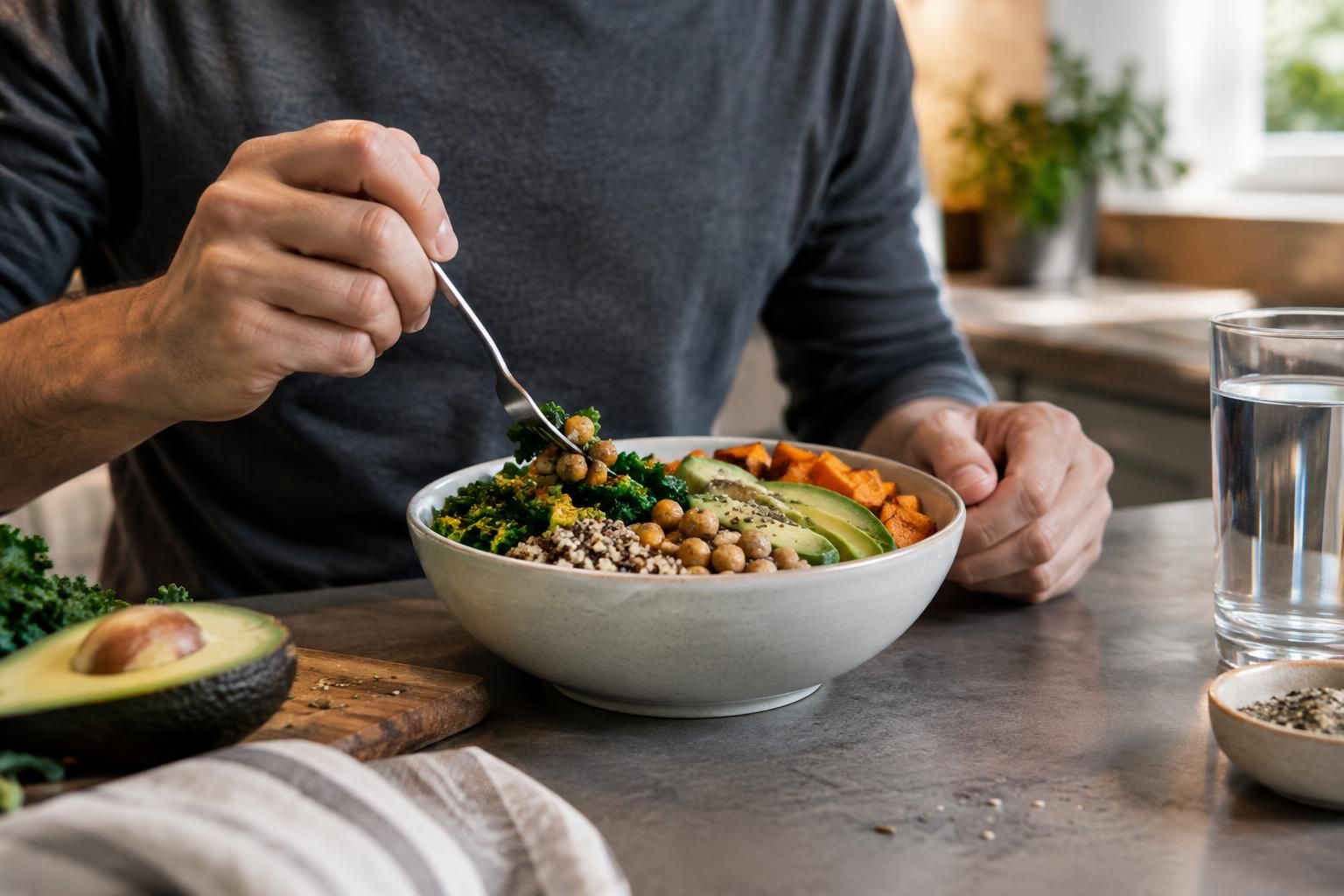
A workable dinner can contain a protein, a plant food and a satisfying carbohydrate. That might be eggs, frozen spinach and toast; tofu, broccoli and noodles; or tuna, tomatoes and crackers. The components can be imperfect. A can of beans and a microwaved potato can feed you faster than deciding which seven-step bowl recipe deserves your evening. The goal is not to optimize every nutrient at every meal. It is to make an adequate meal accessible during a demanding week.

The fifteen-minute dinner decision tree
If you have a microwave, start with a microwave grain, vegetables and a protein. If you have a stovetop, make eggs or tofu and add toast or rice. If you have neither time nor energy, assemble a sandwich with fruit and something crunchy. If you must stop at a store, buy a ready-to-eat protein, a salad kit and a satisfying side rather than wandering the aisles hungry. These are not culinary masterpieces. Their job is to prevent a demanding day from turning into an evening where you have no realistic food option at all.
Let the freezer carry some of the work
Frozen vegetables are often economical, last much longer than delicate produce and can be roasted, microwaved or added directly to soups. Frozen fruit belongs in yogurt or oatmeal. A prepared frozen meal can be useful too; you can pair it with vegetables, fruit or a protein if it leaves you hungry. Keep a short list of freezer items that you genuinely like. A freezer filled with aspirational kale you never eat is not a backup plan.
Use a decision rule instead of endless choice
Try this: if dinner takes more than fifteen minutes of hands-on attention, choose a backup. It could be a sandwich with soup, a rice bowl or leftovers. The rule reduces the cognitive load of choosing when you are already tired. Keep ingredients visible, or put a handwritten list on the refrigerator. Meal planning does not have to mean deciding your exact dinner seven days in advance; sometimes it means preventing the familiar problem of opening an empty fridge.
Reduce cleanup before chasing nutrition perfection
For many tired adults, dishes are the hidden cost of a recipe. Use one-pan meals, parchment-lined trays, microwave bowls and leftovers that can be reheated in the same container when safe. Keep seasonings within reach. A meal that requires washing two cutting boards and four pans may be nutritionally excellent but operationally unrealistic. Your best dinner can be one that is easy to finish and easy to clean up after, allowing you to rest rather than resent the entire process.
Notice the habits that create decision fatigue
Do you open five recipe sites before every meal? Do you buy ingredients for dishes no one in the household actually likes? Do your vegetables spoil because you planned seven fresh meals but only cooked three? These are solvable design problems. Repeat meals you enjoy, buy fewer perishable ingredients and allow convenient components. You will probably eat a wider variety over months if the basic system works than if you alternate between elaborate meal plans and total exhaustion.
There is room for takeout
Some nights, ordering food is the practical choice. You can still look for a meal that includes something filling and a fruit or vegetable if available. There is no need to turn an occasional pizza into a moral crisis. Patterns across many meals matter more than one dinner. If cooking fatigue persists, consider whether your grocery plan demands too many fresh ingredients, too much cleanup or too much decision-making—and simplify one of those burdens.
Build a rescue shelf
Set aside a few staples that can become dinner even before the next grocery run: canned beans, canned fish if you eat it, whole-grain pasta, rice, tomato sauce and frozen vegetables. Add seasonings you already enjoy. Check the shelf every weekend, not as a productivity ritual but as insurance against a chaotic Wednesday. Being prepared does not mean you will always cook; it means the easiest option can still be a satisfying meal.
Make it work in a real week
You do not need to redesign your entire life to test the idea. Think about what would be easiest to do when your schedule is ordinary, your energy is average, and you have no special reason to feel particularly motivated. Start small, and let the experience guide the next adjustment.
- Identify your three most stressful dinner nights. Choose a modest starting point and try it on a normal weekday. If it feels easy, repeat it before making it bigger.
- Write down three emergency dinners with five ingredients or fewer. Experiment with the timing and format. Small adjustments are often more useful than adopting a strict schedule that does not fit.
- Stock two shelf-stable protein choices and two freezer vegetables. Keep a practical backup for busy days. A simpler version is better than assuming the entire routine has failed.
- Keep cleanup simple: one pan, one bowl or one tray. Pay attention to how the change fits your real life: comfort, satisfaction, cost and the effort it takes to repeat.
- Notice which backup meals you actually choose, then restock those. Keep what worked, change what did not, and allow for days when your plans shift. Useful habits need flexibility.
What a sustainable approach looks like
Wellness advice often sounds precise until it meets a real schedule. A breakfast suggestion can be perfectly balanced and still fail if it takes forty minutes to make. A movement goal can be healthy yet impractical for someone with a long commute. The answer is rarely to demand more discipline. It is to simplify the environment so that the useful choice is an available choice. Plan for your ordinary day, not for the day on which everything goes smoothly.
This is especially true for working adults parents caregivers. You can use the suggestions as possibilities rather than commands, and keep only those that make ordinary meals, movement or attention feel easier. If personal health circumstances change the decision, individual advice matters more than following a general checklist.
It can help to connect this habit with a routine you already understand.
For more practical context, read our article about cravings in perimenopause and our explanation of revenge bedtime procrastination. These related guides focus on everyday choices rather than promising that a single ingredient changes everything.
The core idea behind healthy eating when tired is to lower the effort required for a decent meal, not to demand more discipline from an already depleted person.
Three shortcuts that make low-energy meals more realistic
The quickest dinner is often a small variation on food already in your refrigerator. Keep one cooked or canned protein, one vegetable option, and one easy base such as whole-grain bread, rice, or potatoes available. Then the decision is simply how to combine them. For example, beans and leftover rice make a bowl; eggs and frozen vegetables can become a quick skillet meal; hummus and a whole-grain wrap can stand in for a more complicated dinner.
Planning the next day’s lunch at the same time can save another round of decisions. Our high-fiber lunch guide includes portable meals built from pantry staples. For something to keep at your desk when the afternoon runs long, see satisfying afternoon snack combinations. If mornings are the hardest part of your week, easy budget breakfasts offer more ideas that do not require a full cooking session.
Frequently asked questions
Are frozen vegetables as useful as fresh?
Yes. Frozen vegetables can be a nutritious, practical choice and often reduce waste. People vary in preferences, symptoms, schedules and underlying health needs. Use the answer as a practical starting point rather than an inflexible rule.
Is takeout incompatible with healthy eating?
No. Your overall pattern matters, and convenience meals can be balanced in ways that fit your needs. What helps one person may not suit another, particularly when medical conditions or medication use change the picture. The details of your situation matter.
What if I do not have energy for meal prep?
Skip elaborate prep. Stock foods that require little or no preparation and rotate a handful of familiar meals. A single ingredient or a single day cannot answer every question about a routine. Consider the longer pattern and prioritize clear information over sweeping claims.
The bottom line
The best use of this advice is to choose a routine you can understand and sustain. Rather than hunting for one perfect food or rule, choose the changes that make your next ordinary week easier. Your habits will evolve; keeping them practical is more valuable than trying to follow a flawless schedule every day.