
At 3:18 p.m., the vending machine starts to look like the most organized part of your day. Lunch happened hours ago. There are two meetings left, and dinner feels impossibly far away. It is easy to label the resulting hunger as a failure of willpower, especially if you are trying to manage your weight. But a snack is not a character test. It is a small opportunity to make the next part of the day easier. The useful question is whether your snack has enough staying power to bridge the gap to dinner without turning into an accidental second lunch.
The best satisfying afternoon snacks are not the ones with the most impressive label; they are the ones that match your hunger, schedule, and next meal.
Satisfying afternoon snacks start with the size of the gap
A snack at 2:30 p.m. can serve a different purpose from one at 5:30 p.m. If dinner is three or four hours away, you may need something more substantial than a few crackers. If you are eating in an hour, a piece of fruit or yogurt may be enough. Matching the snack to the length of the gap is more useful than following a rigid rule about what a “proper” snack should look like.
Think about what the rest of your day is asking for. On a desk-heavy afternoon, yogurt and fruit may be enough. On a day with a long commute, workout, class, or late dinner, you may want something more substantial such as half a sandwich, cottage cheese with crackers, or hummus with pita and vegetables.
Pack the snack at the same time you pack lunch so it does not depend on a 4 p.m. decision. If you buy snacks at work, identify two default choices you genuinely like rather than negotiating with yourself every afternoon. Satisfying afternoon snacks become easier when there is a familiar answer ready before hunger gets intense.
This also takes some of the moral language out of snacking. Eating between meals is not automatically a mistake, and skipping a snack is not automatically more disciplined. The useful question is whether the choice makes the rest of the day easier.
Why a snack sometimes leaves you hungrier
A handful of candy or a sugary drink can taste wonderful, but it may not provide much protein or fiber, the components that often help make food satisfying. Portion size matters too. A tiny snack can fail simply because it does not contain much food. Conversely, grabbing from a giant open bag while answering emails makes it hard to notice how much you have eaten. The objective is not to ban sweet food. It is to build a snack that fits your hunger and your afternoon instead of relying on a single quick taste.
The easy combination: protein plus fiber
An apple with peanut butter, yogurt with berries, hummus and carrots, or crackers with cheese and sliced tomato all combine familiar food groups. There is no magical formula, but adding protein or fiber can make a snack more substantial. If you prefer savory flavors, try edamame or a small bean salad. If you crave something sweet, a banana and a few nuts may be more useful than pretending dessert does not exist. Aim for something you enjoy enough to repeat; a theoretically perfect snack you never pack cannot help.

Five snack ideas that cover different kinds of days
For a quiet work-from-home afternoon, yogurt with berries can be ready in a minute. For travel, an apple and a single-serving packet of peanut butter are less fragile than a prepared bowl. For a salty craving, try roasted chickpeas or crackers with cheese. For a sweet craving, pair a small portion of chocolate with fruit or a more substantial snack if you are truly hungry. For a post-workout afternoon, leftovers or a sandwich may be more realistic than a tiny snack. None of these is a command to eat in a specific way; they are examples of matching food to actual hunger and logistics.
Plan for where you really spend your afternoon
The ideal snack for someone working from home is not always the best one for a commuter or a student. At home, a bowl of cottage cheese and fruit takes two minutes. In a backpack, a whole piece of fruit and a shelf-stable roasted-chickpea packet can survive the day better. In an office refrigerator, yogurt or leftovers become easy options. Preparation should match your surroundings. A five-minute Sunday shopping decision is often worth more than thirty minutes of elaborate snack-box assembly.
Separate hunger from the need for a break
You can be hungry and mentally exhausted at the same time. Before eating, consider whether you need a snack, a brief walk, water or simply five minutes away from notifications. If hunger is present, eat. If you also need rest, take it. Treating every tired feeling as a food problem may leave you frustrated, while ignoring real hunger can lead to an uncomfortable evening. A workable snack habit makes room for both physical appetite and the daily rhythm of work.
Why the previous meal matters
Sometimes the snack problem begins at noon. A rushed lunch of a few bites might set up strong hunger by three, and the vending machine is not the cause. Ask whether lunch contained enough protein, satisfying carbohydrate and an enjoyable vegetable or fruit. If you are consistently hungry soon after eating, it may be more useful to improve lunch than to search for a branded “craving control” snack. Your activity and stress level also change from day to day. Treat afternoon appetite as part of the whole day's food pattern.
A way to use convenience foods without guilt
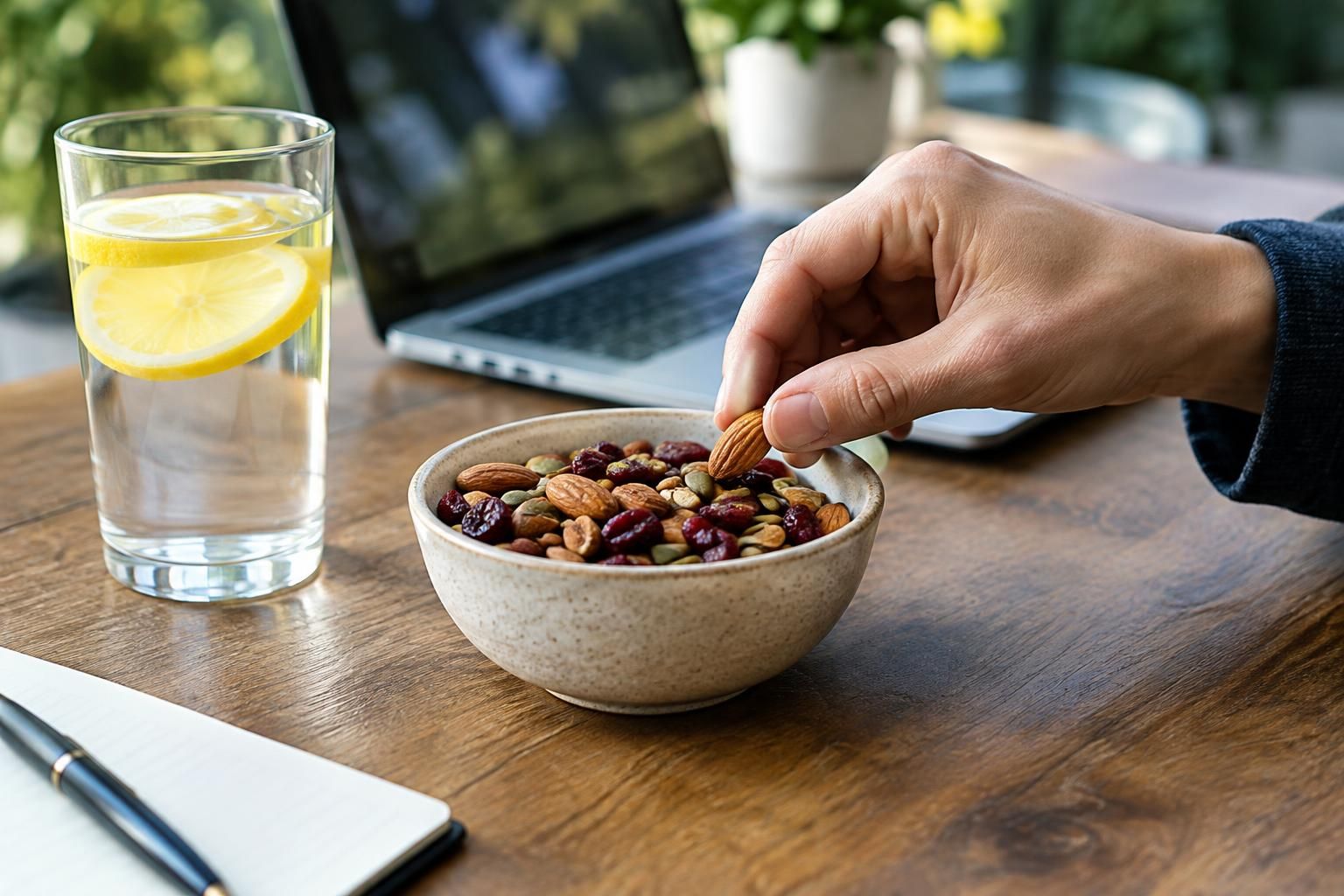
Packaged food can be genuinely useful. A trail mix, cheese stick, whole-grain crackers or a simple cereal bar can be better than having no plan when a long workday gets delayed. Compare labels if sodium, added sugar or allergies matter for you, but do not demand perfection. The point is a snack that arrives before hunger becomes overwhelming. Keeping one shelf-stable option in your bag is a planning choice, not evidence that your diet is inadequate.
Why strict afternoon food rules can rebound
“No food after lunch” sounds simple on paper, but it can be difficult when lunch was light or dinner is late. Some people then arrive home intensely hungry and eat while cooking because the gap has become too long. Rather than fighting that pattern with more rigid rules, try planning a snack earlier. A normal, satisfying afternoon can support steadier decisions at dinner. Weight management is not improved by making every hour between meals a contest.
How to create your three-snack rotation
Choose one sweet, one savory and one portable option. Put those ingredients on the same section of your grocery list each week. Keep the preparation ordinary and the portions practical. If a combination does not satisfy you, increase the protein, add a fiber-rich food or rethink whether lunch is adequate. A good rotation is flexible: it helps on a busy Tuesday and still allows a spontaneous coffee-shop pastry on Friday without drama.
Build a snack rotation you can actually repeat
Choose one sweet option, one savory option, and one portable option that you can buy almost anywhere. Keep the ingredients in roughly the same place on your grocery list each week. If one combination leaves you hungry again quickly, increase the portion or add a protein- or fiber-rich food rather than assuming snacking itself is the problem. The point of satisfying afternoon snacks is to make the transition to dinner calmer, not to create another food rule you have to obey perfectly.
Make it work in a real week
You do not need to redesign your entire life to test the idea. Think about what would be easiest to do when your schedule is ordinary, your energy is average, and you have no special reason to feel particularly motivated. Start small, and let the experience guide the next adjustment.
- Select three snacks that take less than five minutes to assemble. Choose a modest starting point and try it on a normal weekday. If it feels easy, repeat it before making it bigger.
- Pair a source of protein with a fruit, vegetable or whole grain when practical. Experiment with the timing and format. Small adjustments are often more useful than adopting a strict schedule that does not fit.
- Keep one option in the places where hunger normally catches you off guard. Keep a practical backup for busy days. A simpler version is better than assuming the entire routine has failed.
- Use a plate or container rather than eating from an oversized package at your desk. Pay attention to how the change fits your real life: comfort, satisfaction, cost and the effort it takes to repeat.
- Notice whether the snack makes dinner feel calmer and adjust the portion accordingly. Keep what worked, change what did not, and allow for days when your plans shift. Useful habits need flexibility.
What a sustainable approach looks like
Wellness advice often sounds precise until it meets a real schedule. A breakfast suggestion can be perfectly balanced and still fail if it takes forty minutes to make. A movement goal can be healthy yet impractical for someone with a long commute. The answer is rarely to demand more discipline. It is to simplify the environment so that the useful choice is an available choice. Plan for your ordinary day, not for the day on which everything goes smoothly.
This is especially true for commuters office workers students. You can use the suggestions as possibilities rather than commands, and keep only those that make ordinary meals, movement or attention feel easier. If personal health circumstances change the decision, individual advice matters more than following a general checklist.
It can help to connect this habit with a routine you already understand.
For more practical context, read our article about cravings in perimenopause and our guide to walking for weight loss after 40. These related guides focus on everyday choices rather than promising that a single ingredient changes everything.
Make afternoon snacks work with the rest of your meals
If you are hungry every afternoon, take a look at lunch before deciding that your snack is the problem. A meal with beans, grains, produce, and a satisfying protein can help you avoid arriving at three o’clock feeling ravenous. Our high-fiber lunch ideas give you practical wraps and grain bowls to pack for work. A good snack can then fill a normal gap rather than making up for a lunch that was too small.
Snack planning also gets easier when you shop for ingredients that work in several places. Oats, yogurt, nuts when appropriate, fruit, and beans can turn up in breakfasts and lunches as well as afternoon breaks. For more inexpensive starting points, see our budget-friendly breakfast ideas and our beginner’s guide to prebiotic foods.
Frequently asked questions
Are snacks bad for weight loss?
No. Overall eating patterns, energy intake, food quality and personal needs matter more than whether calories arrive in three meals or include snacks. People vary in preferences, symptoms, schedules and underlying health needs. Use the answer as a practical starting point rather than an inflexible rule.
What if I am hungry again an hour later?
Your snack may have been too small, lunch may have been insufficient, or your day may demand more energy. Review the context without self-criticism. What helps one person may not suit another, particularly when medical conditions or medication use change the picture. The details of your situation matter.
Is fruit alone enough?
Sometimes. If fruit does not keep you satisfied, try pairing it with yogurt, nuts or another protein-containing food. A single ingredient or a single day cannot answer every question about a routine. Consider the longer pattern and prioritize clear information over sweeping claims.
The bottom line
The best use of this advice is to choose a routine you can understand and sustain. Rather than hunting for one perfect food or rule, choose the changes that make your next ordinary week easier. Your habits will evolve; keeping them practical is more valuable than trying to follow a flawless schedule every day.