
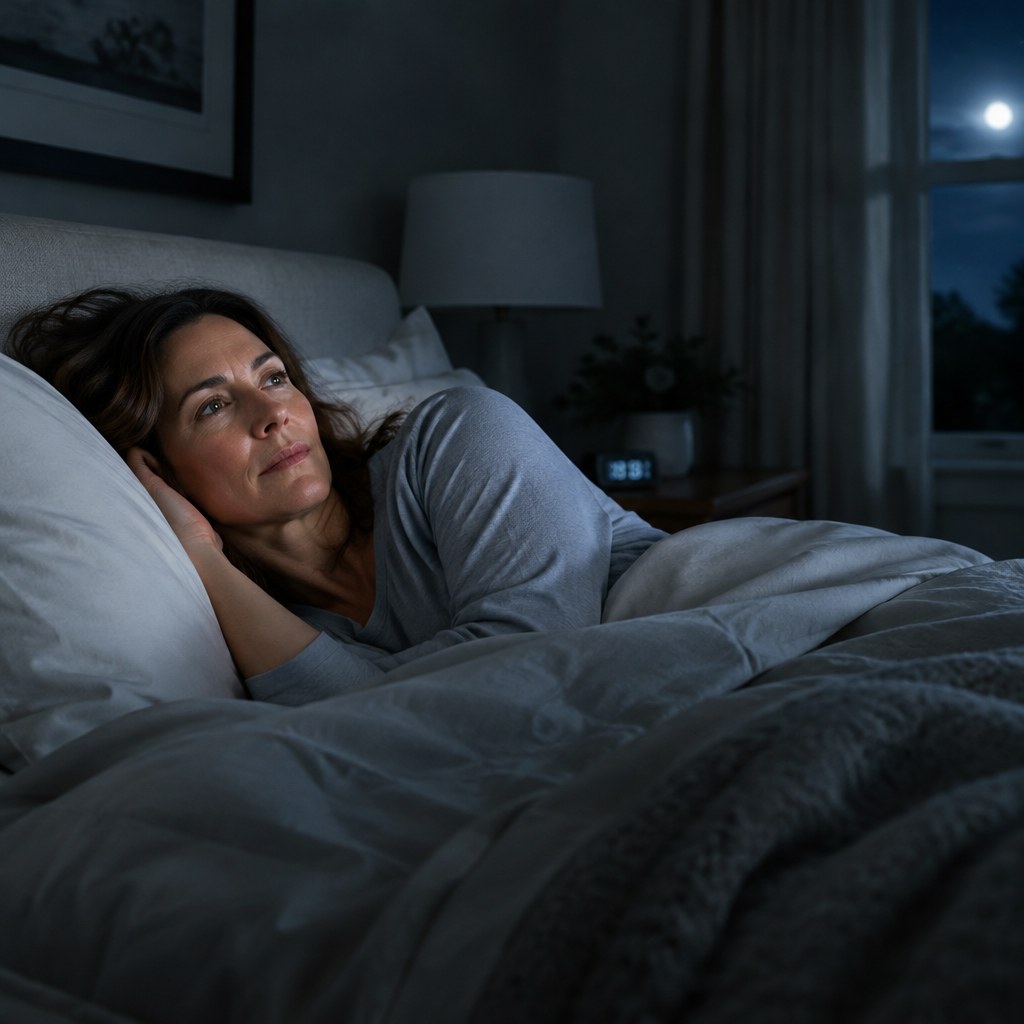
Waking up at 3 a.m. once in a while is annoying. Waking up at roughly the same time most nights after 40 can start to feel like your body has quietly changed the rules.
You fall asleep normally, then suddenly you are wide awake. Maybe you are hot. Maybe your mind starts running. Maybe you need the bathroom. Maybe nothing obvious happened at all. Then you look at the clock, realize it is 3:07, and start doing the mental math on how many hours of sleep you have left.
The frustrating part is that there usually is not one single explanation. Sleep after 40 can be affected by hormones, stress, habits, bladder symptoms, alcohol, caffeine, pain, snoring, temperature changes, and the normal way sleep becomes lighter as the night goes on.
That does not mean you should simply accept poor sleep. It means the most useful first step is figuring out what kind of waking you are dealing with.
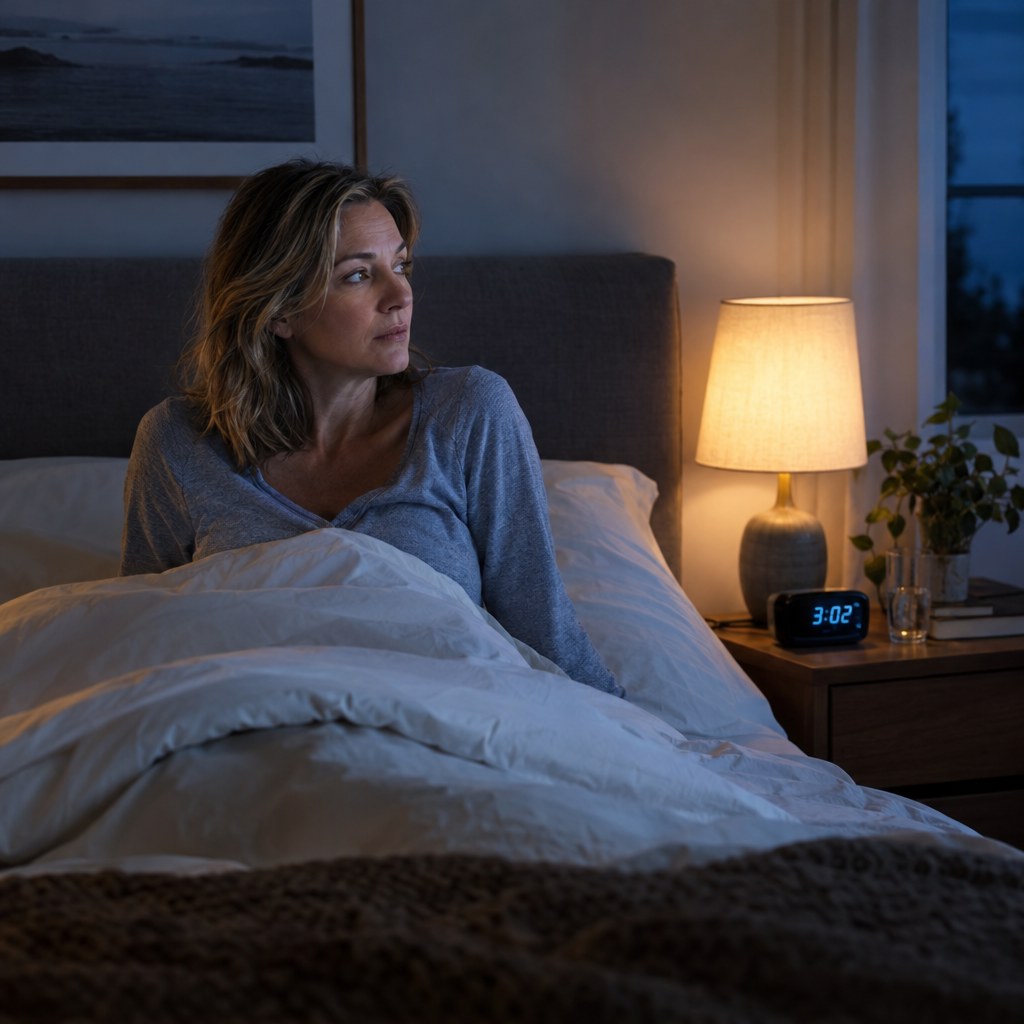
Why 3 A.M. Feels Like Such a Common Time to Wake Up
There is nothing magical about 3 a.m. Your sleep moves through repeated cycles, and the second half of the night often contains lighter sleep and more REM sleep than the first half.
That makes it easier for things that might not wake you earlier in the night to become noticeable later: a warm room, a full bladder, a hot flash, a partner moving, a small noise, a stressful thought, or a change in breathing.
If your bedtime is somewhere around 10 or 11 p.m., the early-morning hours also happen to be several sleep cycles into the night. So “I always wake at 3” may really mean “I tend to wake when my sleep becomes lighter.”
After 40, Hormonal Changes Can Make Sleep Less Predictable
For many women, perimenopause and menopause change sleep before they change anything else in an obvious way.
Hot flashes and night sweats can wake you directly. But sleep can also become lighter or more fragmented even when you do not wake drenched in sweat. Some women describe it as suddenly becoming a “lighter sleeper” than they used to be.
The important thing is not to blame every sleep problem on menopause. Hormonal changes may be one piece of the picture, but sleep apnea, anxiety, alcohol, medications, pain, bladder symptoms, and other health issues can overlap with midlife.
If menopause is also changing your bladder habits, our guide to bladder control after menopause explains why those symptoms can show up together and what practical steps may help.
Sometimes You Wake Up First — and Then Decide You Need to Pee
This distinction matters more than people realize.
There is a difference between:
- waking because your bladder is urgently full, and
- waking for another reason, noticing you are already awake, and then going to the bathroom “just in case.”
Those can feel identical at 3 a.m., but they point toward different patterns.
If nighttime urination is happening regularly, especially more than once a night, it is worth tracking separately from your sleep. Fluid timing, caffeine, alcohol, medications, overactive bladder symptoms, sleep apnea, and several medical conditions can all play a role.
We have a deeper guide on frequent urination at night in women over 40 if the bathroom is a regular part of your wake-ups.
Stress Can Be Quiet All Day and Loud at 3 A.M.
One of the strangest things about middle-of-the-night waking is how calm you can feel during the day and how busy your brain becomes at night.
You wake up and suddenly remember the email you forgot to send, the appointment you need to book, the conversation you wish had gone differently, the bill you need to pay, or the problem you have been successfully ignoring since breakfast.
This does not necessarily mean you are “too anxious to sleep.” It can simply mean there is less competing input at night, so your brain grabs the first unfinished thing it finds.
The worst response is often trying to force yourself to sleep while getting increasingly angry that you are awake.
If I were trying to break that pattern, I would keep the night boring: dim light, no doom-scrolling, no work email, no dramatic clock-watching, and no decision-making at 3 a.m.
Alcohol Can Help You Fall Asleep and Still Make the Second Half of the Night Worse
This is one of the more confusing sleep habits because alcohol can genuinely make you feel sleepy.
But falling asleep faster is not the same thing as sleeping better all night. As alcohol is metabolized, sleep can become more fragmented later. It can also increase snoring, worsen breathing problems in some people, and make nighttime bathroom trips more likely.
You do not have to assume one glass of wine is ruining your sleep forever. A much better experiment is to compare a few alcohol-free evenings with your normal pattern and see whether the 2–4 a.m. wake-up changes.
Caffeine May Be Lasting Longer Than You Think
Many people can drink coffee at 4 p.m. and still fall asleep at 10 p.m. That does not automatically mean the caffeine is irrelevant.
You can be tired enough to fall asleep while still having lighter or more fragmented sleep later in the night.
If sleep has changed after 40, one easy experiment is moving your last caffeinated drink several hours earlier for a week. You are not committing to a caffeine-free life. You are simply testing whether timing matters for you.
Your Bedroom May Be Fine at Bedtime and Too Warm at 3 A.M.
Temperature gets surprisingly little attention.
A bedroom that feels comfortable when you get into bed may feel stuffy several hours later. Heavy bedding, synthetic sleepwear, menopause-related temperature swings, and a partner who likes the room warmer can all contribute.
Simple changes are worth trying before making sleep complicated: lighter layers, breathable bedding, a cooler room, and water nearby if night sweats are an issue.

Snoring and Sleep Apnea Become More Important to Consider in Midlife
If you wake repeatedly and cannot explain why, breathing deserves a place on the list.
Sleep apnea can cause repeated brief awakenings that you may not fully remember. Loud snoring, gasping, waking with a dry mouth or headache, daytime sleepiness, and a partner noticing pauses in your breathing are reasons to discuss sleep with a healthcare professional.
Women are sometimes less likely to recognize sleep apnea because the symptoms are not always dramatic. Fatigue, insomnia, frequent waking, or morning headaches can be part of the picture too.
A Simple Seven-Night Sleep Check Can Tell You More Than Guessing
If you keep waking at the same time, I would not change ten things at once. That makes it impossible to know what actually helped.
For one week, track only a few things:
- bedtime and approximate time you fell asleep,
- time of each awakening,
- whether you woke hot, anxious, in pain, or needing the bathroom,
- caffeine after lunch,
- alcohol in the evening,
- late fluids,
- how rested you felt the next morning.
You are looking for patterns, not perfect data.
If every bad night follows late wine, that is useful. If every wake-up involves urgency, that points you toward bladder habits. If the room is warm and you wake sweaty, temperature and menopause may matter. If there is no clear trigger and the problem keeps going, that is useful information to bring to a clinician.
What I Would Try Before Buying Another Sleep Gadget
There is no shortage of products promising better sleep. Some may be useful, but I would make the basics boringly consistent first.
- Keep wake time fairly steady, even after a rough night.
- Move caffeine earlier.
- Test a few alcohol-free evenings.
- Avoid very large amounts of fluid right before bed.
- Keep the bedroom cool and dark.
- Do not turn a 3 a.m. wake-up into phone time.
- Get daylight and movement during the day.
- Track whether hot flashes, urinary urgency, pain, or snoring are part of the pattern.
Then change one thing at a time.
The goal is not to create a perfect sleep routine. The goal is to stop treating every bad night like a mystery.
When Waking at 3 A.M. Deserves More Than Lifestyle Tweaks
Talk with a healthcare professional if the problem is persistent and affecting your daytime function, or if it comes with loud snoring, gasping, chest symptoms, severe night sweats, significant mood changes, persistent pain, repeated urinary symptoms, unusual thirst, or other new health changes.
It is also worth asking for help if you have been dealing with insomnia for months. Chronic sleep problems are easier to address when you stop treating them as something you simply need to “push through.”
The Most Useful Question Is Not “Why 3 A.M.?”
It is: what keeps happening around the time I wake up?
Maybe it is your bladder. Maybe it is a hot flash. Maybe your sleep is becoming lighter and stress slips in. Maybe alcohol is fragmenting the second half of the night. Maybe you are snoring more than you realize.
Once you stop treating the clock itself as the problem, the pattern often becomes easier to understand.
Related Guides
- Frequent Urination at Night in Women Over 40
- Bladder Control After Menopause
- Sudden Urge to Pee in Women Over 40
Frequently Asked Questions
Why do I wake up at 3 a.m. every night after 40?
There is usually no single cause. Lighter sleep later in the night, menopause-related changes, stress, alcohol, caffeine, temperature, bladder symptoms, pain, or sleep-disordered breathing can all contribute.
Is waking up at 3 a.m. a sign of menopause?
It can be associated with perimenopause or menopause, especially when hot flashes, night sweats, or other hormonal symptoms are present, but it is not specific to menopause.
Why do I wake up and immediately need to pee?
Sometimes a full bladder causes the awakening. Other times you wake for another reason and then notice the bladder. Tracking the order of events can help identify the pattern.
Should I take melatonin if I wake up in the middle of the night?
That depends on your health, medications, timing, and the type of sleep problem you have. If middle-of-the-night waking is frequent, it is better to discuss persistent insomnia with a qualified healthcare professional rather than automatically adding a supplement.
Can stress cause middle-of-the-night waking even if I fall asleep easily?
Yes. Some people fall asleep without trouble but become more alert after a normal nighttime awakening, especially when stress or rumination is present.
Want More Practical Wellness Guides?
Join Welluna Journal for new articles, simple checklists, and occasional wellness recommendations.
No daily spam. Unsubscribe any time.
This article is for general informational purposes and is not medical advice. Persistent or worsening sleep problems should be discussed with a qualified healthcare professional.
Leave a Reply