
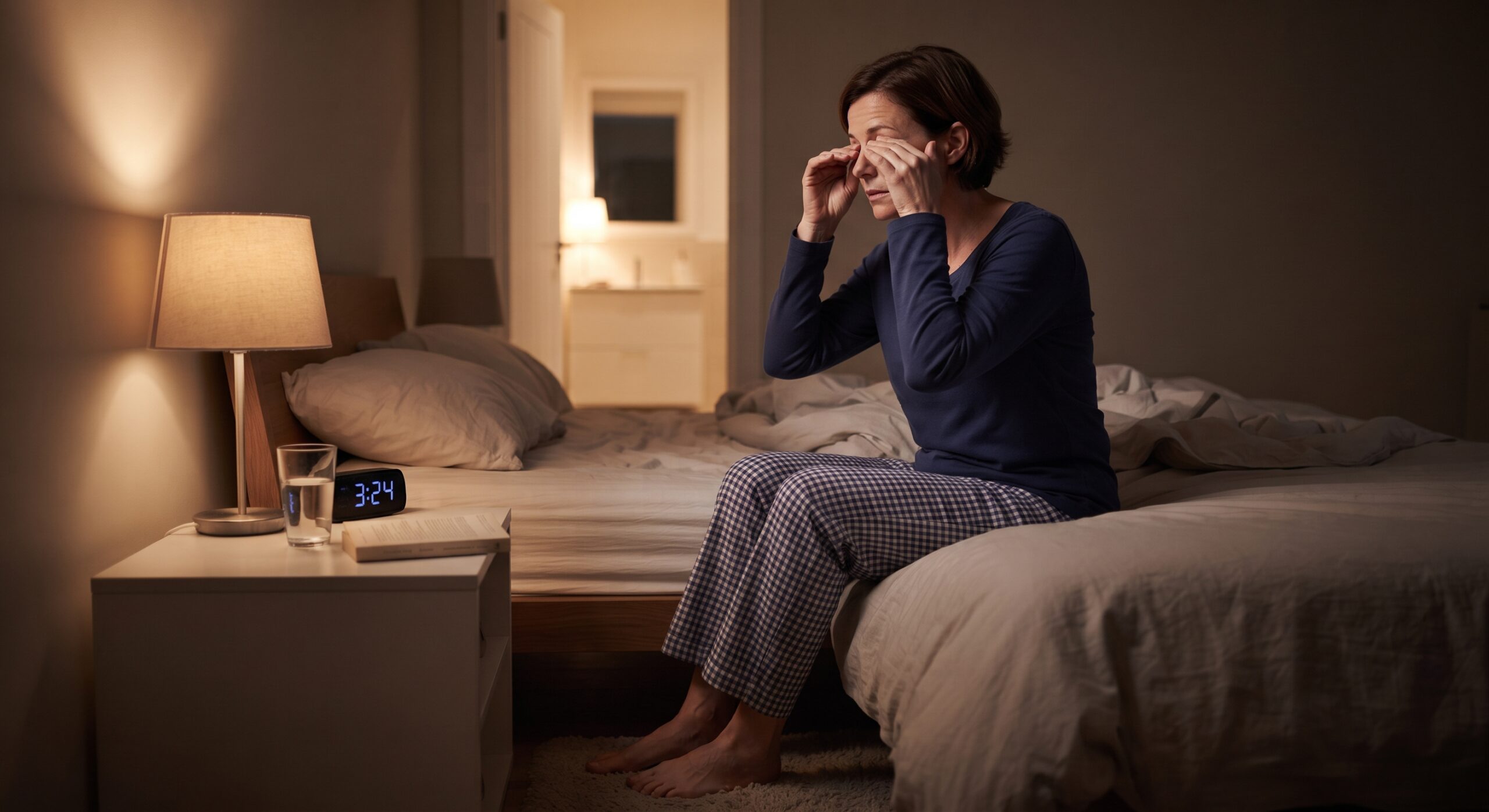
There is a special kind of frustration that comes from waking up at 1:17 a.m., walking to the bathroom half asleep, getting back into bed, and then doing the exact same thing again two hours later.
At first, it is easy to shrug it off. Maybe you drank too much tea. Maybe you had watermelon after dinner. Maybe you are just getting older.
But when frequent urination at night in women over 40 starts happening over and over, it can affect much more than your bladder. It chips away at sleep, energy, mood, patience, workouts, concentration, and the very simple pleasure of waking up feeling rested.
And the annoying part is that “just drink less at night” is not always a complete answer.
Nighttime urination can happen for several different reasons, and figuring out which ones are most relevant to you is usually more useful than trying random fixes.

First, There Is a Name for Waking Up to Pee at Night
The medical term is nocturia.
That sounds more dramatic than it needs to, but the idea is simple: you wake from sleep because you need to urinate.
One occasional nighttime bathroom trip is not automatically a problem. Life happens. You drink more than usual, have a late dinner, or simply wake up and realize you might as well go.
The issue is when it becomes a pattern.
If you are waking multiple times most nights, especially if it is disrupting your sleep or making you anxious about bedtime, it is worth paying attention to rather than writing it off as “just age.”
Why It Often Becomes More Noticeable After 40
There is rarely one single explanation.
For some women, menopause and age-related changes can affect urinary symptoms. For others, pelvic floor changes after pregnancy and childbirth may still be part of the picture years later.
Sometimes the bladder itself feels more urgent. Sometimes the body is simply producing more urine at night. Certain medications can matter. Diabetes can matter. Sleep apnea can matter. Swelling in the legs during the day can matter because fluid may shift back into circulation when you lie down.
And then there are the ordinary things: coffee, alcohol, carbonated drinks, late-night water, salty dinners, constipation, stress, and the habit of using the bathroom “just in case” every time you wake up.
That is why I would not try to solve nighttime urination with one dramatic change.
I would start by figuring out what pattern I actually have.
The Simplest Tool: A Three-Day Bladder Diary
This is not glamorous, but it is surprisingly useful.
For three days, write down:
- what you drink and roughly how much,
- what time you drink it,
- when you use the bathroom,
- how many times you wake up at night,
- whether the urge feels mild or urgent,
- whether you leak on the way to the bathroom,
- and anything unusual that day, like alcohol, heavy exercise, constipation, or a very salty meal.
You are not trying to create perfect medical data. You are looking for patterns.
Maybe you discover that the worst nights happen after two large mugs of tea after dinner. Maybe it is wine. Maybe you are drinking almost all of your daily water after 7 p.m. because you forgot to hydrate earlier.
Maybe there is no obvious pattern at all.
That last possibility is useful too, because it tells you this may deserve a closer look instead of endless self-experimenting.
Drinking Less Is Not the Same as Drinking Smarter
The obvious reaction to nighttime urination is to cut fluids aggressively.
I would be careful with that.
The goal is not to spend the entire day mildly dehydrated just so you can sleep through the night.
A more sensible approach is often to shift more of your fluid intake earlier in the day and ease off closer to bedtime, especially if your current routine is the opposite.
Caffeine and alcohol can also be worth experimenting with because both may affect bladder symptoms or nighttime urine production for some people.
You do not have to swear off coffee forever because you woke up twice last night. But moving that second coffee earlier or skipping a late glass of wine for a week can give you useful information.
What If the Urge Feels Sudden and Intense?
This is where frequent urination and overactive bladder symptoms can overlap.
If the urge feels like it goes from zero to emergency in seconds, you may start developing little habits around it without realizing.
You sleep closest to the bedroom door. You keep the hallway clear. You know exactly which floorboard squeaks. You avoid hotel rooms far from the bathroom. You wear clothes at night that are easy to pull down quickly.
That sounds funny until you realize how much planning is happening around one symptom.
Bladder training and urgency-suppression techniques can help some people. That can include timed bathroom trips, gradually changing the interval between trips, relaxed breathing, and learning how to respond to urgency without immediately panicking and sprinting.
If you also deal with daytime leakage, this earlier Welluna guide may be helpful: Bladder Leakage in Women Over 40: Why It Happens and What You Can Actually Do About It.
Pelvic Floor Strength Still Matters — But It Is Not the Whole Story
Kegels get recommended for almost every female bladder complaint, which can make them sound like a universal solution.
They are not.
Pelvic floor muscle training can be useful, especially when urinary leakage is part of the problem. But waking up to urinate at night can have causes that have very little to do with weak pelvic floor muscles.
So yes, learn proper pelvic floor technique if it is relevant to you. But do not assume that doing fifty hard squeezes before bed automatically fixes nocturia.
If anything, I would rather see someone do a small number of correctly performed exercises consistently than turn pelvic floor training into another exhausting nightly task.
The Sleep Connection Is Bigger Than It Looks
Here is something I find interesting: sometimes the bladder wakes you up, and sometimes you wake up first and then notice your bladder.
Those are not always the same thing.
If your sleep is already light because of stress, hot flashes, snoring, pain, noise, or insomnia, you may become aware of even a moderate urge that you would have slept through on a better night.
That can create a frustrating loop.
You wake up. You pee. You start expecting to wake up. You sleep more lightly. Then you notice the urge sooner.
This is why I would look at nighttime urination as both a bladder issue and a sleep issue.
If there is loud snoring, gasping during sleep, extreme daytime sleepiness, or other signs of possible sleep apnea, that deserves professional attention. A bladder supplement is not a substitute for investigating an underlying sleep disorder.
Do Not Ignore Swollen Ankles at the End of the Day
This is one of those details people do not always connect with nighttime bathroom trips.
If fluid tends to collect in your legs or ankles during the day, lying down can allow some of that fluid to move back into circulation. Your kidneys then process it, which can increase urine production at night.
That does not mean every puffy ankle explains nocturia. But it is another example of why nighttime urination is not always “the bladder being weak.”
If swelling is new, significant, one-sided, painful, or accompanied by shortness of breath, that is something to discuss with a healthcare professional rather than trying to manage it with lifestyle tips alone.
Where a Bladder Wellness Supplement Fits
This is the point where I think expectations matter most.
If you wake up to urinate because of uncontrolled diabetes, sleep apnea, a urinary infection, or another medical condition, a dietary supplement is not addressing the underlying cause.
But if you are already working on hydration timing, pelvic floor habits, bladder training, sleep quality, and other basics, you may still be interested in additional bladder-focused wellness support.
One product I have been looking at in that context is NewEra Protect.
It is marketed as a women’s bladder and pelvic floor wellness supplement. I would not frame it as a cure for nocturia or urinary incontinence. I would frame it as something that may fit alongside a broader bladder-health routine for someone who wants an additional layer of support.

Take a closer look at NewEra Protect →
What I Like About Thinking in Routines Instead of Fixes
The phrase “bladder health routine” sounds less exciting than “one weird trick,” but I trust it more.
A routine can include:
- drinking enough during the day without loading up right before bed,
- watching caffeine and alcohol timing,
- managing constipation,
- working on pelvic floor strength when appropriate,
- using bladder training if urgency is part of the problem,
- improving sleep habits,
- getting evaluated when symptoms suggest something more than a simple lifestyle issue,
- and using optional supplements only if they fit your needs and health situation.
That feels less dramatic, but it is also much more realistic.
A Practical 14-Night Experiment
If I wanted to understand what was going on without overcomplicating my life, I would run a two-week experiment.
Nights 1–3: Track everything without changing much. Just get a baseline.
Nights 4–7: Move more of your fluid intake earlier in the day. Reduce late caffeine and alcohol. Keep dinner normal rather than suddenly changing ten variables at once.
Nights 8–10: Add consistent pelvic floor work if leakage is part of your symptoms. Keep it gentle and technically correct.
Nights 11–14: Look at the sleep side too. Is stress keeping you awake? Are hot flashes waking you first? Are you snoring heavily? Are you reaching for your phone at 2 a.m. and then deciding to use the bathroom because you are already awake?
If you want to explore a targeted wellness supplement during this kind of routine, this is also where something like NewEra Protect could fit.

See NewEra Protect and the current offer →
When Nighttime Urination Deserves Medical Attention
I would not ignore it if it suddenly becomes much worse, especially if there are other symptoms.
Talk with a healthcare professional if you have painful urination, blood in the urine, difficulty emptying your bladder, repeated urinary infections, excessive thirst, unexplained weight changes, significant leg swelling, new severe urgency, or nighttime urination that is seriously disrupting your life.
It is also worth discussing if you are taking a medication that may increase urination, because timing sometimes matters and medication changes should be handled with a clinician rather than improvised at home.
And if you are waking several times every night for weeks or months, you do not need to wait until it becomes unbearable before asking for help.
You Should Not Have to Organize Your Sleep Around the Bathroom
The thing I dislike most about persistent nighttime urination is how quietly it starts changing everyday life.
You become reluctant to drink water after dinner. You choose the hotel bed closest to the bathroom. You worry about staying at someone else’s house. You wake up already tired and tell yourself this is simply what happens after 40.
Sometimes there is a simple habit making things worse. Sometimes there is a bladder issue. Sometimes it is sleep. Sometimes there is a medical reason that deserves attention.
The useful approach is not to assume.
Track the pattern. Adjust the obvious things. Strengthen the basics. Get professional input when the symptoms point beyond lifestyle. And if you want an additional bladder-focused wellness option as part of that routine, review the product carefully rather than expecting it to do the whole job for you.
Learn more about NewEra Protect →
Related Bladder Health Guides
- Bladder Control After Menopause
- Bladder Leakage in Women Over 40
- Sudden Urge to Pee in Women Over 40
Frequently Asked Questions
Why do I keep waking up to pee at night after 40?
There can be several reasons, including fluid timing, caffeine or alcohol, overactive bladder symptoms, menopause-related changes, medications, sleep disorders, diabetes, urinary tract problems, or increased nighttime urine production. The pattern matters.
Is getting up twice a night to urinate normal?
An occasional night like that is not necessarily concerning, but regular nighttime urination that disrupts sleep is worth paying attention to. If it is persistent or getting worse, discuss it with a healthcare professional.
Should I stop drinking water after dinner?
Not necessarily. Severely restricting fluids is not a good long-term strategy. It may be more helpful to drink more earlier in the day and reduce large amounts close to bedtime.
Can pelvic floor exercises reduce nighttime urination?
They may help if bladder control or urgency is part of the problem, but nocturia can have many causes. Pelvic floor exercises are one tool, not a universal solution.
Can menopause cause more frequent urination?
Menopause-related changes can contribute to urinary symptoms in some women, but frequent urination can also have many other causes. Persistent symptoms deserve proper evaluation.
Can NewEra Protect stop nocturia?
I would not present any dietary supplement as a guaranteed treatment for nocturia. NewEra Protect is better viewed as optional bladder and pelvic floor wellness support alongside sensible habits and appropriate medical care.
Where can I read more about NewEra Protect?
You can review NewEra Protect here and decide whether it fits your own wellness routine.
Affiliate Disclosure: This article may contain affiliate links. If you purchase through one of these links, Welluna Journal may receive a commission at no additional cost to you.
This article is for general informational purposes and is not medical advice. Dietary supplements are not a substitute for diagnosis or treatment. Persistent or worsening urinary symptoms should be discussed with a qualified healthcare professional.
Leave a Reply