
The trip sounded wonderful when you booked it. A weekend away. A long drive with your favorite playlist. A flight to visit family. Maybe an overdue vacation where the plan was to do absolutely nothing productive for a few days.
Then your bladder joined the planning committee.
Suddenly you’re wondering how often the car will need to stop, where the airport bathrooms are, whether you should skip your morning coffee, and how to avoid an embarrassing moment while waiting in a long line.
If you’re dealing with bladder control while traveling after 40, those worries are understandable. Urinary urgency, leakage, and frequent bathroom trips can turn something exciting into a project that requires far more planning than it should.
But the answer doesn’t have to be staying home. With a few practical habits, a little advance planning, and the right guidance when symptoms persist, travel can feel manageable again.
Why Long Drives and Flights Can Make Bladder Symptoms Feel Worse
Travel changes your routine in small but important ways. You sit longer than usual. You drink coffee in unfamiliar places. You rush through security. You wait in lines. You may have less control over when you can use the bathroom.
None of that necessarily causes a bladder condition. But it can make an existing pattern more noticeable.
Some people leak when coughing, laughing, lifting a suitcase, or standing after a long stretch of sitting. Others experience sudden urgency: the feeling that the bathroom is needed right now, regardless of whether it’s convenient.
Then there are people who urinate more often than expected, especially after large drinks or caffeine. These experiences can overlap, but they don’t always have the same causes.
Understanding your own pattern is more useful than treating every urinary symptom as one problem.
First, Know the Difference Between Urgency and Leakage
Travel planning becomes easier when you know which issue you’re trying to accommodate.
Stress-related leakage can happen when pressure increases around the bladder—for example during coughing, sneezing, lifting, or some forms of exercise.
Urgency-related leakage is associated with a sudden strong need to urinate that may be difficult to delay.
Some women experience both, and others have frequent urination without actual leakage. Burning, pain, fever, visible blood in urine, or difficulty emptying the bladder are not symptoms to simply cover up with a travel strategy. They deserve medical assessment.
If you’re unsure which pattern sounds familiar, start with our guides on bladder leakage after 40 and sudden urinary urgency.
Don’t Make the Most Common Travel Mistake: Avoiding Water Completely
It’s tempting to think, “If I don’t drink anything, I won’t need the bathroom.” That idea becomes especially appealing before a flight or a drive through an area with few rest stops.
But deliberately becoming dehydrated can make you feel unwell, and concentrated urine may irritate the bladder for some people.
A more practical approach is balance. Drink regularly throughout the day. Avoid gulping huge amounts at once immediately before boarding or setting off. Notice whether a particular drink tends to trigger urgency for you.
You may find that coffee, alcohol, fizzy drinks, or other beverages affect your symptoms. You don’t necessarily need to remove all of them forever. Start by paying attention to your own response.
For many people, choosing water with meals and keeping a refillable bottle handy is simpler than constructing a complicated hydration schedule.
Before a Road Trip, Build Bathroom Stops Into the Route
There is something liberating about knowing you don’t need to negotiate every stop as if you’re causing a major inconvenience.
Before leaving, look at the route. Identify towns, gas stations, or rest areas where stopping is realistic. On a long drive, build in regular breaks rather than waiting until you are desperately uncomfortable.
That doesn’t mean you should urinate every ten minutes “just in case.” Constant preventive bathroom visits can become a habit that makes it harder to understand your normal pattern. A clinician may recommend structured bladder training if urgency is an ongoing issue.
Instead, plan reasonable flexibility. Let the person you’re traveling with know you may want a stop along the way. You don’t have to provide a personal medical history to request a bathroom break.
Also think about access. If walking quickly is difficult or you have mobility concerns, choose stops with convenient facilities rather than only the most scenic exit.
On a Flight, Make Small Choices That Reduce Stress
If air travel tends to make you anxious about your bladder, think through the practical details before you’re standing at the gate.
An aisle seat may make bathroom trips easier than climbing past two people. Using the restroom before boarding can be convenient, and learning the airplane’s bathroom location may reduce uncertainty.
Airport security and boarding can create periods when bathroom access is limited, so leave extra time and avoid getting stuck in a last-minute sprint.
If you use absorbent protection, pack enough in your carry-on for delays. Keep a spare pair of underwear in a small pouch. The point isn’t expecting disaster. It’s reducing the mental energy spent worrying about something that may never happen.
And be realistic about turbulence: sometimes the restroom isn’t available immediately. If you’re dealing with urgency that is severe enough to make travel difficult, that is a good reason to ask a healthcare professional about treatment options before your trip.
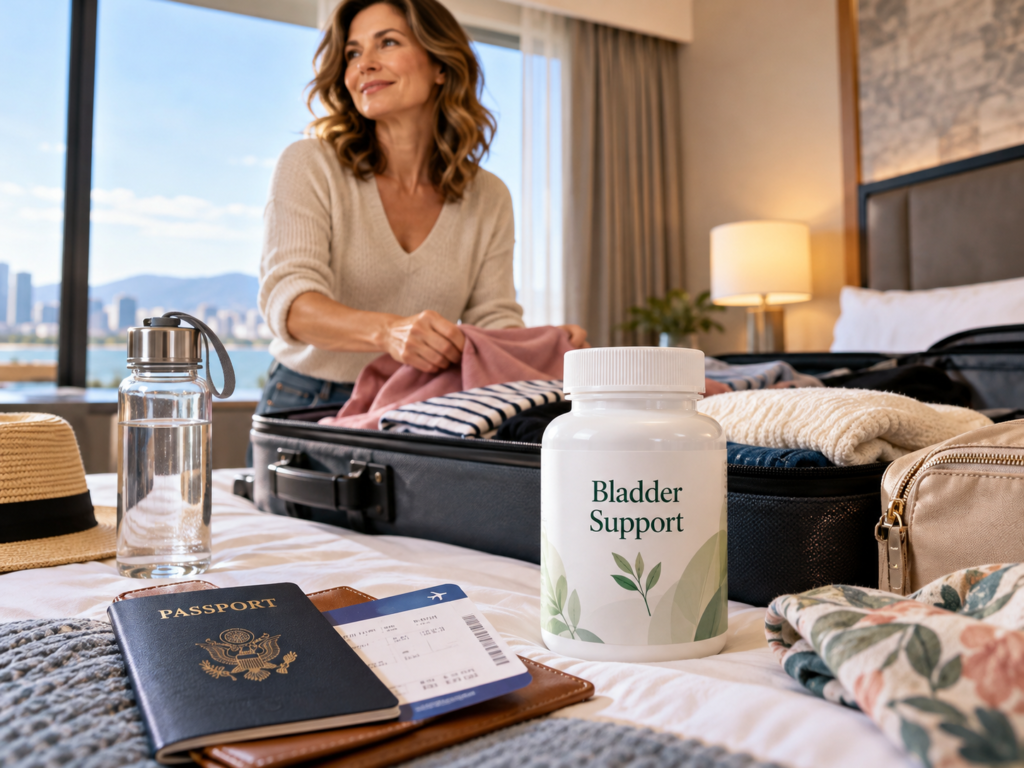
What to Pack for More Confidence
You do not need to build a medical supply store in your handbag. A small, discreet kit is usually enough.
- One spare pair of underwear, or more for a longer trip.
- Absorbent pads or other protection if you use them.
- A small sealable bag for wet or soiled items.
- Tissues or wipes appropriate for your skin.
- Your regular medications and an accessible list of what you take.
- A refillable water bottle and comfortable clothes.
If you’re choosing pads, make sure they are designed for urinary leakage rather than assuming menstrual products absorb the same way. Find a fit that feels comfortable before a trip rather than experimenting for the first time on a six-hour flight.
A little preparation can make travel feel less like a test and more like an ordinary part of life.
Pelvic Floor Support Is More Than Squeezing as Hard as You Can
The pelvic floor helps support the bladder and other pelvic organs. Pelvic floor muscle training can help many women with certain kinds of urinary leakage, but technique matters.
The goal is to contract the appropriate muscles and then relax them fully. Tensing your thighs, buttocks, and abdomen instead may not produce the result you think you’re practicing.
It is also important to know that not everybody benefits from doing more Kegels. Some people have pelvic floor muscles that are overly tense or painful, and a generic strengthening routine may not be appropriate. A pelvic floor physical therapist can help identify which approach fits your body.
The National Institute of Diabetes and Digestive and Kidney Diseases explains that pelvic floor training may take several weeks to show improvement and recommends seeking professional help if you’re unsure about technique.
If you have a trip coming up in two days, this isn’t a promise that a few exercises will suddenly eliminate symptoms. Think of pelvic floor care as part of a longer-term plan.
How Bladder Training Can Fit Into Everyday Life
If urgency is the main issue, structured bladder training is sometimes recommended. This usually involves recording your pattern and gradually working toward more predictable bathroom intervals with professional guidance.
It is not about forcing yourself to hold urine while in pain or waiting until you are desperate. It is about understanding how your bladder behaves and using an appropriate plan.
Before a trip, a short bladder diary can be useful: note when you drink, when you use the restroom, whether there was strong urgency, and any leakage episodes.
If you discover that certain beverages or situations repeatedly precede symptoms, you’ll have something specific to discuss with a clinician instead of a vague feeling that your bladder is always unpredictable.
How NewEra Protect Can Fit Into a Bladder Wellness Routine
When you’re already using smart travel habits—planning bathroom breaks, staying comfortably hydrated, and supporting your pelvic floor—it can make sense to add another layer of support to your routine.
NewEra Protect is a dietary supplement created for women’s bladder and pelvic-floor wellness. For women who want something simple to add to an existing routine, it may be worth considering alongside the practical habits covered in this guide.
I like the idea of treating a product like this as part of a broader wellness strategy rather than expecting one single step to do everything. The travel planning, daily habits, and supportive products can all work together to make the routine feel more complete and easier to maintain.
If that sounds like the kind of extra support you’re looking for, you can take a closer look at NewEra Protect here and review the current product details.
Before adding any supplement, it’s still sensible to check the ingredient list and directions, especially if you take medication, are pregnant or nursing, or have an existing medical condition.

How to Add NewEra Protect to Your Routine Before a Trip
If you’re considering a bladder wellness supplement before traveling, it’s better to make it part of your normal routine rather than treating it like a last-minute travel fix.
That gives you time to read the label, follow the directions, and see how it fits alongside the habits you’re already using—hydration, bathroom planning, comfortable clothing, and pelvic floor support.
For women who prefer to prepare ahead, this can make the whole routine feel more intentional and less reactive.
You can review the ingredients, directions, and current product information on the official NewEra Protect page here and decide whether it fits the kind of support you want to add to your travel routine.
Travel Clothes Can Be Part of Your Comfort Plan
Let’s talk about the practical details that often get ignored in medical-style articles.
If you’re anxious about an accident, a comfortable outfit can make a difference. Pants that are easy to manage in a small airplane bathroom may be more useful than a complicated jumpsuit. A light layer that you can tie around your waist might give you a sense of backup. A discreet pouch can keep supplies close instead of buried beneath everything else in your luggage.
Choose what feels like you. Having bladder symptoms doesn’t mean you need a whole new wardrobe or that darker clothes are the only option. The goal is to make the trip more comfortable, not to spend it feeling self-conscious about every outfit.
What to Do When Urgency Hits in an Awkward Moment
You’re in a boarding line, the seat-belt sign is on, or the next highway exit is farther away than you expected. Panic can make the situation feel more intense.
Try to stop rushing if it’s safe to do so. Take a few slow breaths and identify the nearest realistic bathroom option. Some clinicians teach specific urgency-suppression techniques, which may include brief pelvic floor contractions for appropriate patients.
But there is no single internet trick that works for every cause of urgency. If you repeatedly find yourself unable to delay urination or are having accidents, it’s time for personalized advice rather than relying only on an emergency coping technique.
A Simple Travel-Day Plan You Can Actually Use
Here’s how I would organize a trip without turning it into a medical mission.
The evening before
Pack essential supplies and regular medications. Check your route or airport information. Get reasonably prepared so your morning doesn’t start in a panic.
Before leaving home
Eat normally, drink sensibly, and use the restroom as needed. Avoid the temptation to dehydrate yourself. Wear comfortable clothing and put supplies somewhere accessible.
During the trip
Take ordinary breaks when practical. Stay aware of personal beverage triggers without imposing unnecessary restrictions. If you are flying, use opportunities for bathroom access rather than waiting until the last possible moment.
After arriving
Settle back into a routine. Notice whether travel actually made symptoms worse or whether anticipating symptoms was the biggest source of stress. Both experiences deserve attention, but they may call for different responses.
When Travel Concerns Mean It’s Time to See a Professional
If bladder symptoms have reached the point where you’re avoiding flights, skipping road trips, declining invitations, or constantly checking bathroom locations, a medical evaluation can be worthwhile.
Urinary symptoms can have different causes, and some have specific treatments. A primary care clinician, urogynecologist, or pelvic floor physical therapist may help depending on your symptoms and medical history.
Seek prompt medical advice for symptoms such as painful urination, fever, blood in urine, difficulty emptying the bladder, or a sudden unexplained change. Those symptoms deserve proper evaluation rather than self-care alone.
For women experiencing nighttime trips to the bathroom as well, our guide to frequent urination at night after 40 explores other common contributors worth discussing.
Confidence Doesn’t Mean Never Having a Symptom
It’s easy to tell yourself that you’ll feel confident again when you never have to think about your bladder. But in real life, confidence can also mean knowing what helps you, planning for the occasional inconvenience, and understanding that needing an extra bathroom stop isn’t a personal failure.
You are allowed to enjoy a vacation, a road trip, or a family visit while managing a health issue. You don’t need to pretend the problem doesn’t exist, and you don’t need to build your whole life around it.
Start with the practical foundations. Ask for help if symptoms are interfering with daily life. And if you’re considering a supportive product as part of a broader wellness routine, take a closer look at NewEra Protect here after reviewing whether it’s appropriate for you.
The trip deserves to be about where you’re going, not only where the next restroom is.
Frequently Asked Questions
How can I manage frequent urination on a long flight?
Plan bathroom access, consider an aisle seat, drink fluids sensibly, and pack any regular protection you use. Persistent or severe urgency should be assessed by a clinician for individualized options.
Should I stop drinking water before a road trip?
Generally, deliberately dehydrating yourself isn’t a good solution. Spread fluids throughout the day and discuss specific fluid strategies with your clinician if you have a medical condition that affects hydration.
Can caffeine increase urinary urgency?
For some people, caffeine can make urgency or bladder symptoms more noticeable. Track your response rather than assuming every person must avoid it entirely.
Can pelvic floor exercises help with leakage while traveling?
Pelvic floor muscle training can help certain types of urinary leakage over time, but technique and the type of pelvic floor problem matter. A qualified clinician or therapist can help guide treatment.
Can a bladder wellness supplement fit into a travel routine?
Yes. Some women like adding a bladder wellness supplement to a broader routine that already includes hydration, planned bathroom breaks, pelvic floor support, and other practical habits. It should be viewed as a supportive addition rather than the only strategy.
What should I pack for bladder leakage on vacation?
Consider discreet absorbent protection, spare underwear, a sealable bag, supplies suitable for your skin, and your usual medications. Choose what helps you feel prepared without overpacking.
When should I see a doctor for bladder symptoms?
Seek medical advice if symptoms persist, worsen, disrupt daily life, or occur with pain, fever, blood in urine, or difficulty emptying the bladder.
Related Welluna Journal Guides
- Bladder Leakage in Women Over 40
- Bladder Control After Menopause
- Sudden Urge to Pee in Women Over 40
For more information about established treatment options, see the NIDDK guide to bladder control treatment.
Affiliate Disclosure: This article may contain affiliate links. If you purchase through one of these links, Welluna Journal may receive a commission at no additional cost to you.
This article is for general informational purposes and is not medical advice. If urinary symptoms are persistent, worsening, or concerning, speak with a qualified healthcare professional.