
You can lose weight without doing formal exercise. That statement sounds almost rebellious in a culture where weight loss is often packaged as boot camps, sweaty challenges, and “no days off” motivation. But body weight is not controlled by gym attendance alone.
If your energy intake stays lower than the energy your body uses over time, weight can decrease even if you never step on a treadmill. That does not make movement unimportant. Regular physical activity supports heart health, sleep, mood, muscle, mobility, and long-term weight maintenance. It simply means that you do not need to build your entire weight-loss plan around workouts.
For many people, the bigger levers are much less dramatic: meals that keep hunger manageable, fewer calories that disappear unnoticed in drinks and snacks, better sleep, less chaotic eating, and a routine that can survive a normal Tuesday.
Can you really lose weight without exercise?
Yes. Weight loss can happen without a formal exercise program when calorie intake is lower than calorie use over time. NIDDK notes that reducing calories from foods and beverages is central to weight loss, while physical activity is especially useful for health and helping maintain lost weight.
The word exercise is also worth separating from movement. You might not go to a gym, run, or follow workout videos, but you still walk through stores, stand at work, carry groceries, clean the house, climb stairs, cook, garden, and move through daily life. All of that contributes to energy use.
So “weight loss without exercise” does not have to mean becoming completely sedentary. It can simply mean that the food-and-routine side of the equation does most of the weight-loss work while movement supports your health in ways that go far beyond the scale.
Start with the part that usually breaks first: hunger
A plan that leaves you hungry all day usually becomes harder to follow, regardless of how perfect it looks on paper. The goal is not to prove how little you can eat. It is to make a moderate calorie reduction feel ordinary enough that you do not spend every evening fighting the refrigerator.
One useful way to build meals is to combine several types of food rather than relying on one “diet” ingredient:
- A meaningful protein source such as eggs, Greek yogurt, cottage cheese, fish, chicken, tofu, beans, or lentils.
- Fiber-rich foods such as vegetables, fruit, beans, oats, and whole grains.
- Enough carbohydrate and fat to make the meal satisfying rather than building a plate that looks virtuous but leaves you searching for snacks an hour later.
- Flavor you actually enjoy. A meal does not become healthier because it tastes like punishment.
That structure is flexible. Breakfast could be yogurt, oats, berries, and nuts. Lunch could be beans, rice, vegetables, salsa, and avocado. Dinner could be fish, potatoes, and a large salad. There is no single “fat-loss menu” everyone needs to follow.
Food volume can make a calorie deficit feel less obvious
Two meals can contain a similar number of calories and feel very different in size. Foods with more water and fiber—vegetables, fruit, legumes, soups, and many minimally processed meals—can provide more physical volume for the same or fewer calories than small portions of energy-dense foods.
This is not a rule that every meal must be huge. It is simply a useful tool when hunger is the reason previous weight-loss attempts failed.
Instead of making a sandwich smaller, you might add a bowl of vegetable soup or fruit beside it. Instead of cutting a pasta portion until dinner feels depressing, you might add vegetables and protein so the plate still looks and feels like a full meal.

Watch the calories that do not feel like food
Some of the easiest calories to reduce are the ones that barely register as eating. Sweetened coffee drinks, soda, juice, frequent alcohol, sauces, grazing while cooking, and handfuls from large snack bags can add energy without creating the same sense of a proper meal.
You do not need to ban any of these. The useful question is whether they are worth the calories to you.
If you love a sweet coffee every morning, keep it and make a different adjustment. If you barely notice the second soda with lunch, that may be an easier place to change. Weight management becomes more sustainable when you protect the foods you genuinely enjoy and trim the habits that are mostly automatic.
Evening snacking is often a daytime problem in disguise
It is easy to blame nighttime eating on willpower. But sometimes the evening snack starts at noon: lunch was too small, the afternoon was stressful, dinner happened late, and the kitchen finally becomes the first quiet moment of the day.
Before trying to “stop snacking,” look at what happened earlier. Did you eat enough at lunch? Was there a long gap between meals? Did you arrive home ravenous? Was the snack genuine hunger, comfort, boredom, or simply a transition out of work mode?
Our guide to evening snacking after a long day goes deeper into this pattern. The point is not to eliminate snacks. It is to make them intentional instead of discovering at 10 p.m. that you spent the evening eating around the meal you actually needed.
Sleep can make appetite management easier—or much harder
Weight loss discussions often treat sleep as a side note. In real life, a short night can change the whole next day. You wake tired, reach for more caffeine, want highly rewarding food, have less patience for meal prep, and move less because everything feels harder.
CDC includes adequate sleep and stress management alongside healthy eating and physical activity as part of healthy weight management. That does not mean sleeping more automatically causes fat loss. It means sleep affects the environment in which your food decisions happen.
If you regularly stay up even though you are exhausted, our article on revenge bedtime procrastination is worth reading. Sometimes the most useful “weight-loss habit” is simply making tomorrow easier.
You do not need a workout plan—but daily movement is still valuable
Exercise is not a punishment for eating, and you do not need to calculate how many minutes of walking “erase” a dessert. Physical activity has important benefits even when the scale barely changes.
If formal workouts are not appealing right now, start with movement that fits your day: walk during a phone call, take a ten-minute stroll after lunch, park farther away, use stairs when practical, or do a few minutes of mobility between work blocks.
Our 10,000 steps guide explains why there is nothing magical about one step number, and our walking for weight loss article looks at how walking fits into a broader plan.
The gut-health angle: useful, interesting, and easy to oversell
Gut health has become part of almost every modern weight-loss conversation. The microbiome is genuinely involved in digestion and energy extraction from food, so researchers have naturally asked whether probiotics, prebiotics, or synbiotics could influence body weight.
So far, the human evidence is mixed. NIH notes that some studies of probiotics show small reductions in body weight or body fat, while others show no effect or even different outcomes depending on the strains, dose, and people being studied.
That means a gut-focused supplement should not be treated like a fat-loss drug. Its more sensible role is as an optional part of a routine built around digestion, food quality, appetite awareness, and metabolic wellness.
Where SodaTide fits into a weight-loss-without-exercise routine
If you are interested in the gut-health side of appetite and metabolic wellness, SodaTide is an interesting product because it takes a very different approach from stimulant-heavy “fat burners.”
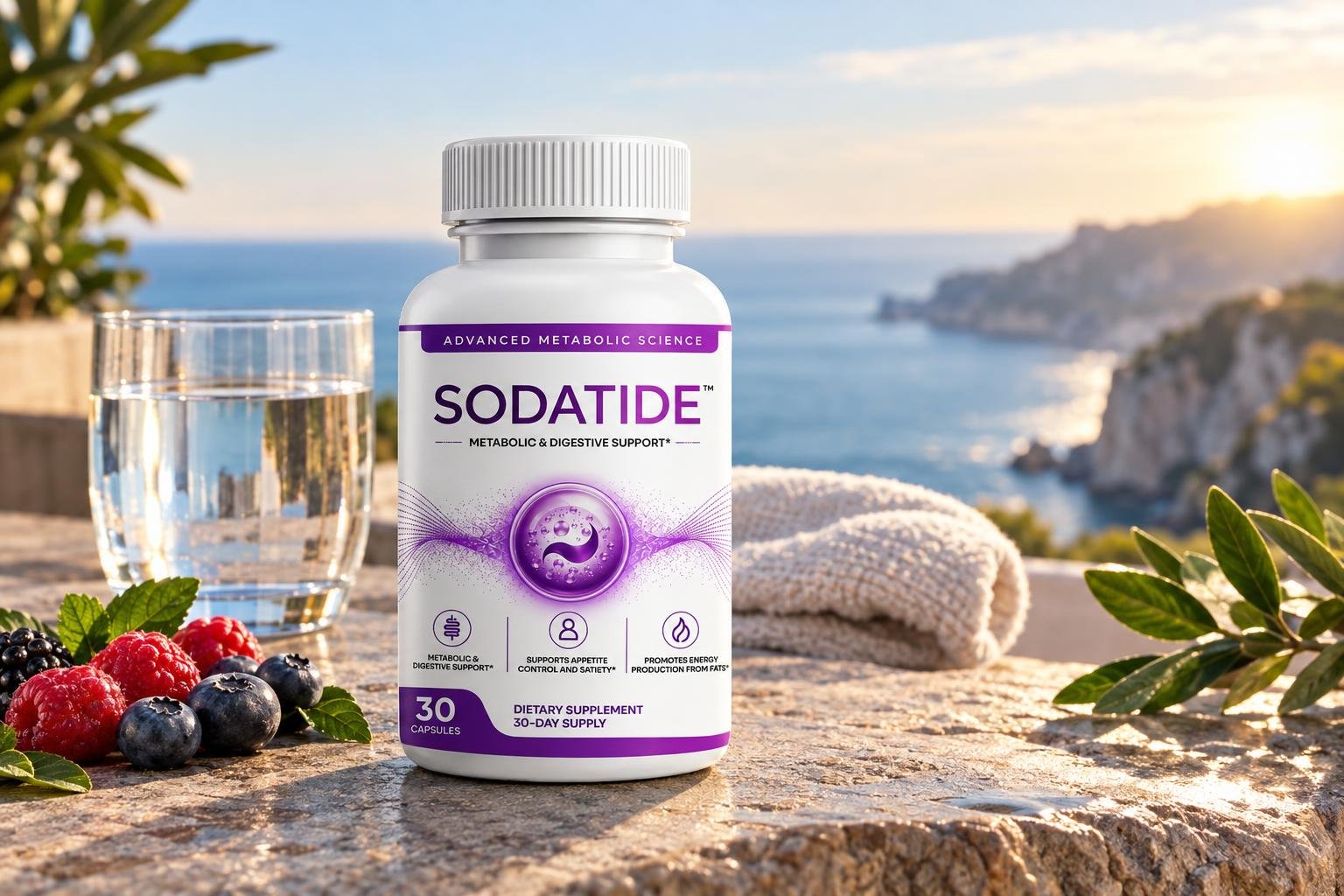
SodaTide is a once-daily synbiotic-style supplement built around two prebiotic fibers plus a probiotic blend. The current label information shown by an authorized U.S. seller lists:
| Ingredient | Amount per capsule |
|---|---|
| Chicory root inulin | 211 mg |
| Potato resistant starch | 100 mg |
| Probiotic blend | 36 mg |
The probiotic blend is listed as containing Bifidobacterium infantis, Clostridium butyricum, and Akkermansia muciniphila. The current label gives the blend by weight rather than publishing a CFU count.
What makes SodaTide appealing is the simplicity of the concept. There is no caffeine or stimulant listed. Instead of trying to make you “feel” a supplement through stimulation, the formula is built around prebiotic fibers and probiotic species associated with the gut environment.
It is also a straightforward routine: one capsule daily with water, with 30 capsules per bottle. The seller advises refrigeration for optimal probiotic quality. For someone who dislikes powders, complicated stacks, or multiple doses throughout the day, that simplicity is a real practical advantage.
If a once-daily, gut-focused formula fits the kind of support you are looking for, see the current SodaTide offer and product details here.
Why the prebiotic-plus-probiotic approach is interesting
A prebiotic is essentially food that certain gut microorganisms can use. A probiotic provides microorganisms themselves. Putting both ideas into one formula is often described as a synbiotic approach.
SodaTide combines inulin and resistant starch with a three-species probiotic blend, so the product has a clear identity rather than trying to be a twenty-ingredient “everything” capsule.
The fiber amounts in one capsule are not meant to replace the fiber in food. That is actually the healthiest way to think about the product: keep vegetables, fruit, beans, oats, nuts, seeds, and whole grains doing the heavy lifting, and treat the supplement as an optional addition to that routine.
Why no-stimulant positioning can matter
Many products in the weight-management category are built around caffeine or other ingredients designed to create an obvious energy sensation. That can appeal to some shoppers, but it is not ideal for everyone—especially if sleep is already fragile or you already drink plenty of coffee.
SodaTide’s current ingredient list does not include caffeine or a thermogenic stimulant. For readers who specifically want to avoid another stimulant-based product, that gives it a clear point of difference.
What I would look at before buying
Check the current label, serving directions, storage instructions, package size, price, shipping terms, and refund terms. If probiotics often make you feel gassy or bloated at first, that is also worth keeping in mind.
If you have a weakened immune system, a serious medical condition, are pregnant, or take medication that makes supplement choices more complicated, ask an appropriate healthcare professional before adding a probiotic product.
If the simple one-capsule format and gut-focused formula sound like a good match for your routine, take a closer look at SodaTide and the current package options here.
Do not let “without exercise” turn into “without muscle”
There is one downside to focusing only on the scale: weight loss can include both fat and lean tissue. Even if you do not want traditional workouts, preserving muscle deserves attention.
Protein intake helps support muscle, and some form of resistance activity can be useful even when it is very simple. That might mean bodyweight sit-to-stands, resistance bands, carrying groceries, gardening, or a short strength routine at home rather than a gym membership.
The point is not that you must exercise to “earn” weight loss. It is that your goal should ideally include feeling capable and functioning well, not simply making the number on the scale smaller.
A realistic weight-loss day without a workout
A successful day does not need to look like a fitness influencer’s schedule.
Breakfast might be yogurt, oats, fruit, and nuts. Lunch could be a protein-and-vegetable bowl or a sandwich with fruit. You take a short walk during a phone call because it clears your head, not because a watch told you to burn a certain number of calories. Dinner is satisfying enough that you do not spend the evening searching the pantry.
If SodaTide is part of your chosen routine, you take the capsule according to the current directions with water and move on with your day. The supplement does not become the project. The routine does.
What to track besides the scale
Body weight changes from day to day because of fluid, sodium, carbohydrate intake, digestion, hormones, and many other factors. One number can create a lot of emotional noise.
Useful things to watch include:
- How often you arrive at meals overly hungry.
- Whether your meals are becoming easier to repeat.
- How often evening snacking feels automatic.
- Sleep quality and daytime energy.
- How your clothes fit over time.
- Your longer-term weight trend rather than one morning’s number.
- Whether the routine feels sustainable three weeks later, not just exciting on day three.
CDC notes that gradual, steady weight loss tends to be easier to maintain than rapid loss. That is less exciting than a dramatic before-and-after promise, but it is much more useful for real life.
When weight loss without exercise may need a different plan
Generic advice has limits. Medications, thyroid conditions, menopause, sleep disorders, diabetes, depression, chronic pain, and other health issues can all change the weight-management picture.
If your weight is changing unexpectedly, hunger feels extreme, or a reasonable routine produces no progress over time, individualized care may be more useful than making the diet stricter.
And if you have a history of an eating disorder, weight-loss advice centered on restriction or tracking may not be appropriate. Health is broader than a target weight.
Frequently asked questions
Can you lose weight without working out?
Yes. Weight loss can occur without formal workouts when calorie intake remains below calorie expenditure over time. Physical activity is still valuable for overall health and for helping maintain weight loss.
What is the easiest place to start?
For many people, improving meal structure is easier than starting a demanding exercise plan. Build meals around satisfying protein, fiber-rich foods, and portions you can repeat consistently.
Do probiotics help with weight loss?
Research is mixed. Some studies show small changes in body weight or body fat with certain probiotic strains, while others show no meaningful effect. The outcome depends on the specific organisms, dose, duration, and person.
Is SodaTide a fat burner?
SodaTide is better understood as a gut-focused metabolic and digestive wellness supplement. Its current formula is built around prebiotic fibers and a probiotic blend rather than caffeine or stimulant ingredients.
How do you take SodaTide?
The current label information describes one capsule daily with an 8 oz. glass of water. Always follow the directions on the product you actually receive because labels can change.
Can I lose weight just by walking?
Walking can increase energy use and offers many health benefits, but weight loss still depends on the overall balance between calorie intake and expenditure. It works best as part of a broader routine rather than as a way to compensate for food.
The bottom line
Weight loss without exercise is possible, but the best version of that idea is not “do nothing and take a pill.” It is recognizing that food structure, appetite, sleep, stress, and everyday habits often have a larger influence on weight loss than one intense workout.
You do not need to love the gym to make progress. Build meals that keep you satisfied, reduce the calories you barely notice, protect sleep, move in ways that fit your life, and judge progress over weeks rather than days.
If gut health and appetite support are part of what you want to explore, SodaTide offers a simple once-daily, non-stimulant formula built around prebiotic fibers and probiotics. That makes it an interesting optional addition to a sensible routine—not a replacement for the routine itself.
Further reading
- CDC: Steps for Losing Weight
- NIDDK: Eating & Physical Activity to Lose or Maintain Weight
- NIH Office of Dietary Supplements: Probiotics Fact Sheet for Consumers
- NIH Office of Dietary Supplements: Probiotics Fact Sheet for Health Professionals
Affiliate disclosure: This article contains affiliate links. If you purchase through them, Welluna Journal may earn a commission at no additional cost to you. This content is for general education and is not personal medical advice.