
The most useful lunch is often the one that still exists on Thursday. Monday’s carefully packed salad is easy; Thursday is when meetings run long, the refrigerator looks random, and you need something that can survive in a tote bag for part of the day.
High-fiber lunch ideas for busy women work better as combinations than as recipes. A grain or starchy base, a protein, vegetables or fruit, and a flavorful extra can create dozens of meals without turning Sunday into a meal-prep shift. Fiber also works best when you increase it gradually and drink enough fluid, especially if your usual intake has been low.
The lunch that made it to Thursday
There is a big difference between a lunch that looks gorgeous on Sunday and one that still tastes good after a rushed Thursday morning. A delicate salad can arrive soggy; a jar of beans, rice, crunchy vegetables, and dressing packed separately may survive the same commute beautifully. Real meal planning includes the bag, the refrigerator, the reheating situation, and whether you actually like the food after it has sat for four hours.
Try making two flexible components rather than five identical lunches: one grain or starch, one bean or lentil mixture, and a selection of vegetables. Change the sauce, add a familiar protein when wanted, and keep a backup lunch that does not require perfect preparation. Fiber is useful, but increasing it too quickly can be uncomfortable. Give your digestion time, drink according to your needs, and remember that a practical meal you enjoy is more sustainable than a technically perfect bowl.
Use a simple lunch formula instead of recipes
Think in parts: a fiber-containing base, a protein source, produce, and something that makes the meal enjoyable. Brown rice with lentils and roasted vegetables is one version; a bean-and-cheese wrap with lettuce is another. A leftover vegetable soup with whole-grain bread works too.
You can assemble these from prepared ingredients without pretending you enjoy batch cooking every Sunday. If a store-bought salad kit helps you eat lunch, use it. The formula should reduce decision fatigue, not introduce a new standard of domestic perfection.
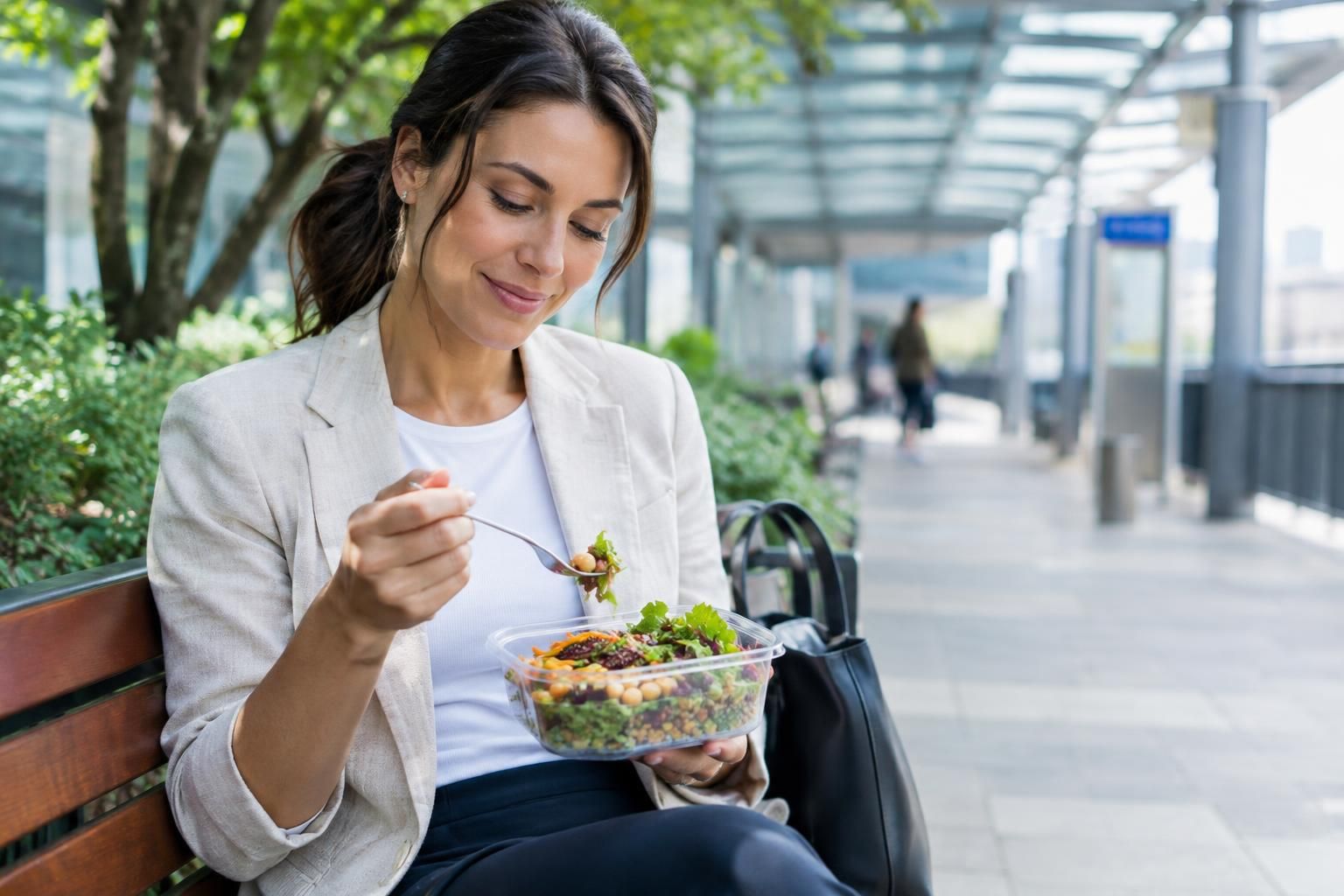
Choose a few foods that store and travel well
Canned beans, frozen vegetables, oats, whole-grain wraps, and sturdy fruit are useful staples. A microwave at work expands your options, but cold lunches can be satisfying too: chickpea salad, hummus with vegetables and crackers, or a grain bowl packed in a safe container.
Follow food-safety guidance for temperature-sensitive items. A lunch that spends hours in a hot car is not a good plan, regardless of the ingredients. An insulated bag or workplace refrigerator can make the routine easier.
Increase fiber at a comfortable pace
If you are not used to many beans or whole grains, adding a large amount overnight may cause uncomfortable digestive changes. Make gradual adjustments and drink fluids according to your needs. Individual digestive conditions sometimes require personalized advice.
The point is not to hit an impressive number in an app. It is to build a varied pattern of foods you enjoy. If hunger and cravings feel unusually different during perimenopause, our article on sugar cravings in perimenopause explores that specific life stage without blaming appetite on willpower.
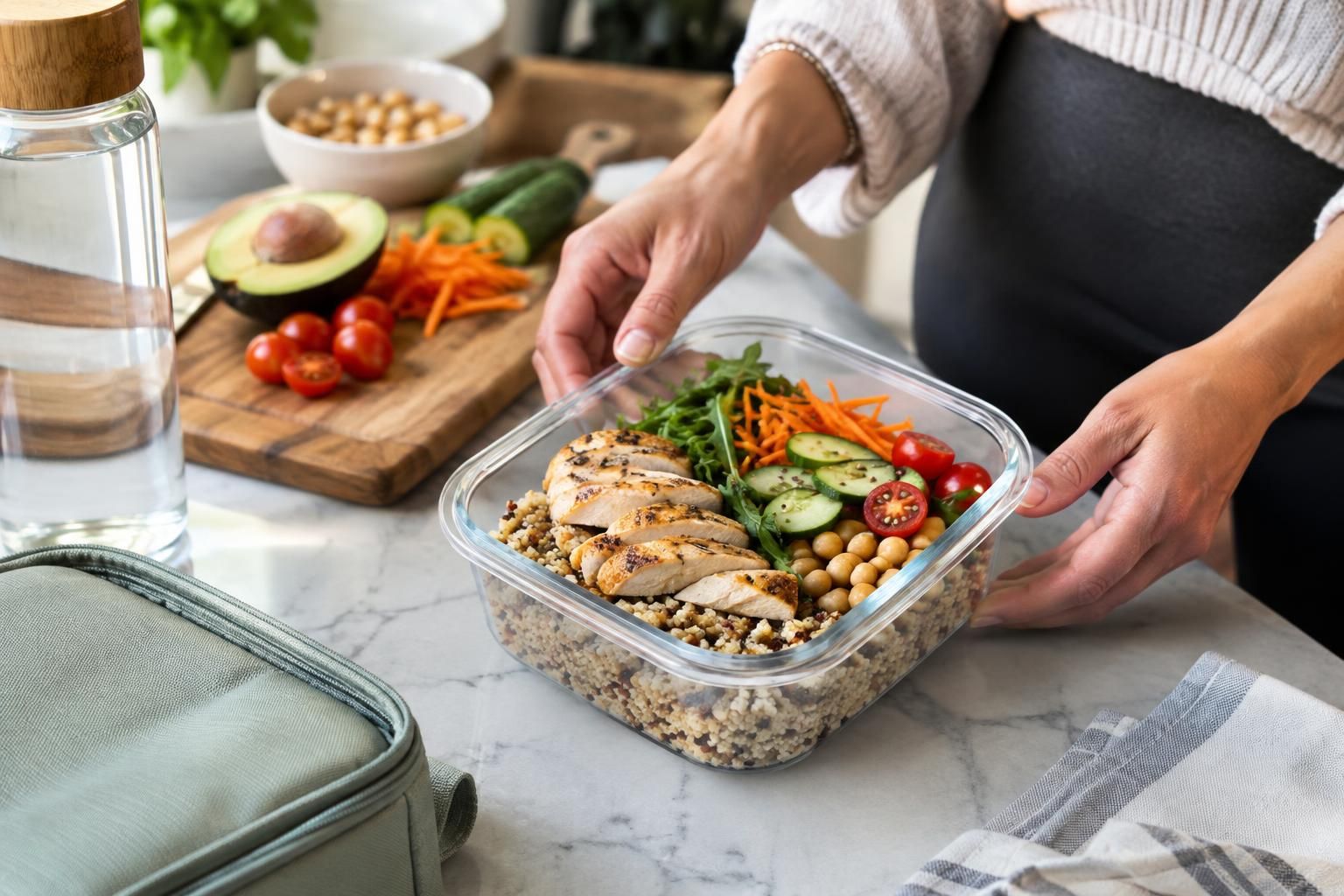
Make the meal satisfying enough to matter
A lunch that looks virtuous but leaves you hungry an hour later is not doing much for your schedule. Include enough food, and combine fiber-rich ingredients with a protein source and satisfying flavors. Lemon dressing, olive oil, herbs, or a favorite sauce can help.
Our article on weight changes in perimenopause discusses how complicated health goals can become during midlife. You do not need to adopt a restrictive diet to build a useful lunch. Consistency and adequacy deserve more attention than food rules.
12 high-fiber lunch ideas for busy women
You do not need twelve different recipes in rotation. Pick two or three that suit your workday, then borrow an ingredient or two from the others when you want variety. These high-fiber lunch ideas for busy women rely on beans, lentils, vegetables, fruit, and whole grains—foods that are easy to find in ordinary grocery stores. Exact fiber amounts vary by brand and portion, so check labels if you are tracking a particular goal.
1. Chickpea and crunchy-vegetable pita
Mash canned chickpeas with a little olive oil, lemon juice, salt, and black pepper. Tuck the mixture into a whole-wheat pita with shredded carrots, cucumber, and lettuce. The chickpeas and whole-wheat bread add fiber, while the vegetables give the sandwich a fresh crunch. If you love creamy fillings, add a spoonful of plain yogurt or tahini. Pack the pita and filling separately when you need it to stay crisp until lunchtime.
Make it easier: Rinse and drain two cans of chickpeas at once. Keep half for a grain bowl tomorrow. You can change the flavor with dill, smoked paprika, or a little mustard instead of making an entirely new lunch.
2. Lentil and brown-rice lunch bowl
Combine cooked lentils, brown rice, roasted peppers, and a handful of greens. Dress with lemon, olive oil, and herbs. This is one of those meals that tastes just as reasonable cold as it does warm, which makes it useful when the office microwave has a line. Add a boiled egg, tofu, or leftover chicken if you want more protein. Lentils are the main fiber-rich ingredient; brown rice and vegetables contribute more.
Pack it smart: Let cooked components cool promptly, refrigerate them, and pack with an ice pack when a workplace refrigerator is unavailable. A small separate container for dressing keeps the greens from turning soggy.
3. Black-bean and avocado tortilla wrap
Spread mashed black beans over a whole-grain tortilla. Add avocado, corn, shredded cabbage, and a squeeze of lime. Roll it tightly in parchment or foil so it is easy to hold during a short lunch break. The beans, tortilla, and vegetables work together instead of placing all the nutritional pressure on a single ingredient. If avocado tends to brown before lunch, squeeze on extra lime or pack it separately.
Easy swap: Use pinto beans, leftover roasted sweet potatoes, or sliced bell pepper. A spoonful of salsa can turn the same ingredients into a different-tasting lunch without another grocery trip.
4. Vegetable and white-bean soup
Stir canned white beans into a basic vegetable soup with carrots, tomatoes, onion, and greens. Serve with a slice of whole-grain bread. You can make this from leftovers or a lower-sodium store-bought soup and add beans for substance. It is especially helpful on cool days when a cold salad sounds unappealing. A thermos designed for hot food is useful if you cannot reheat it at work.
Make ahead: Prepare a larger pot, portion it into shallow containers, and refrigerate or freeze promptly. Reheat leftovers until steaming hot. Do not assume a regular tote bag will keep soup at a safe temperature all morning.
5. Hummus, roasted-vegetable, and quinoa box
Build a lunch box with cooked quinoa, a few spoonfuls of hummus, roasted zucchini or carrots, cucumber slices, and an orange. You get contrasting textures without assembling a formal recipe. Quinoa, vegetables, and chickpea-based hummus provide fiber, while the fruit makes a simple finish to the meal. This works particularly well for people who prefer grazing on separate components instead of eating one large bowl.
Time saver: Buy precooked grains or use leftover roasted vegetables from dinner. Put hummus in a leakproof cup rather than directly beside the bread or crackers.
6. Tuna and white-bean salad on whole-grain toast
Mix canned tuna with rinsed white beans, diced celery, lemon, and a little olive oil or yogurt. Eat it over whole-grain bread or alongside whole-grain crackers. Tuna supplies protein but does not supply fiber; the beans, bread, and vegetables do that job. If you do not eat fish, use chickpeas with a little extra mustard and lemon for a similar texture.
Travel note: Keep this lunch chilled. For a no-fridge day, choose a shelf-stable unopened tuna pouch and separate unopened ingredients, then assemble when you are ready to eat.
7. Sweet-potato and black-bean bowl
Microwave or roast a sweet potato, then top it with black beans, tomatoes, plain yogurt, and cilantro. Add a handful of leafy greens or leftover corn. The sweet potato is filling, the beans bring extra fiber, and the toppings make it feel like a meal rather than a plain baked potato. Roast several sweet potatoes with dinner and refrigerate extras for a fast workday lunch.
Cold-lunch option: Dice the cooked potato and toss it with beans and lime dressing. Keep yogurt chilled and separate until serving.
8. Mediterranean farro and lentil salad
Toss cooked farro with lentils, chopped cucumber, parsley, tomatoes, and lemon vinaigrette. The chewy grain holds up well when dressed lightly, so the bowl is less fragile than delicate lettuce. Add feta if you enjoy it, or pumpkin seeds for crunch. Use brown rice instead of farro when you need a gluten-free base, and check labels for other ingredients if avoiding gluten.
Shortcut: Start with precooked lentils and a microwaveable grain packet. You can assemble the salad in roughly the time it takes to chop a few vegetables.
9. Edamame noodle salad
Combine whole-wheat noodles or soba noodles with shelled edamame, grated carrots, sliced cucumber, and a ginger-soy dressing. For a lunch that travels well, rinse cooled noodles and toss them with a little dressing so they do not clump. Edamame, vegetables, and appropriately chosen noodles make the bowl more fiber-rich than plain noodles alone. Look at the package ingredients if wheat or other allergens are a concern.
Flavor change: Add lime and peanut butter to the dressing when appropriate for your allergies, or use sesame and rice vinegar for a lighter taste.
10. Overnight oats with berries and seeds
Lunch does not have to look like lunch. Oats soaked in milk or a fortified plant-based alternative with berries, chia seeds, and plain yogurt can be a practical option when you prefer something cool and quick. Oats, berries, and chia seeds contribute fiber. For a more substantial meal, add a boiled egg, cottage cheese, or another protein you enjoy alongside the jar.
Pack it safely: Keep the prepared jar refrigerated and use an insulated lunch bag with an ice pack in transit. Frozen berries can help keep it cool on the way to work, but they do not replace proper cold storage.
11. Bean-and-vegetable quesadilla
Fill a whole-grain tortilla with mashed pinto beans, chopped spinach, and a modest amount of cheese, then toast in a skillet until crisp. Cut it into triangles and pack salsa separately. This is a convenient way to use the last spoonfuls of beans and vegetables from the fridge. It also feels more like comfort food than meal prep, which matters on stressful workdays.
Meal-prep trick: Make the filling ahead and cook the tortilla shortly before leaving if you prefer a crisp exterior. Refrigerate promptly and keep chilled until lunch.
12. Leftover grain bowl with a colorful topping
Start with whatever cooked whole grain you already have: brown rice, barley, quinoa, or farro. Add a scoop of beans, leftover roasted vegetables, and a protein of choice. Finish with crunchy cabbage, herbs, or a quick yogurt dressing. This is the most flexible lunch on the list because nothing requires a specific recipe. It is also one of the simplest ways to use leftovers before they are forgotten at the back of the fridge.
Budget move: Make one large grain batch for several meals rather than buying a different base for every lunch. Freeze extra portions if you will not use them soon.
These combinations are ideas, not a strict meal plan. Swap ingredients for taste, budget, food allergies, dietary needs, and cultural preferences. For more ways to make packed meals filling, see our guide to satisfying afternoon snacks.
Connect lunch to the rest of your day
Your afternoon may feel harder when there was no real meal break. Make lunch more than a container of food beside a keyboard. If possible, sit down and step away from the most demanding task for a few minutes.
After lunch, a short walk may also feel refreshing. Our guide to daily step goals offers a less rigid way to think about movement. Food, rest, and activity do not need to be perfect to work together.
What if lunch is eaten in ten-minute pieces?
Plenty of workdays do not provide a long uninterrupted meal. If your schedule allows only a brief break, consider food that is easy to eat in stages without losing its appeal. A wrap, a balanced grain bowl, or soup in an insulated container may be more realistic than a complicated plate.
When possible, advocate for a proper break; nutrition should not have to adapt endlessly to unreasonable working conditions. But a practical backup can make difficult days easier while you work toward a more predictable routine. Convenience is part of the plan, not something to apologize for.
A five-day high-fiber lunch plan you can actually repeat
If choosing lunch every morning is the part that exhausts you, give yourself a loose plan rather than a rigid menu. Five workdays do not require five sets of ingredients. You can cook one pot of lentils or beans, prepare one grain, and reuse vegetables with different flavors. Think of the following as a flexible example, not a nutritionally complete prescription.
| Day | Easy packed lunch |
|---|---|
| Monday | Brown rice, lentils, roasted vegetables, lemon dressing |
| Tuesday | Whole-grain wrap with hummus, chickpeas, and crunchy carrots |
| Wednesday | White-bean vegetable soup with whole-grain toast |
| Thursday | Quinoa bowl with edamame, cucumber, and a favorite sauce |
| Friday | Leftover bean-and-grain bowl with fruit on the side |
Notice how often beans, grains, and vegetables reappear. That repetition cuts shopping time, and different dressings make the meals feel less repetitive. If you do not enjoy cooking, buy cooked grains and washed vegetables. You are paying for convenience, not failing at healthy eating.
Prep once, assemble in minutes
A useful grocery routine is built around tasks you will genuinely finish. Start by washing produce, cooking or buying a grain, draining canned beans, and preparing one simple dressing. Store the ingredients in separate covered containers so you can mix them during the week. You might assemble a grain bowl on Monday, a wrap on Tuesday, and a snack box on Wednesday, even though the food came from the same shopping basket.
Do not leave cooked grains or beans sitting on the counter while you finish other chores. Refrigerate perishable foods promptly, keep lunches cold during transport, and follow safe storage guidance. The FoodSafety.gov guide to food safety is a practical reference for storing and handling meals.
What should a balanced, higher-fiber lunch include?
Start with a fiber-containing plant food, then make sure the meal is satisfying. Beans, lentils, whole grains, vegetables, and fruit are dependable places to begin; add a protein source and enough food for your appetite. Healthy fats and seasoning help turn ingredients into a lunch you actually want to eat. A tiny salad with a sprinkle of chickpeas is not the only possible interpretation of a healthy meal.
If you are curious about the difference between fiber-rich and prebiotic foods, our beginner’s guide to prebiotic foods explains how some plant foods fit into gut-friendly eating patterns. You do not need to chase the trendiest ingredient. Familiar pantry staples count.
High-fiber work lunches on a tight budget
Dry lentils, oats, canned beans, brown rice, carrots, cabbage, and seasonal fruit can be cost-effective staples. Frozen vegetables can be just as convenient as fresh ones, especially when you are cooking for one and fresh produce tends to spoil. Compare prices per serving rather than assuming that a product marketed as a wellness food is the better deal.
Build a short grocery list around two base ingredients and a few flexible additions. For example, a bag of lentils and a package of whole-grain tortillas can become soup, wraps, and grain bowls. Use whatever vegetables are affordable that week. If the plan requires six sauces, a special jar, and three expensive toppings, it may be working against your schedule and budget.
How to pack a high-fiber lunch without soggy food
A good recipe can still disappoint if it is packed in the wrong order. Put sturdy grains and beans at the bottom of a container, keep leafy greens and crunchy vegetables higher up, and carry dressing separately. For wraps, keep wet ingredients away from the tortilla until just before eating. Soup belongs in a leakproof, appropriately insulated container, not an unsealed cup in your work bag.
- No microwave: Choose chickpea salads, wraps, grain bowls, and bean-based snack boxes designed to be eaten cold.
- No refrigerator: Use an insulated bag with ice packs for perishable food, or bring unopened shelf-stable components and assemble lunch when ready.
- Short lunch break: Pack a hand-held wrap, pre-portioned bowl, or lunch box that does not need complicated assembly.
- Texture matters: Keep crackers, toasted seeds, and cut fruit separate until you are ready to eat them.
- Very little energy: Use prewashed vegetables, canned beans, and microwaveable whole grains instead of starting from scratch. Our healthy eating when tired guide has more low-effort options.
What about fiber goals?
Fiber needs vary with age, sex, energy intake, and personal circumstances. Rather than trying to add a huge amount in a single lunch, look at your eating pattern across the day. Labels can help you compare whole-grain breads and wraps, but the most fiber-packed product is not automatically the one you will enjoy. If beans and whole grains are new to your routine, gradually increase portions to give your digestive system time to adjust.
Some medical conditions and digestive symptoms call for individualized advice, and a high-fiber diet is not appropriate in every situation. Persistent pain, bleeding, or significant unexplained changes in bowel habits deserve medical attention rather than another meal-prep experiment.
Fiber does not have to taste like a health assignment
Add lentils to a soup you already like, choose a whole-grain wrap for a favorite filling, or pack berries alongside yogurt. Familiar dishes are often better starting points than a dramatic diet overhaul. Herbs, sauces, and textures matter because enjoyment helps make meals repeatable.
If a particular food creates persistent discomfort, you do not need to force it for the sake of a nutrient target. Digestive needs vary, and a clinician or registered dietitian can help when symptoms are ongoing. The goal is a varied eating pattern that works with your body and your schedule.
One grocery basket, four different lunches
Imagine buying whole-grain wraps, a container of hummus, canned beans, a bag of greens, carrots, apples, plain yogurt, and a cooked grain or microwaveable brown-rice option. That is not one meal; it is a small system.
On Monday, the beans and greens become a grain bowl. Tuesday, hummus, vegetables, and beans go into a wrap. Wednesday, yogurt and fruit support a lighter lunch alongside leftovers. Thursday, whatever remains can become a snack-style box. Repetition is not a failure of creativity. It is what keeps ingredients from becoming expensive refrigerator decoration.
If you are also trying to support weight or appetite goals in midlife, our article on perimenopause hunger and sugar cravings looks at why satisfying meals can matter more than simply trying to eat less.
Repeat the architecture, change the flavor
You can keep the same lunch structure for weeks and make it feel different with seasoning, sauces, crunchy toppings, fruit, or the protein you choose. That is often more sustainable than collecting twenty recipes that require twenty separate shopping lists.
The goal is not maximum fiber at every meal. It is a lunch that leaves you comfortably fed, travels well, and fits the time you actually have. If a higher-fiber change causes digestive discomfort, slow down and adjust rather than forcing the number upward.
Build two dependable lunches and one emergency option
- Choose two lunch combinations you could eat more than once without resentment.
- Buy at least one fiber-rich ingredient that can appear in both.
- Keep one shelf-stable backup at work or in your bag when practical.
- Increase fiber gradually and pair it with adequate fluids.
- After a week, judge the plan by afternoon hunger, convenience, cost, and digestion—not by how impressive the lunch looked.
Frequently asked questions
Are beans a good source of fiber?
Yes. Beans and lentils contribute fiber as well as other nutrients. Portion size and tolerance vary, so increase amounts gradually if needed.
Do I have to eat salads for a high-fiber lunch?
No. Soups, grain bowls, wraps, sandwiches, and leftovers can all include fiber-rich ingredients.
Can fiber alone control appetite or weight?
No single nutrient guarantees a particular outcome. Overall eating patterns, health, sleep, activity, and individual circumstances influence appetite and weight.
High-fiber lunch ideas for busy women work best when they make the middle of the day easier. Keep a few staples, pack a satisfying amount, and choose combinations that survive your real schedule. A reliable lunch is an everyday convenience, not another project to perfect.