
The first month of strength training is not very cinematic. You repeat the same squat pattern, learn how to hinge without rounding into a question mark, and discover that moving a bench into position can feel more complicated than the exercise itself. Then, somewhere around the fourth or fifth session, the room feels less foreign.
Beginner strength training for women in their 30s works best when familiarity is treated as progress. You do not need a six-day split or a dramatic transformation goal. Two well-chosen sessions can teach the main movement patterns, build confidence with resistance, and still leave room for work, family, walking, sleep, and the rest of life.
The confidence that comes from repeating boring exercises
Imagine starting with a chair squat that feels awkward in week one. By week three you know where your feet go, you recognize the movement, and you no longer need to watch a tutorial before every repetition. Nothing spectacular happened, but the exercise belongs to you now. That small familiarity is easy to overlook because fitness content celebrates novelty and dramatic transformations.
Choose a few movements that make sense for your body and repeat them long enough to learn. Technique, appropriate resistance, and recovery matter more than collecting complicated variations. Ask a qualified coach for help if you need individualized instruction. Familiar exercises can become a source of confidence rather than a test you are afraid to fail.
Choose what you want strength to help you do
Being stronger can mean carrying groceries, enjoying hikes, picking up luggage, or simply feeling more capable in daily life. Some people also enjoy measurable gym progress. Naming a personal goal gives the routine direction without making appearance its only purpose.
If aerobic training is already part of your week, you do not have to abandon it. Our beginner guide to hybrid training explains how different types of exercise can fit together. The details will depend on what you enjoy and can recover from.
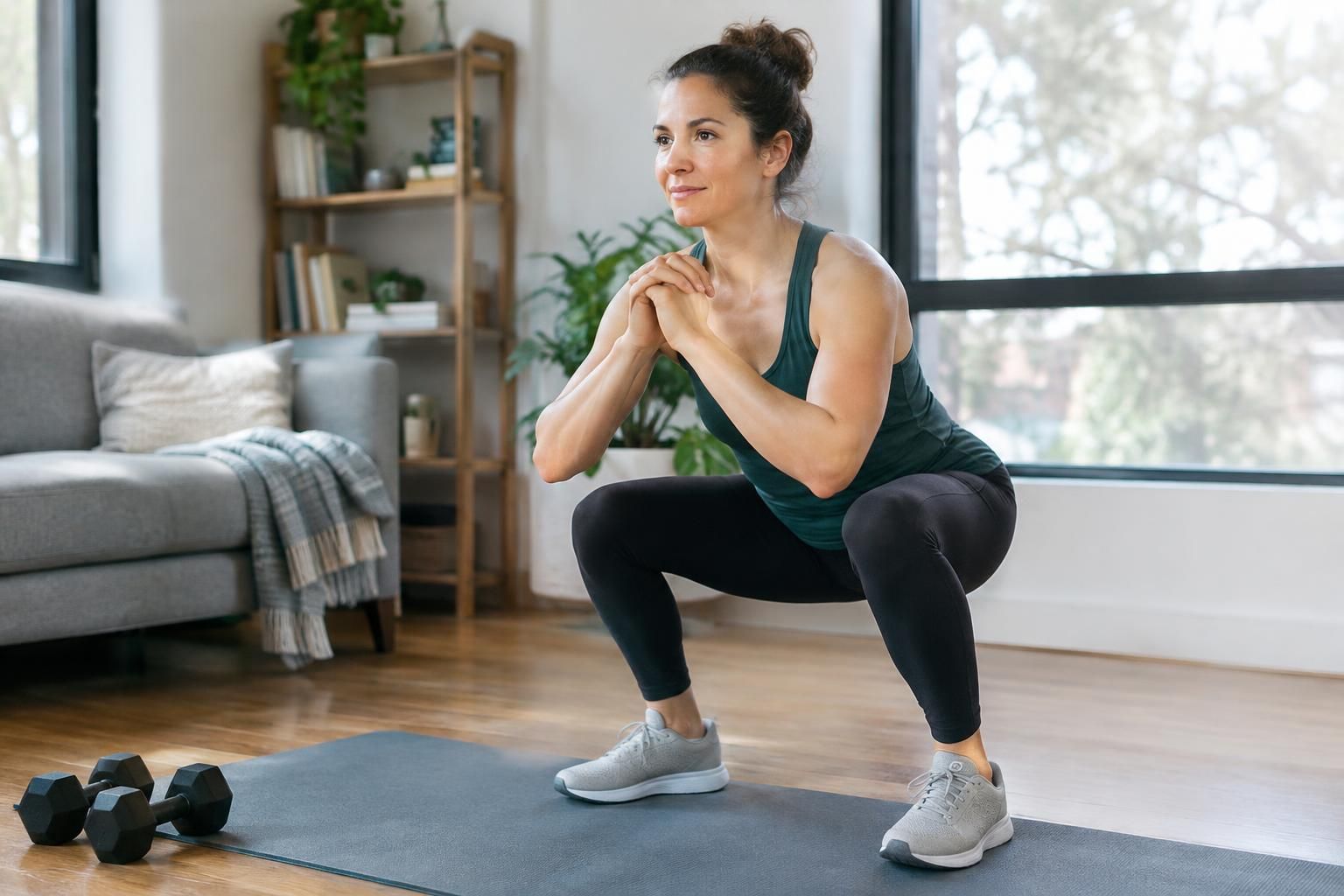
Learn five movement patterns before complicated exercises
A basic routine can include sitting down and standing up, pushing something away, pulling something toward you, bending at the hips, and carrying a manageable weight. You can practice these with bodyweight, resistance bands, dumbbells, or gym machines.
Ask a qualified trainer for help if you are unsure of technique. Choose resistance that allows controlled movement, and stop if an exercise produces pain or other concerning symptoms. A clear pattern matters more than collecting a long list of exercise names.
Two good sessions can be enough to begin
Try spacing workouts across the week so that you have time to recover. A full-body session may be easier to schedule than a complicated split with different body parts every day. You do not need to leave the gym exhausted for the session to count.
If your schedule becomes crowded, shorten a session instead of deciding the week is ruined. You might practice a few movements for fifteen minutes, then return to the fuller version next time. Building continuity is more useful than punishing inconsistency.
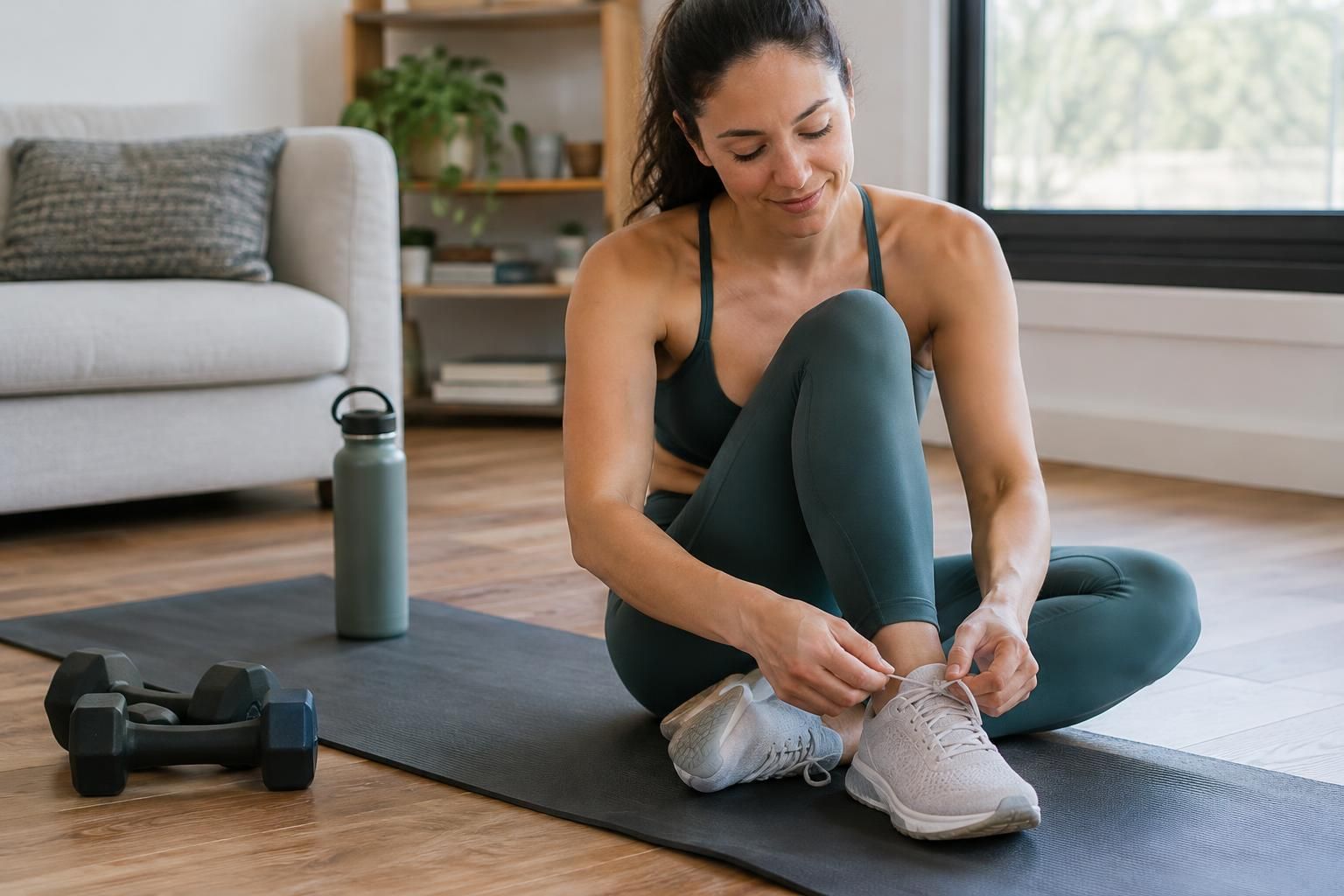
Pair strength with everyday activity
Walking, cycling, or dancing can complement strength work without making every day a training day. The amount and intensity that fit you will depend on your starting point. Our article on daily step goals shows why small movement habits still matter.
You may also enjoy a gradual running plan. Although our running after 40 guide targets another age group, it offers a useful reminder that increasing activity slowly can be more sustainable than jumping into intense workouts.
Let recovery be part of the calendar
Muscle soreness can occur when you begin unfamiliar work, but persistent or sharp pain should not be ignored. Make room for sleep, regular meals, and manageable recovery time between demanding sessions.
If your first month feels difficult because of fatigue, caregiving, or work pressure, respond by adjusting the plan. A routine that asks less of you during an overloaded week is not a failed routine. It is a better fit for reality.
Measure progress in useful, humane ways
The scale or mirror is not the only measure of progress. Notice whether you can perform familiar exercises with better control, carry something more comfortably, or recover more easily from a normal session. Record a few notes rather than tracking every possible number.
If you have a medical condition, pregnancy-related considerations, or concerns about exercise safety, seek individualized advice. Strength training should help you feel more capable, not pressure you into ignoring symptoms.
What a first month could realistically look like
Week one may be mostly about learning the exercises. In week two, repeat the same pattern so the movements become familiar. During the third week, you might notice that a weight feels more manageable or that you need less time to remember the sequence.
By week four, review your schedule. Did you enjoy the routine? Were two sessions realistic? Did you recover comfortably? Your answers may lead you to keep the plan, shorten it, or ask for technique advice. A month of learning is more useful than a month of forcing changes just to prove you are serious.
Make the routine welcoming on a crowded week
A work deadline, a birthday, or family responsibilities can remove the training window you had planned. Keep a short version that includes a few familiar movements and still gives you a chance to practice. You do not have to start over when life interrupts.
If a session consistently causes pain or leaves you unusually exhausted, consider reducing intensity and seeking professional advice. Strength training should become a sustainable part of your week, not a source of fear about being unable to keep up.
Repeat a small menu long enough to learn it
Choose a squat or sit-to-stand, a hinge, a push, a pull, and a carry or core exercise. Keep those patterns for several weeks instead of changing the workout every time you see a new video. Repetition gives you a chance to notice technique, load, breathing, and recovery.
That can feel “boring” compared with endless variety, but boring is useful when you are learning. Once the movements feel familiar, small changes—another repetition, a slightly heavier weight, a different variation—actually mean something because you have a baseline.
A two-day plan for the week that is already full
One simple structure is to train the whole body twice per week with at least a day between sessions. Each workout can include four to six exercises, two or three manageable sets, and loads that allow controlled technique. You do not need to train to failure to begin.
On the other days, walk, rest, do cardio you enjoy, or live your life. If you want to combine running and lifting later, our hybrid training guide offers a beginner-friendly way to organize both without making every day hard.
Measuring progress beyond the bathroom mirror
You might notice that carrying groceries upstairs feels less tiring or that you can take your luggage off the carousel with more confidence. These are everyday outcomes worth noticing. They are not dramatic before-and-after photos, and they can be particularly satisfying because they matter during normal life.
If you want numbers, record the exercise and a manageable training load, then review after several weeks. Do not measure your worth against someone else’s body or lifting total. Our hybrid training guide can help if you also enjoy running or cycling and want to balance those interests with strength work.
When the plan competes with everything else
A woman in her thirties may have caring responsibilities, shifting work hours, travel, or a social calendar she values. Fitness advice that assumes unlimited recovery time and a quiet home misses the point. Make a standard version of your routine and a ten-minute backup that uses familiar movements.
Ask which version makes it easier to come back next week. If pain, pregnancy-related concerns, chronic illness, or other health factors affect your options, adapt with appropriate professional input. Training should add capacity to your life, not crowd out everything that makes your life meaningful.
The day the gym plan becomes ten minutes at home
Some weeks, the bag you packed on Monday stays by the door until Thursday. That does not require a dramatic reset. Do a shorter home session: sit-to-stands, a hip hinge with a backpack, wall or counter push-ups, and a row variation with equipment you can use safely.
The important skill is not never missing the ideal session. It is learning how to shrink the plan without abandoning the identity you are building. A flexible routine survives much longer than one that only counts when everything goes perfectly.
How to know when it is time to add weight
If you can complete every repetition with stable technique and the final repetitions feel challenging but controlled, a small increase may be reasonable. The increase does not need to be dramatic. Sometimes one extra repetition or a slightly harder variation is enough progression for the week.
Keep a simple log so you are not guessing. Seeing that the same movement went from an eight-pound dumbbell to a twelve-pound dumbbell over several months can be more motivating than searching for daily visual change. Strength progress is often quiet, cumulative, and very measurable.
Start with two repeatable sessions
>
- Pick five basic movement patterns and keep them for several weeks.
- Train twice this week with at least a day between sessions.
- Stop each set with enough control that technique stays consistent.
- Write down the exercise and load so progress is easier to see.
- Create a ten-minute home fallback for the week when the gym plan does not happen.
Frequently asked questions
Do I need a gym membership to begin?
No. Home exercises, bands, and dumbbells can be useful starting points if you choose movements appropriate to your ability.
Should every set feel exhausting?
No. Controlled technique and gradual progression matter. Beginners do not need to train to exhaustion to establish a habit.
Can I combine strength workouts with running?
Often yes. Plan around your ability and recovery, and adjust the intensity rather than stacking demanding sessions without rest.
Beginner strength training for women in their 30s is less about building a new identity overnight than learning a few moves you trust. Keep the first month simple, make recovery normal, and let getting stronger be something that adds to your life.