
The train doors close while your lunch is still sitting on the kitchen counter. That one mistake changes the whole day: coffee becomes breakfast, the vending machine becomes lunch, and by the time you get home you are hungry enough to eat while deciding what to cook.
Healthy eating on long commutes is less about perfect meal prep and more about redundancy. You need food that travels, a backup that can live at work or in a bag, and an evening option that does not require heroic cooking after two hours of transportation. The system should expect delays and forgotten containers because those are normal features of commuting life.
The lunch that missed the train with you
You make a lovely lunch the night before, then discover that the train is delayed and you will not reach a refrigerator for hours. The plan looked excellent in the kitchen and less excellent on a crowded platform. Healthy eating on long commutes is a logistics problem as much as a recipe problem. Temperature, storage, timing, and the ability to carry food all shape what will work.
Think about the most inconvenient travel day first. If food needs refrigeration, use appropriate insulation and cooling or choose a safe alternative. Keep a backup you can purchase along the route without spending an unreasonable amount. There is no virtue in carrying a complicated meal that you cannot keep safe or comfortably eat.
Plan around the hours you are actually away
Before buying new lunch containers, look at your schedule. When do you leave? When can you reliably stop to eat? Does your workplace have refrigeration, a microwave, or only a small counter next to the coffee machine?
Planning around these details is more useful than copying an elaborate meal-prep video. Someone with a ninety-minute train commute needs different options from a driver who makes frequent stops or a nurse who cannot always take a predictable break.
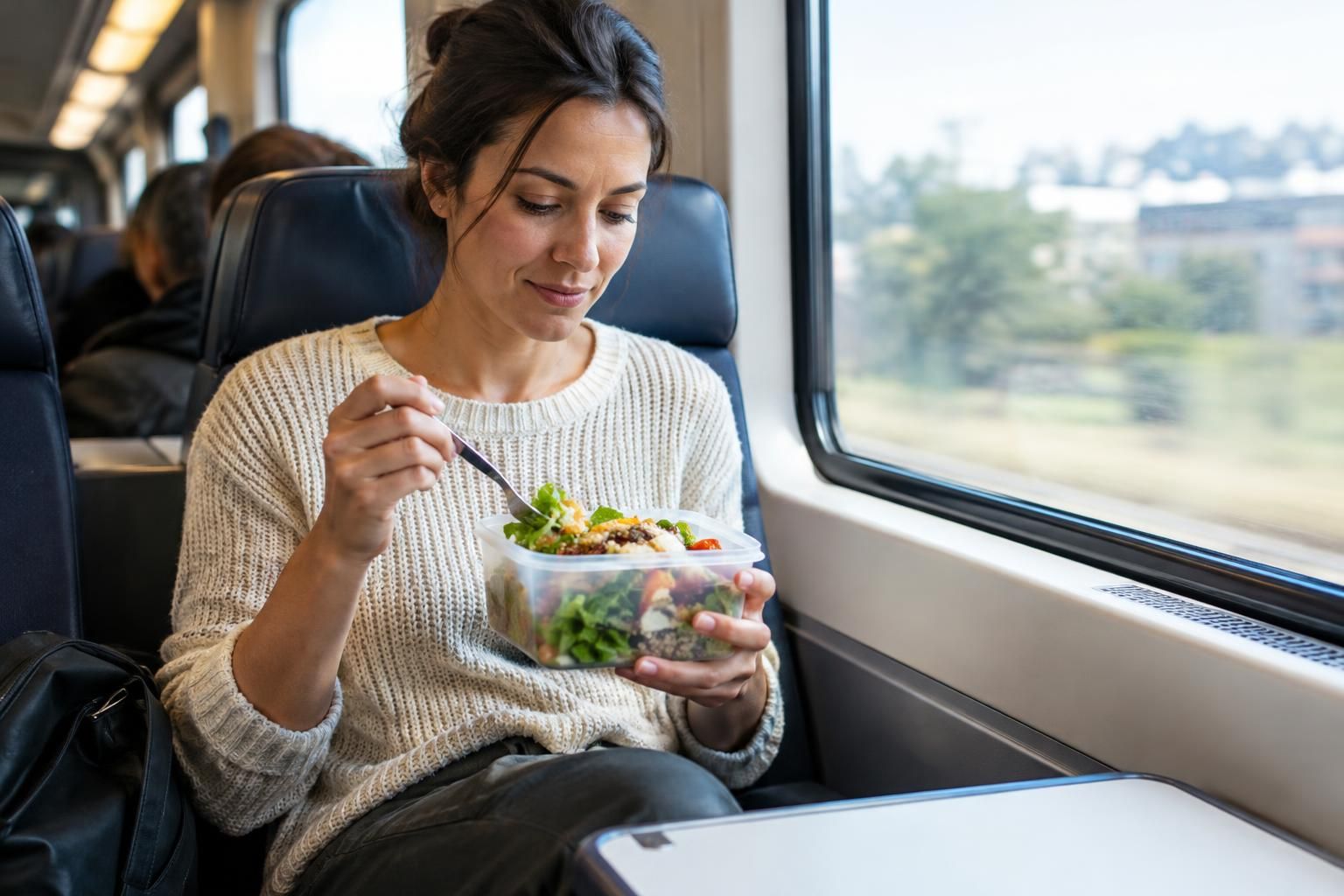
Build portable combinations rather than complicated recipes
A whole-grain sandwich with a satisfying filling, a bean-and-rice bowl, yogurt with fruit in an insulated bag, or leftovers in a suitable container can cover many days. Add produce where convenient, and choose flavors you actually like.
Portable food does not have to look like a diet meal. It should be enough to support a demanding day. If you are often exhausted by late afternoon, our article on everyday energy habits for men offers one perspective on meal timing alongside sleep and movement.
Take food safety seriously
Perishable foods need appropriate temperature control. A lunch left in a hot car for hours is not a good idea, even if you cooked it carefully. Use an insulated cooler and ice packs when needed, or choose shelf-stable foods when you cannot control storage conditions.
When purchasing food on the road, look for places where you can combine familiar basics: a sandwich and fruit, soup and bread, or a rice bowl with vegetables and protein. There is no need to search for a perfect label on every item.
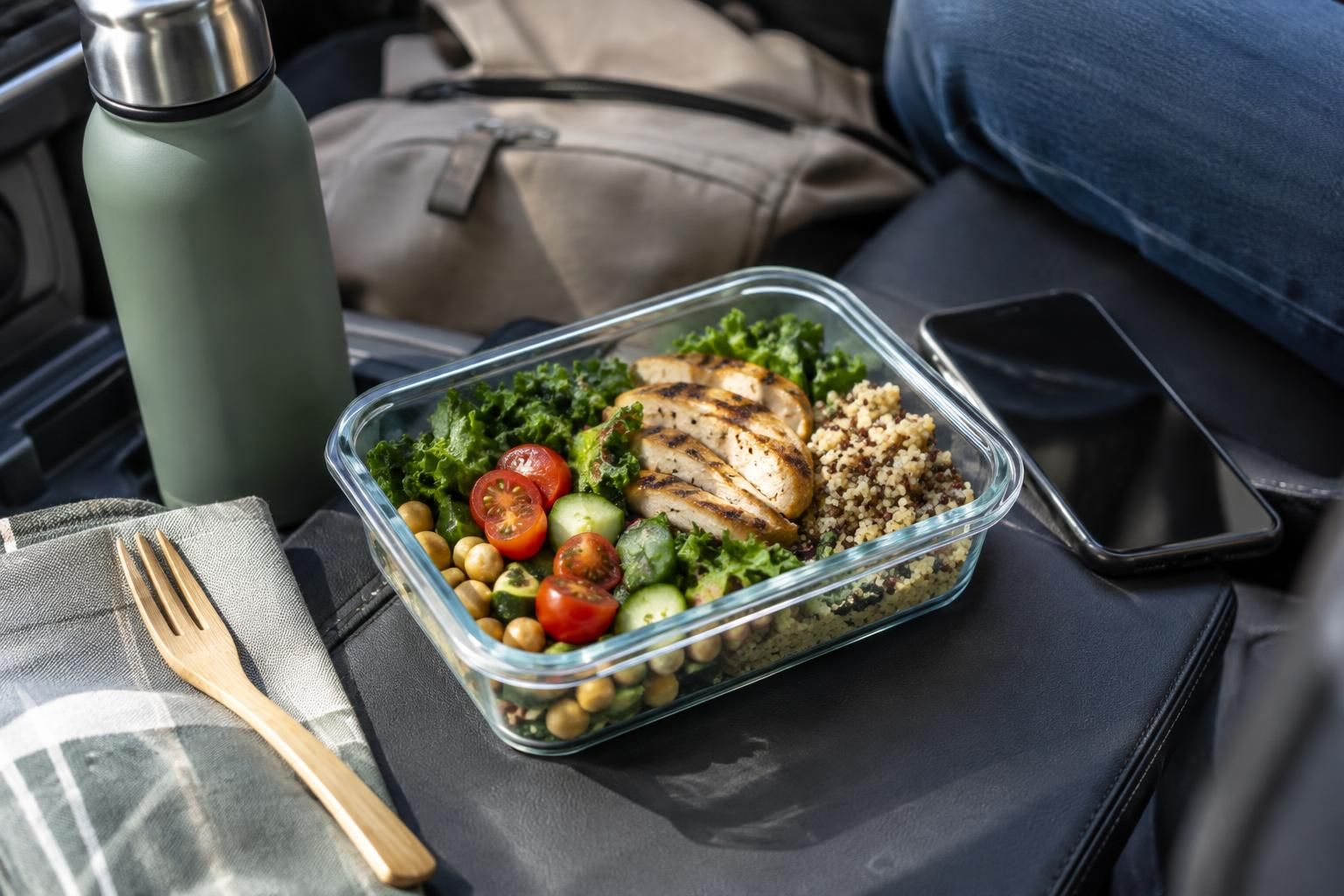
Make a backup you can afford
Keep one or two shelf-stable options available when the bus is delayed or a meeting runs long. Oatmeal packets, whole-grain crackers, nut butter, or a safe packaged snack may work depending on allergies and preferences.
You can also map a few reliable stops rather than relying on an impulsive purchase when you are extremely hungry. Spending a little time learning what is available on your route may save both money and stress.
Let the commute include a bit of movement when possible
You may already walk to a station, climb stairs, or park farther from the entrance. Those activities count without needing a fitness label. If your route leaves you seated for long stretches, small breaks may help you feel less stiff.
Our guide to daily steps offers ideas for making movement approachable, while the hybrid training article is there if you want a more structured fitness plan outside your commute. Food and exercise should support the schedule, not compete for every spare minute.
Give yourself permission to use convenience
A supermarket sandwich, a microwavable meal, or takeout is not a moral failure. The goal is to create a routine that works with a long day. If a prepared option saves time and helps you eat comfortably, that can be a useful choice.
Start with one commute day and plan it well. You do not need a week of identical meals. A flexible pattern that makes one difficult day easier is already worthwhile.
Use the same ingredients in different ways
A bag of tortillas, canned beans, vegetables, and a protein you enjoy can become a wrap, a rice bowl, or a simple dinner. That flexibility may save more money than committing to a different recipe every day. Choose ingredients that fit your storage and cooking situation.
When shopping, consider how often you will genuinely have time to prepare food. A ready-to-eat option that prevents skipped meals may be worth more than a large bargain package you never use. Practical value includes time and convenience, not only the price on the shelf.
Build a travel-day backup without overpacking
You do not need an entire pantry in your bag. One safe snack and a clear idea of where you can find a meal can make delays less frustrating. Think about mess, storage temperature, allergies, and whether you will actually want to eat the item after a long day.
An ordinary plan can still include stopping for food with coworkers or friends. Healthy eating is not a reason to isolate yourself from a social meal. A routine worth keeping allows for changing plans and different kinds of days.
Design the food plan for the worst commute, not the best one
Choose the day when you leave earliest or return latest. What is the longest stretch between realistic eating opportunities? Where can you safely store food? Which station, store, or café is an acceptable backup if the packed meal disappears?
Once that difficult day has a workable plan, easier commute days usually need less effort. You may pack a sandwich and fruit, keep nuts or another shelf-stable snack at work, and know exactly what you can buy near the station without spending fifteen minutes comparing options when you are already late.
A portable meal does not have to look like meal prep
An ordinary sandwich, fruit, and a drink can be a completely reasonable lunch. So can a bean-and-grain bowl when you have a reliable place to keep it cold. If you enjoy warm food, investigate whether your workplace provides a microwave or whether a safely packed thermos makes sense. The right solution depends on your commute rather than a universal list of “best lunches.”
Make a short list of three combinations: one made at home, one bought affordably on the route, and one that works when everything is late. This creates flexibility without asking you to make twenty decisions each morning. A routine should reduce stress, not introduce a daily food transportation project.
The 8:10 p.m. dinner problem
The commute does not end when you walk through the door. If dinner still requires forty-five minutes of cooking, the plan may fail at the final step. Keep one “assembly dinner” available: eggs and toast with vegetables, a frozen meal plus extra produce, soup and a sandwich, or leftovers that can be reheated immediately.
Convenience is not the opposite of healthy eating. It can be the reason you eat a real dinner instead of grazing through the kitchen while waiting for something elaborate. If walking is part of your commute, our article on daily step goals can help keep that movement in perspective without turning transportation into a fitness contest.
Build a system that survives delays
Review your usual route and identify the vulnerable moments: leaving home late, arriving after a store closes, or getting stuck without a place to eat. Solve one at a time. Perhaps packing food by the door helps; perhaps buying lunch near work is more practical than carrying it on a bus.
At the end of a week, ask which option saved time without making food feel joyless. Keep that approach and discard the elaborate plan that repeatedly failed. A successful commuting meal strategy should feel ordinary. That is exactly why it can last.
A grocery stop on the way home can be part of the plan
Convenience is often treated as a compromise, but it can also be the reason a routine survives. A small shop near the station might have fruit, yogurt, sandwiches, or ingredients for a familiar dinner. If that is where you reliably pass every day, using it can be smarter than imagining you will prepare everything at home during a rushed morning.
Notice the options available along your actual route and their prices. Choose the ones that fit your budget and storage needs. A sustainable plan recognizes the city, bus schedule, and workday you inhabit, not an ideal day with a perfectly stocked kitchen.
Put the backup where the problem actually happens
A snack in your pantry does not help when you are stuck at the office. Keep the backup in the place where the gap appears: a desk drawer, locker, work refrigerator, or bag, depending on food-safety needs. Replace it when you use it.
This one detail turns “I should be more prepared” into an actual system. Preparation works better when it is physical, visible, and located at the point of failure.
Build one commute-proof food chain
>
- Pack one main meal that travels safely.
- Keep one affordable shelf-stable backup at work or in your bag.
- Identify one acceptable store or café option on your route.
- Stock one ten-minute dinner at home for the late return.
- After a week, adjust the plan around the commute day that still causes the most hunger or spending.
Frequently asked questions
What can I eat if I have no refrigerator at work?
Consider shelf-stable options or an insulated bag with appropriate cold packs. Food safety depends on the food and storage conditions.
Do I need to meal prep every Sunday?
No. A mix of simple home-packed meals, leftovers, and convenient purchased options can be realistic.
Is eating on the commute itself a problem?
It depends on safety, comfort, and circumstances. Focus on a practical opportunity to eat rather than forcing a fixed timetable.
Healthy eating on long commutes is an exercise in realistic planning, not perfection. Keep familiar food accessible, protect it safely, and leave room for delays. A good routine is one that still works when the train is late.