
A near-fall can change more than one afternoon. You catch yourself on a railing, nothing is injured, and yet for the next week you notice yourself looking down at every curb and declining the walk you normally enjoy. Confidence can shrink before strength does.
Balance and everyday strength after 60 are not about performing athletic tricks. They are about preserving ordinary choices: carrying groceries, getting up from a chair, walking across uneven ground, visiting friends, and moving around your home with more confidence. The safest plan starts with your current abilities and any medical or mobility concerns, then builds gradually from movements that matter to your life.
Confidence can shrink quietly after a near-fall
Imagine catching your foot on a doorstep and feeling frightened even though you do not fall. A few days later you avoid the same walk. Soon the route to the café begins to feel too challenging. Changes in confidence can matter as much as changes in strength. The goal is not to pretend the fear is silly, but to explore what would help you feel safer and more capable again.
Appropriate assessment, supportive exercise, and practical changes to the environment can all be part of the picture. A physical therapist may help identify suitable balance activities. Good shoes, adequate lighting, and thoughtful organization at home can also matter. There is no universal exercise sequence that is safe for every person.
Start with the activities that matter to you
A fitness plan is easier to value when it connects to your actual life. Perhaps you want to walk around the neighborhood, climb a short staircase, garden, travel, or play with grandchildren. Name one or two goals before deciding what exercise to do.
Our article about daily step goals challenges the idea that everyone needs the same number. Your starting point, comfort, and health matter more than a device notification. A short, enjoyable walk can be a meaningful part of a larger activity pattern.

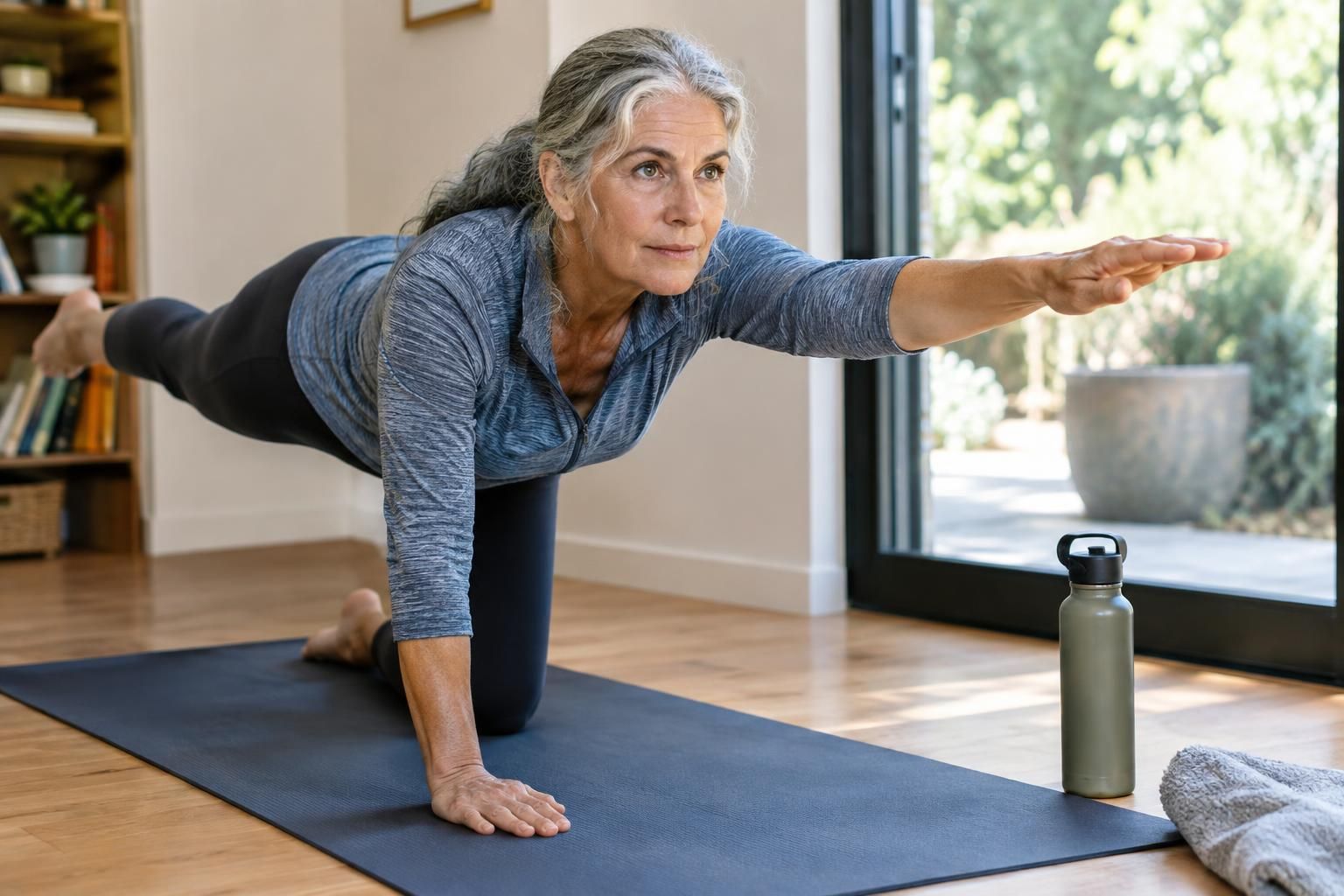
Make safety the starting point for balance work
If you are unsteady, have fallen recently, or feel dizzy, talk to a healthcare professional or physical therapist before beginning balance exercises. A tailored plan may be safer and more effective than following a video alone.
For someone who is already steady and cleared for activity, supervised classes or supported exercises may provide a comfortable introduction. Use stable surroundings and avoid challenges that put you at risk of falling simply to prove you can do them.
Strength can begin with familiar movements
Standing up from a suitable chair, lifting light everyday objects, or using resistance bands may be part of a strength routine when appropriate. A qualified instructor or clinician can help adjust movements for joint concerns, medical conditions, or mobility limitations.
The point is to practice useful movements in a controlled way, not to see how much weight you can move on the first day. Increase difficulty only when it is appropriate, and make room for recovery between more demanding sessions.
Walking can be social as well as physical
A regular walking partner or community group may make movement more enjoyable and easier to repeat. Start with comfortable distances and surfaces, and consider footwear, weather, and opportunities to rest along the route.
If you are interested in the relationship between walking and weight goals, our article on walking for weight loss after 40 explores that topic. But the benefits of movement are not limited to weight, and older adults do not need to pursue weight loss to justify being active.
Support movement with ordinary daily habits
Regular meals, fluids according to medical needs, appropriate sleep, and a schedule that leaves room for rest all matter. If medications or health conditions affect dizziness, appetite, or activity tolerance, discuss those concerns with your care team.
Our article about nighttime waking after 40 addresses a common sleep concern from a specific perspective. It may help you formulate questions, but persistent night waking, frequent urination, or excessive fatigue deserves tailored assessment.
Build a plan that allows good and difficult days
Some days are energetic; others include aches, appointments, and responsibilities. A useful activity plan has a shorter version and does not punish you for needing rest. Keeping an activity social or enjoyable can be more motivating than tracking every minute.
If you notice new weakness, recurrent falls, chest symptoms, or unusual shortness of breath, seek professional care. Safety and confidence are not separate goals. A routine should support both.
Social support can make activity more enjoyable
A short walk with a neighbor or an appropriately designed group class can offer companionship as well as movement. Ask about local community centers, walking groups, or supervised programs that accommodate your abilities. A supportive environment can make it easier to return week after week.
If you need a mobility aid or assistance, using it is not a setback. The most useful activity is one that takes safety seriously. Choose well-maintained routes, reasonable weather conditions, and a pace that allows conversation and rest as needed.
How to discuss movement concerns at a healthcare visit
If you have become less steady or more hesitant about walking, bring specific examples: trouble with stairs, a recent trip, difficulty rising from a chair, or fear of falling. Those details can help a clinician identify whether further assessment or a physical therapy referral would be appropriate.
There is no need to arrive with a self-diagnosis. Describe what has changed and what you would like to do more comfortably. A plan tailored to your health and environment is more valuable than following a generic online challenge.
Bring a one-week movement diary to the conversation
For one week, note moments when you feel steady and moments when you hesitate. Maybe stairs feel fine in the morning but harder when you are tired. Maybe turning quickly, stepping off a curb, or carrying a bag changes your confidence.
This information can make a healthcare or physical-therapy conversation more specific. Instead of saying “my balance is not what it used to be,” you can describe the situations that matter. That helps turn a vague concern into practical goals.
Measure strength by what it lets you keep doing
The useful question is not whether you can lift a particular number. Can you stand from a chair with control? Carry groceries without feeling unstable? Get down to a garden or low shelf and return comfortably? These tasks make strength personal.
Appropriate resistance training can be adapted to many ability levels, but safety matters. A sturdy support, clear floor space, suitable footwear, and professional guidance when needed are part of the exercise—not signs that the exercise “does not count.”
Movement can be social without being strenuous
A walk with a neighbor, a gentle community class, or an outing to a local park can combine activity with companionship. That social part is easy to dismiss when wellness advice focuses only on heart rates and exercise counts. But an enjoyable plan gives you a reason to return, and that matters for long-term participation.
Choose places with suitable surfaces, lighting, rest opportunities, and access to help when needed. Walking is not an obligation if it is unsafe or uncomfortable for you; other activities may be appropriate. Our guide to daily step goals emphasizes that numbers are not the whole story of movement.
A better question than “Am I too old?”
Ask instead, “What do I want to keep doing comfortably?” It might be gardening, dancing at a family event, traveling, or simply carrying a bag without worry. These specific goals make conversations with a clinician or exercise professional more useful than a generic wish to “stay young.”
If your confidence has changed, seek support before withdrawing from activities you love. A sensible plan can make room for rest days and adaptations. You are not required to meet a fitness influencer’s standard to care for your own mobility. The real outcome is more possibility in ordinary life.
Choose a destination, not just an exercise
A goal such as “walk to the corner café with a friend” can be more motivating than “improve balance.” The exercises then have a reason: leg strength for the walk, balance practice for curbs, and enough endurance to enjoy the conversation rather than simply complete the distance.
If walking is one of your goals, our guide to daily steps explains why there is no need to chase 10,000 for movement to be meaningful.
A supportive environment is part of the routine
Good lighting, clear walkways, appropriate footwear, and a safe place to rest can make familiar movements feel less intimidating. The details should match your circumstances and any professional advice you have received. Physical confidence grows more comfortably when the environment supports it.
Safety is not separate from independence; it often makes more independence possible.
A simple week can combine strength, balance, and walking
A practical schedule might include two short strength sessions, several walks at a comfortable pace, and brief balance practice near sturdy support. Those pieces do not have to happen in a gym. Sit-to-stands, calf raises, carrying light groceries, and walking with a friend can all be part of a meaningful plan when they match your abilities.
Progress gradually. If you use a cane, walker, or other assistive device, that does not make the movement less valuable. The goal is safe independence and confidence, not performing exercises in a way that looks impressive to someone else.
Build confidence around one everyday goal
>
- Choose one daily activity you want to feel easier or steadier doing.
- Clear a safe practice area and use sturdy support when appropriate.
- Add simple strength and balance work at a level you can control.
- Walk or move socially when company makes the activity more enjoyable.
- Discuss new falls, dizziness, sudden weakness, or meaningful balance changes with a qualified clinician.
When tingling or numbness becomes part of the mobility picture
Balance and strength are only part of comfortable movement. If you are also noticing persistent tingling, burning, numbness, or unusual changes in sensation, do not assume that this is simply aging. Nerve symptoms can have many causes, including diabetes, vitamin deficiencies, medication effects, nerve compression, and other medical conditions, so new or worsening symptoms deserve proper evaluation.
For readers who have already discussed their symptoms with a healthcare professional and are comparing optional nerve-wellness supplements, NeuroSalt is one product in that category. Its current product materials highlight Passionflower, Marshmallow Root, Corydalis, Prickly Pear Extract, and California Poppy Seed. We would treat it as an optional botanical supplement rather than a replacement for diagnosis, physical therapy, medication review, or treatment of an underlying condition.
Review the current NeuroSalt formula and seller details if you want to compare the label for yourself.

Frequently asked questions
Is it too late to begin strength training after 60?
Many older adults can benefit from appropriately designed strengthening activity. The right starting point depends on health, experience, and medical considerations.
Should I practice standing on one leg if my balance is poor?
Do not attempt challenging balance exercises without suitable support or supervision if you are at risk of falling. Ask a qualified professional for safer options.
Does walking count if I do not reach 10,000 steps?
Yes. Activity can be useful at different amounts, and personal goals should reflect your ability and health rather than a universal number.
Balance and everyday strength after 60 are about maintaining participation in the life you enjoy. Begin with safe, useful movements, seek guidance when needed, and allow gradual progress. Everyday confidence is a worthy goal.