
Fibermaxxing sounds like another internet challenge, but the idea underneath it is surprisingly ordinary: eat more fiber-rich foods on purpose. The problem starts when a reasonable nutrition goal turns into a race to double your intake overnight. A huge bowl of bran cereal, chia water, beans at lunch, a fiber bar at 3 p.m., and a psyllium drink before bed can be a lot for a gut that was used to far less.
A better version of fibermaxxing is slower, more varied, and much easier to live with. The goal is not to win a fiber contest. It is to make meals more filling, support regularity, and build a pattern you can keep.
What fibermaxxing actually means
Online, fibermaxxing usually means deliberately adding more high-fiber foods such as beans, lentils, oats, berries, vegetables, whole grains, nuts, seeds, and sometimes fiber supplements. That direction makes sense because many adults fall short of recommended fiber intake. But there is no bonus for jumping from very little fiber to a very high intake in one day.
Fiber changes the physical bulk of food and the way material moves through the digestive tract. Some types are also fermented by gut bacteria. That is useful, but fermentation can create gas. A sudden increase may leave you feeling bloated enough to believe fiber is the problem when the real problem was the speed of the change.

The simplest way to start
Instead of changing every meal, upgrade one eating occasion for several days. Add berries and oats to breakfast, or add beans to lunch, or swap a refined grain for a whole grain at dinner. Once that feels normal, improve another meal.
- Week 1: add one reliable fiber source each day.
- Week 2: add a second source and keep fluids consistent.
- Week 3: increase variety rather than piling on more of the same food.
- Week 4: decide which changes are easy enough to keep.
If lunch is the meal that tends to fall apart, our guide to high-fiber lunch ideas shows how to build portable meals without making everything taste like health food.
Why variety matters more than one magic ingredient
It is easy to fixate on chia, psyllium, resistant starch, or a particular cereal. But different foods bring different combinations of soluble fiber, insoluble fiber, resistant starch, vitamins, minerals, and plant compounds. A week that includes oats, lentils, berries, potatoes, leafy greens, apples, nuts, and whole-grain bread is usually more practical than trying to get most of your fiber from one powder.
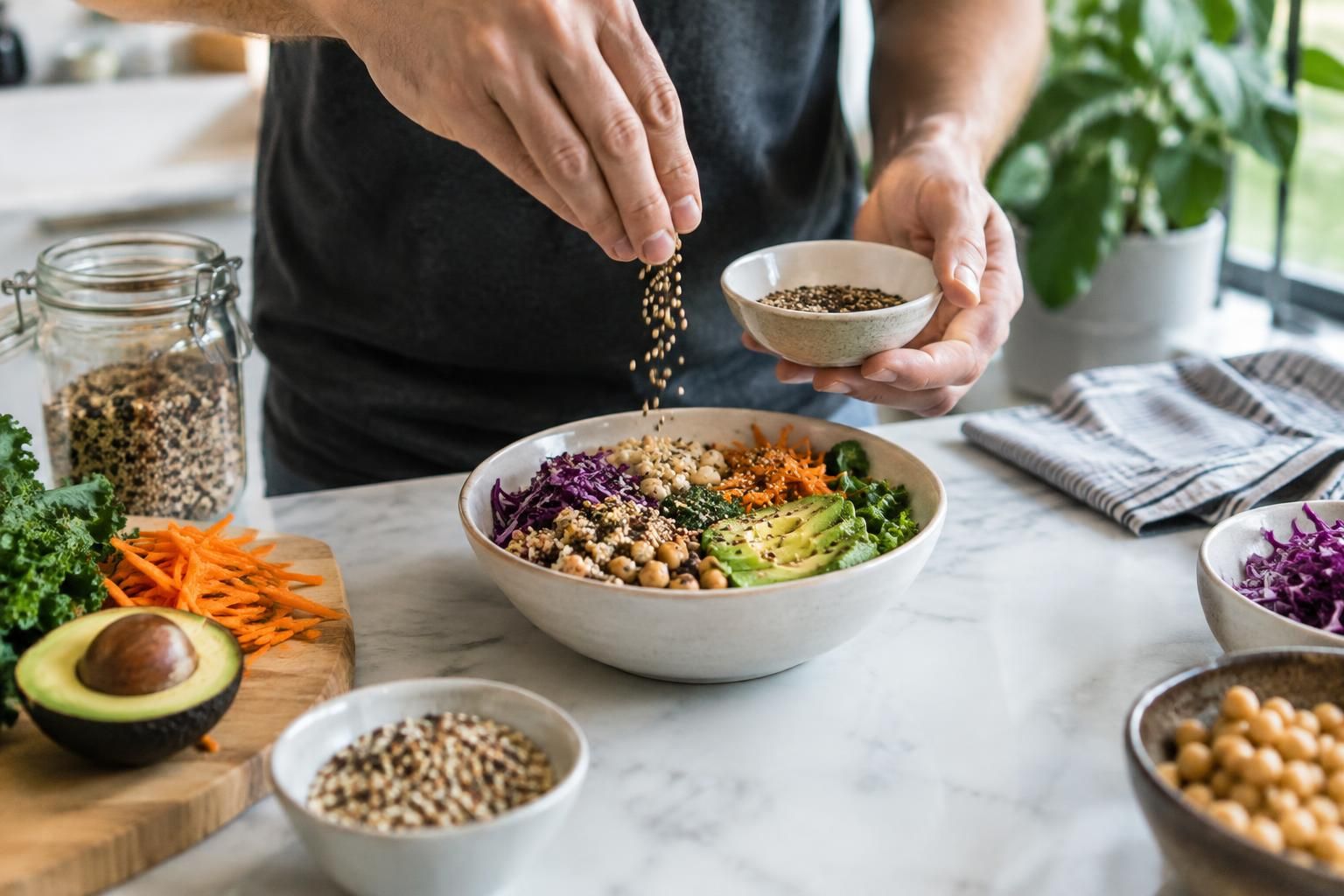
Variety also makes the habit more durable. You can eat oatmeal at home, a bean-and-grain bowl at work, and roasted vegetables at dinner without needing a special product at every meal.
How to reduce bloating when you increase fiber
- Increase gradually. Your digestive system may need time to adapt.
- Keep fluids steady. Fiber works best when hydration is adequate.
- Spread fiber across the day. One giant evening fiber load can feel rough.
- Cook some foods. Cooked vegetables and softer grains may feel easier than a huge raw salad.
- Notice dose, not just food. A food you tolerate in a normal serving may bother you in a very large serving.
Fibermaxxing does not have to mean eating less
One reason high-fiber meals can support weight management is that they often take up more room and require more chewing. But using fiber to suppress hunger as aggressively as possible is not the point. Meals still need enough protein, energy, and fat to feel satisfying. Think of fiber as part of a balanced plate, not a trick for making yourself eat as little as possible.
If weight management is your goal, our walking for weight loss guide is a useful reminder that sustainable results usually come from several modest habits rather than one dramatic lever.
When a supplement can make sense
Food-first does not mean supplements are forbidden. A fiber supplement may be convenient when your diet is inconsistent, travel is hectic, or you have a specific recommendation from a clinician. The same gradual rule still applies. More is not automatically better, and supplements should not crowd out the foods that provide protein, micronutrients, and enjoyment.
A realistic fibermaxxing day
| Meal | Simple fiber upgrade |
|---|---|
| Breakfast | Oats with berries and walnuts |
| Lunch | Whole-grain wrap with hummus and vegetables |
| Snack | Apple with peanut butter |
| Dinner | Lentils or beans added to a grain-and-vegetable bowl |
That day looks ordinary because it should. The best nutrition strategy is often the one that disappears into normal life.
Frequently asked questions
Can fibermaxxing cause constipation?
It can, especially when fiber increases quickly while fluid intake stays low. Constipation can also have many other causes, so persistent symptoms deserve individual attention.
Is there a perfect amount of fiber to aim for?
Needs vary by age, sex, energy intake, health, and tolerance. Rather than chasing a viral number, use established nutrition guidance as a reference and increase gradually.
Should I add fiber if I am already bloated?
Not automatically. Bloating has many possible causes. If symptoms are frequent, painful, or new, it is worth discussing them with a healthcare professional rather than assuming more fiber is always the answer.
How to increase fiber without turning every meal into a project
One reason fiber trends become hard to sustain is that people change the entire grocery cart at once. A more durable strategy is to create a few “default” foods that raise fiber automatically. Keep oats or whole-grain cereal for breakfast, beans or lentils for two lunches per week, frozen vegetables for dinner, and fruit where you can see it. Those defaults remove the need to make a new nutrition decision at every meal.
Another useful strategy is to upgrade foods you already eat. Add beans to chili, berries to yogurt, vegetables to pasta sauce, chickpeas to a salad, or oats to a smoothie. You are not starting a new diet; you are increasing the fiber density of familiar meals.
Fiber supplements: helpful tool or unnecessary extra?
A supplement can be useful when food intake is inconsistent or when a clinician recommends a specific fiber such as psyllium. But supplements are concentrated, which is exactly why they can create symptoms when the dose rises quickly. If you use one, treat it like a measured ingredient rather than a challenge. Follow the label, take it with adequate fluid, and do not stack several products simply because each one is marketed for gut health.
What a sustainable high-fiber week looks like
A sustainable week has variety rather than perfection. You might have oats on Monday, eggs and whole-grain toast on Tuesday, lentil soup on Wednesday, a bean burrito on Thursday, berries most mornings, and a few vegetable-heavy dinners. Some days will be lower. The average pattern matters more than a flawless daily score.
That approach also protects enjoyment. If every restaurant meal becomes an exercise in finding the maximum grams of fiber, the habit starts to control the person instead of helping them.
Who should be more careful with rapid fiber increases?
People with a history of bowel obstruction, certain inflammatory bowel conditions, severe constipation, major abdominal symptoms, or recent gastrointestinal surgery may need individualized guidance. A high-fiber trend is not the right place to self-experiment when digestive symptoms are significant. Persistent pain, bleeding, unexplained weight loss, or a major change in bowel habits deserves medical attention.
The bottom line
Fibermaxxing can be a useful trend when it means building more beans, whole grains, fruit, vegetables, nuts, and seeds into everyday meals. The smartest version is gradual, varied, well hydrated, and flexible enough to continue after the trend fades.