
A useful grocery list should make Wednesday dinner easier, not simply look disciplined on a phone screen. You might start the week with visions of colorful bowls and end it eating toast because the cilantro wilted and the recipe needed a spice you forgot. A balanced weeknight grocery list works better when the ingredients can make several different meals. You buy food with multiple jobs, keep the cooking simple and leave room for a night when plans change.
A balanced weeknight dinner grocery list works best when it buys flexible components rather than five unrelated recipes that all require different ingredients.
Balanced weeknight dinner grocery list: shop by meal building blocks
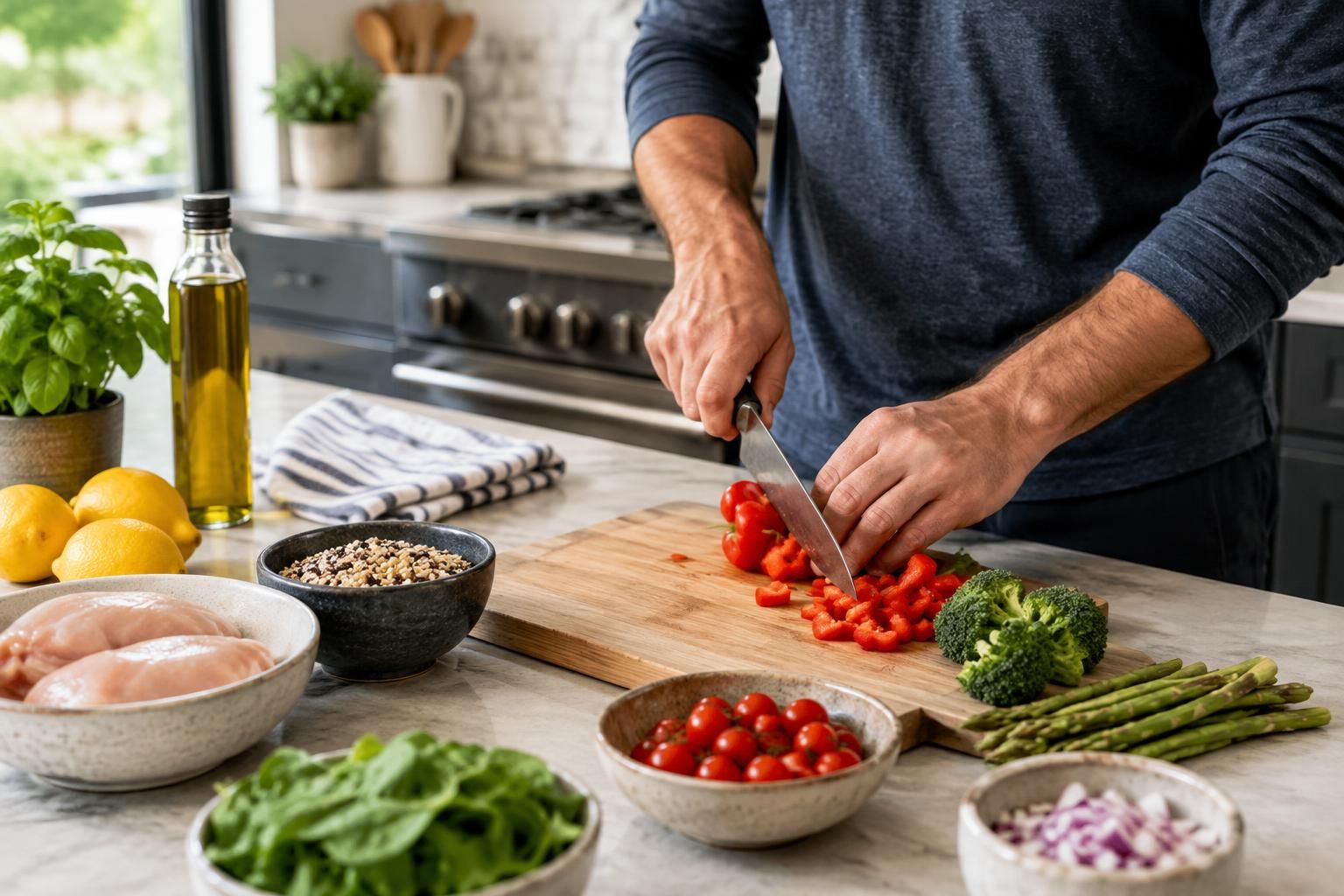
Start with two or three protein options, three vegetables or fruits, two easy carbohydrates, and a few flavor builders. That might mean chicken, eggs, and beans; broccoli, peppers, and apples; rice and tortillas; plus salsa, olive oil, cheese, or a favorite sauce. The exact foods can change every week. What stays consistent is the structure, which makes it easier to assemble dinner even when your original recipe plan falls apart.
A balanced weeknight dinner grocery list should also include one freezer meal and one pantry meal. Frozen vegetables with dumplings, canned beans with rice, or soup with toast can rescue an evening when fresh ingredients were not cooked in time. Backups reduce food waste because you are less likely to order something impulsively while produce sits unused. They also make the plan kinder to nights when you are tired or late.
Before checkout, imagine the second use for each perishable ingredient. Spinach can go into eggs and pasta. Yogurt can be breakfast and a sauce. Roasted vegetables can become a side dish and then a lunch bowl. This small mental check is often more useful for budget and consistency than hunting for a perfectly optimized grocery haul.
Before shopping, turn the list into three possible dinners so you know the ingredients can work together. For example, chicken, rice, peppers, beans, tortillas, broccoli, and yogurt could become a rice bowl, tacos, or a simple sheet-pan dinner with a yogurt sauce. That small exercise prevents buying healthy-looking ingredients that do not form an actual meal. Keep quantities realistic for your household and schedule. If you know you will eat out twice, do not shop as if you are cooking seven nights. A flexible list succeeds when it reduces waste, keeps a few complete meals available, and makes the “what are we eating?” question easier on a busy evening. Keep one meal deliberately repetitive if that helps: the same taco night, pasta night, or grain bowl can reduce decision fatigue and still leave room to vary vegetables, sauces, or proteins. A grocery list does not need novelty every day to support a varied diet across the week. The real win is opening the refrigerator on Wednesday and still seeing several combinations that can become dinner without another store trip.
Begin with four flexible food groups
Choose two proteins, two vegetables, two carbohydrate bases and a couple of flavors you already like. Chicken, tofu, eggs or canned beans can anchor meals. Broccoli, spinach, carrots and frozen mixed vegetables can work in more than one recipe. Rice, potatoes, tortillas or pasta cover different moods without excessive pantry clutter. Sauce, lemon, salsa or spices keep the combinations interesting. This structure is practical because ingredients can move between meals instead of being trapped inside one recipe.
Let perishability guide the order
Use delicate produce earlier in the week and keep sturdy or frozen options for later. A bag of spinach might become Monday's omelet and Tuesday's pasta; frozen broccoli can wait for Friday. This is less about perfect organization than reducing the familiar problem of throwing away something you bought with good intentions. Think about your actual schedule. If Thursday is always busy, plan for leftovers or a quick freezer meal rather than a recipe that requires long chopping.

A sample five-item shopping plan
Buy eggs or tofu, canned beans, a bag of frozen broccoli, potatoes or rice, and a familiar sauce. With pantry basics, those items can support several dinners: bean bowls, eggs with potatoes, tofu and broccoli over rice, and a quick soup if you already have broth. Add fruit or salad ingredients that your household actually eats. The beauty of this plan is not nutritional perfection. It is that the same groceries provide options when someone gets home late or changes their mind about the intended recipe.
Use a base plus a topping
Rice plus beans and roasted vegetables can become a burrito bowl. The same beans can fill quesadillas, and leftover vegetables can become an omelet. Pasta with tomato sauce and a protein can reuse the spinach. A modular approach creates variety without buying unrelated sets of ingredients for every dinner. It is also easier to adapt to different appetites at the same table. People can add more vegetables, protein or carbohydrate according to their needs.
Budget is part of good nutrition planning
Canned beans, frozen vegetables, eggs, oats, pasta and seasonal produce can provide useful nutrition without premium branding. Compare unit prices when possible, but do not spend half an hour saving a tiny amount while making shopping unbearable. Choose simple staples your household reliably eats. Less waste and fewer emergency takeout orders can matter as much to a grocery budget as a special sale on an unfamiliar “superfood.”
An organized refrigerator without elaborate containers
Put the perishables you need to use first near the front. Keep frozen vegetables where they are easy to reach, and store leftovers safely in clearly dated containers. You do not need matching glass jars or color-coded labels unless you enjoy them. Visibility and realistic amounts reduce waste. A half-full fridge with ingredients you know how to use can serve you better than shelves packed with the remains of complicated recipes you only wanted to cook once.
How to handle the unpredictable night
The grocery list should assume at least one plan will change. Maybe a child has an activity, a work deadline extends into dinner or everyone simply wants sandwiches. Keep one backup meal that uses pantry and freezer ingredients alone. That buffer removes the sense that a missed cooking night ruins the entire week's nutrition. Food is meant to support your schedule, not demand that your schedule become less human. A flexible shopping system is useful because it can survive a late meeting, a surprise visitor, or a change in appetite without leaving you with a refrigerator full of ingredients you no longer plan to cook.
Balance does not require perfect portions
Some nights your plate will have more vegetables, others more starch, and sometimes the available dinner is a sandwich. A balanced pattern develops over time. It is helpful to include produce, protein and satisfying carbohydrates in meals when possible, but rigid plate mathematics can make eating feel mechanical. Choose portions that suit hunger, activity and health needs. The grocery list supports decision-making; it is not a daily pass-fail score.
Shop your pantry before the store
Before adding rice, olive oil, beans or seasonings to the cart, glance at what is already there. Make meals around those ingredients first. It reduces waste and makes shopping quicker. A list based on your real kitchen is better than downloading a generic “healthy week” template that ignores food preferences, allergies, storage space and whether you have time to cook.
Make it work in a real week
You do not need to redesign your entire life to test the idea. Think about what would be easiest to do when your schedule is ordinary, your energy is average, and you have no special reason to feel particularly motivated. Start small, and let the experience guide the next adjustment.
- List two proteins and check what you already own. Choose a modest starting point and try it on a normal weekday. If it feels easy, repeat it before making it bigger.
- Select two fresh vegetables and at least one frozen backup. Experiment with the timing and format. Small adjustments are often more useful than adopting a strict schedule that does not fit.
- Choose carbohydrate bases you can use in multiple meals. Keep a practical backup for busy days. A simpler version is better than assuming the entire routine has failed.
- Plan three combinations, leaving space for leftovers or plans changing. Pay attention to how the change fits your real life: comfort, satisfaction, cost and the effort it takes to repeat.
- Restock a simple seasoning or sauce that makes the whole rotation taste good. Keep what worked, change what did not, and allow for days when your plans shift. Useful habits need flexibility.
What a sustainable approach looks like
Wellness advice often sounds precise until it meets a real schedule. A breakfast suggestion can be perfectly balanced and still fail if it takes forty minutes to make. A movement goal can be healthy yet impractical for someone with a long commute. The answer is rarely to demand more discipline. It is to simplify the environment so that the useful choice is an available choice. Plan for your ordinary day, not for the day on which everything goes smoothly.
This is especially true for families roommates working adults. You can use the suggestions as possibilities rather than commands, and keep only those that make ordinary meals, movement or attention feel easier. If personal health circumstances change the decision, individual advice matters more than following a general checklist.
It can help to connect this habit with a routine you already understand.
For more practical context, read our guide to walking for weight loss after 40 and our beginner hybrid-training guide. These related guides focus on everyday choices rather than promising that a single ingredient changes everything.
The advantage of a balanced weeknight dinner grocery list is flexibility: the same basket can produce several different dinners without requiring a new decision every night.
Frequently asked questions
Do I need a separate recipe for each night?
No. Reusing ingredients across several simple meals is often easier and less expensive. People vary in preferences, symptoms, schedules and underlying health needs. Use the answer as a practical starting point rather than an inflexible rule.
Are canned beans and frozen vegetables healthy choices?
They can be. Check sodium and other ingredients as relevant to your needs, and use convenient forms that you will eat. What helps one person may not suit another, particularly when medical conditions or medication use change the picture. The details of your situation matter.
What if I cook for people with different appetites?
Serve components separately when practical so each person can build a comfortable portion. A single ingredient or a single day cannot answer every question about a routine. Consider the longer pattern and prioritize clear information over sweeping claims.
The bottom line
The best use of this advice is to choose a routine you can understand and sustain. Rather than hunting for one perfect food or rule, choose the changes that make your next ordinary week easier. Your habits will evolve; keeping them practical is more valuable than trying to follow a flawless schedule every day.