
You find a class that looks perfect: low-impact strength, friendly instructor, Saturday morning. Your finger hovers over the booking button, and then the practical worries arrive. What if jumping is involved? What if you need the bathroom halfway through? What if a leak happens and you spend the rest of class thinking everyone noticed?
Low-impact workouts with bladder leaks after 50 should begin with comfort and choice, not embarrassment. Bladder leakage is common, but common does not mean you have to quietly shrink your life around it. Movement can be adapted, pelvic-floor care can be individualized, and practical products—including optional supplements such as NewEra Protect—can be evaluated as part of a broader bladder-wellness routine.
The first goal is not a perfect workout; it is getting through the door comfortably
Choose an activity that feels predictable. Walking, stationary cycling, swimming if it suits you, controlled strength training, and low-impact classes can all be starting points. Ask the instructor whether jumping or high-impact intervals can be modified. Arrive early enough to find the bathroom without rushing.
If symptoms are new, worsening, associated with pain or blood, or significantly changing daily life, seek medical evaluation. Bladder leakage can have different causes, and personalized pelvic-floor physical therapy or other treatment may be appropriate.
Our guide to bladder leakage in women over 40 explains why the pattern matters and why a one-size-fits-all “just do Kegels” message can be too simplistic.
Low impact does not mean low value
A controlled strength session can still challenge the legs, hips, back, and upper body without repeated jumping. A brisk walk can improve endurance. A cycling session can raise heart rate with less impact. The workout only needs to match your current comfort and health status.
Strength is especially useful because everyday life asks you to stand, lift, carry, climb, and stabilize. Start with movements you can control—sit-to-stands, supported squats, rows, presses, and other exercises appropriate for your level—and increase difficulty gradually.
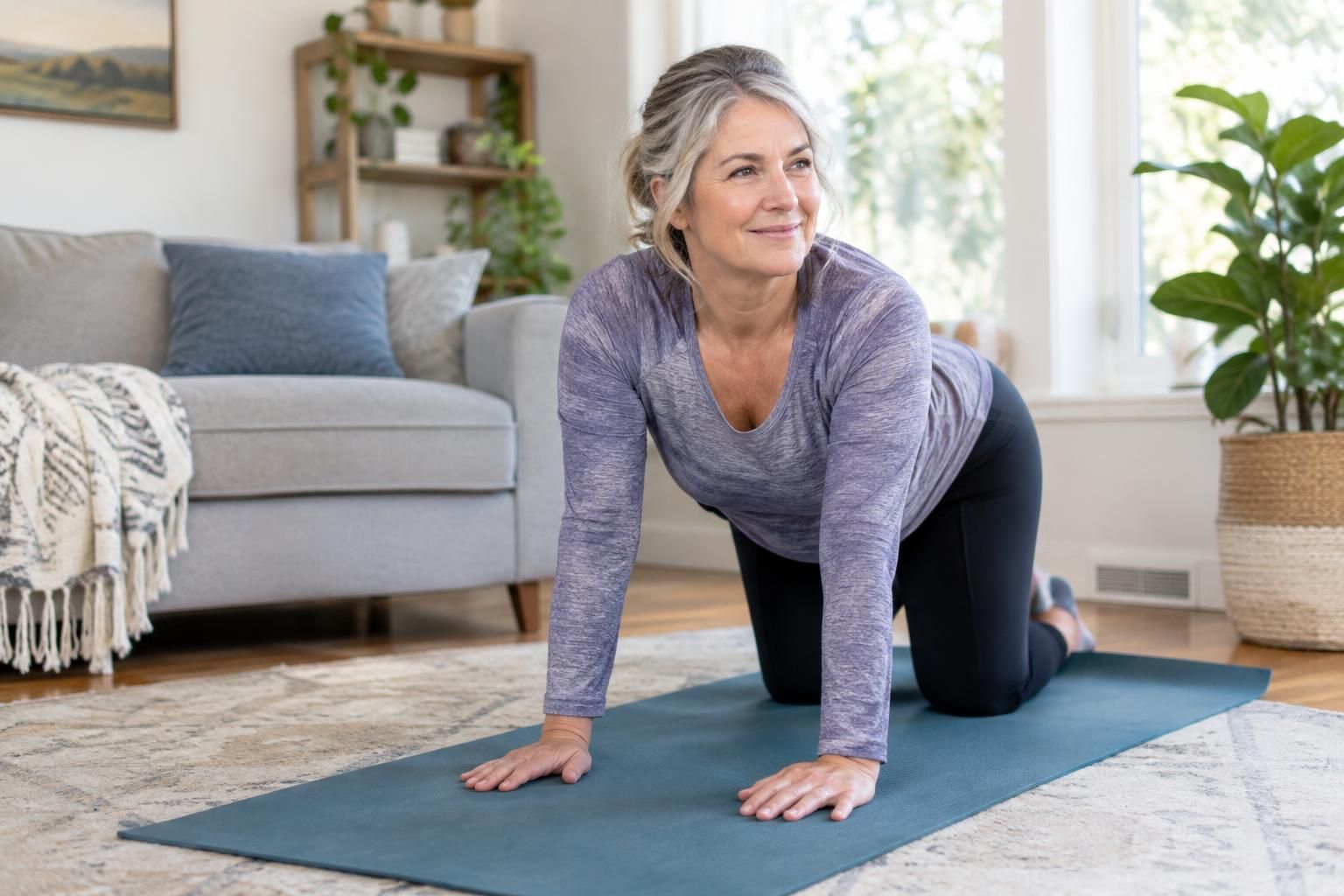
Notice which movements change symptoms instead of labeling all exercise “risky”
Leaks may show up with coughing, jumping, lifting, running, or sudden urgency, and the pattern matters. One woman may tolerate cycling comfortably but leak during step-ups; another may be fine with strength work but anxious on a long outdoor walk without bathroom access.
Keep a short note for two weeks: activity, approximate intensity, symptoms, and anything relevant such as a very full bladder or constipation. This is not a self-diagnosis tool. It is useful information to bring to a pelvic-floor clinician or to help you choose comfortable starting activities.
Make the bathroom plan once, then stop making it the whole story
Use the restroom before class if that helps, wear clothing that makes you feel secure, bring a spare liner or underwear if it reduces anxiety, and learn where the bathroom is. These preparations are not surrender. They are the same kind of planning as carrying water or choosing supportive shoes.
Then let the workout be the workout. Confidence often improves when practical worries have a plan. Our bladder-control travel guide uses the same idea: preparation can expand freedom rather than restrict it.
A 25-minute low-impact strength session can still feel like training
Warm up with five minutes of easy walking or cycling. Then choose four controlled movements such as sit-to-stands, supported split squats, a row, and a press. Perform a manageable number of sets with enough rest to maintain technique. Finish with another few minutes of easy movement.
If breath-holding or a particular exercise increases pelvic pressure or leakage, reduce the load or range and seek individualized guidance. The goal is not to prove that symptoms cannot stop you. It is to learn how your body responds and build from there.
Where NewEra Protect fits into a bladder-wellness routine
NewEra Protect is marketed specifically for women’s bladder and pelvic wellness. The current product page describes nutritional support for healthy bladder function, pelvic health and muscle tone, a healthy inflammatory response, and wellness during perimenopause and menopause. It is not a replacement for medical evaluation or pelvic-floor therapy, but its targeted positioning makes it more relevant than a generic multivitamin for someone exploring bladder-focused wellness products.
The current formula lists several recognizable nutrients and botanical extracts, including vitamin D3, zinc, varuna extract, Japanese knotweed standardized for resveratrol, horsetail extract, boswellia serrata, and Perluxan® hops extract. The product directions currently describe two capsules daily, with morning or evening use based on preference.
Another concrete shopping feature is the brand’s advertised 60-day money-back guarantee. That does not guarantee a health outcome, but it is useful information when comparing cost and seller terms.
If a women-focused bladder formula with a clearly stated daily routine interests you, review NewEra Protect and the current product details here.
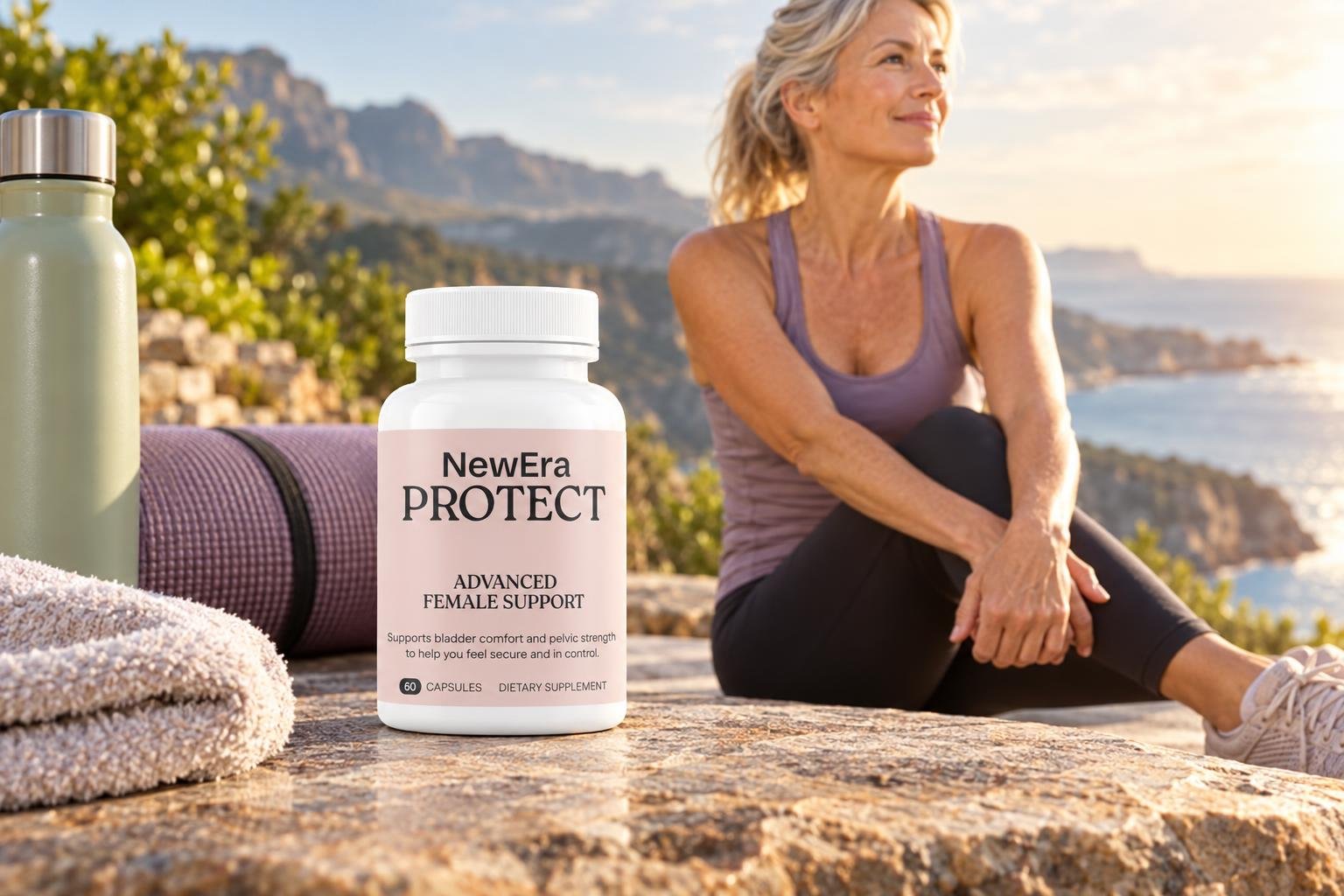
The NewEra Protect formula has a clear bladder-and-pelvic identity
Varuna, horsetail, boswellia, hops extract, zinc, vitamin D3, and resveratrol-containing Japanese knotweed create a formula that is visibly different from a basic multivitamin. The brand positions the combination around bladder function, pelvic support, tissue health, and healthy aging.
That targeted identity is part of the product’s appeal. You are not buying a vague “women over 50” formula and hoping it happens to match your concern. You can see what category the product is designed for and then decide whether the ingredient list and price make sense for you.
Why a targeted product can feel more relevant than a generic wellness shelf
Bladder symptoms are specific enough that generic “healthy aging” marketing can feel disconnected from the actual concern. NewEra Protect’s appeal is that the product is positioned around bladder comfort, pelvic support, and female wellness rather than asking the shopper to infer why a general supplement might matter.
That specificity can make the product easier to evaluate. You can read the label and ask: Do I already take vitamin D or zinc? Are any botanical ingredients a concern with my medication? Does two capsules per day fit my routine? Is the price reasonable compared with other bladder-focused products? The decision becomes concrete.
Pelvic-floor support should be personalized
It is tempting to assume that stronger pelvic-floor contractions are always the answer. In reality, pelvic-floor problems can involve weakness, overactivity, coordination, pressure management, or a combination. A pelvic-floor physical therapist can assess what is happening and teach exercises that match the pattern.
This is particularly important if you experience pain, difficulty emptying, a feeling of pelvic heaviness, or symptoms that do not improve with generic exercises. A supplement can be an optional part of wellness; it cannot tell you which muscles need what kind of training.
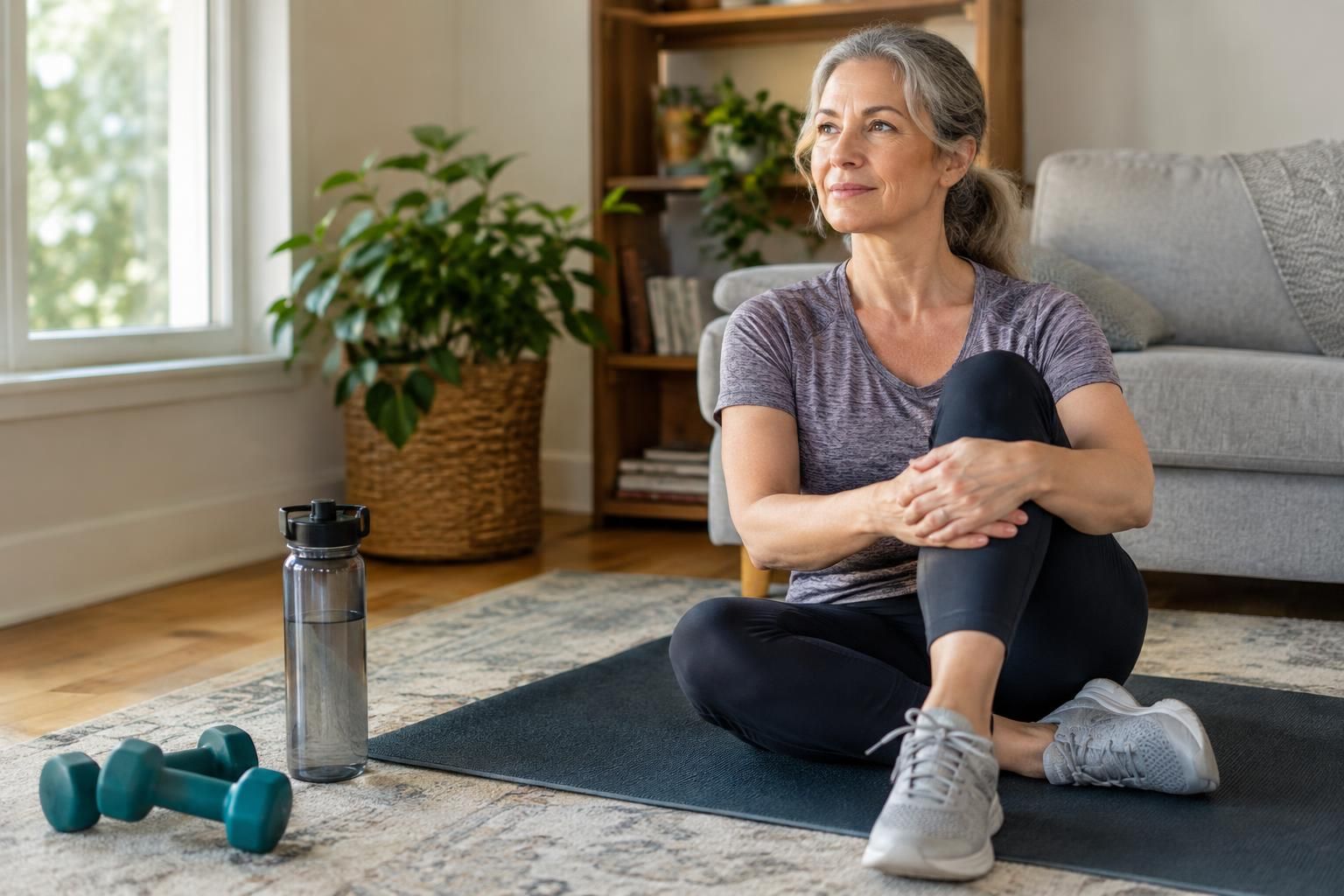
Confidence logistics matter more than people admit
Choose dark workout clothing if it makes you feel more secure. Carry a spare liner or underwear. Start with a class near home. Tell the instructor quietly that you may need to step out. These are ordinary accommodations, not evidence that you are not ready to exercise.
As confidence grows, you may use fewer of them. Or you may keep them because they are convenient. The goal is participation, not proving that you no longer need practical support.
A two-week return-to-movement plan
In week one, choose three short sessions that feel safe: perhaps two walks and one simple strength session. Keep intensity moderate and notice what activities feel comfortable. In week two, repeat the pattern and add time or resistance only if symptoms and recovery allow.
The point is not to test how much leakage you can tolerate. It is to rebuild trust in movement. If one exercise consistently increases symptoms, modify it or ask a qualified professional for alternatives.
Two capsules a day sounds simple—check what else is already on your shelf
The current formula includes vitamin D3 and zinc, nutrients many women already take separately. That makes label comparison especially important. More is not automatically better, and total intake from multiple supplements can add up.
Botanical extracts deserve the same attention. If you use prescription medication, have kidney or liver conditions, or are preparing for surgery, ask an appropriate clinician or pharmacist whether the specific ingredients are suitable for you.
What to look at on the NewEra Protect label
Check the current serving size and ingredient amounts, especially if you already use vitamin D, zinc, antioxidants, or botanical supplements. Review cautions and potential medication interactions. The fact that an ingredient is plant-derived does not automatically make it appropriate for every person.
Also review the seller terms: bottle count, shipping cost, subscriptions if offered, and the details of the advertised guarantee. A confident purchase decision includes logistics as well as the formula.
Do not dehydrate yourself to feel safer during exercise
Some women deliberately drink very little before leaving home because they fear urgency or leakage. That can create a different set of problems, particularly around exercise and heat. Instead of making large fluid changes on your own, discuss persistent urgency or frequency with a clinician and learn what timing and amount make sense for you.
If nighttime urination is part of the picture, our guide to frequent nighttime urination looks at the pattern in more detail.
A walk outside can be the next confidence milestone
Once indoor exercise feels comfortable, choose a route with known bathroom access and a distance that does not create anxiety. Walk with a friend if company helps. Gradually expand the route based on comfort rather than forcing a big jump.
This is where bladder wellness becomes about freedom again. The aim is not a perfect symptom score. It is being able to say yes to more of the day.
Confidence grows through boring successes
The first win may be completing a twenty-minute walk without spending the whole time scanning for a bathroom. The next may be attending the class and using a low-impact modification without feeling self-conscious. These are not dramatic milestones, but they change what you are willing to do next.
A bladder-wellness routine can include treatment, practical preparation, movement, and optional products. None of those pieces has to carry the entire burden.
How to evaluate NewEra Protect over a reasonable period
If you decide to try the product and it is appropriate for you, use it according to the current label rather than changing the serving based on symptoms. Keep medical or pelvic-floor care unchanged unless your clinician advises otherwise. Notice convenience, tolerance, and whether the product feels worth its cost.
Because bladder symptoms can fluctuate for many reasons, do not treat a good or bad day as proof. The product can be one optional part of a larger plan that includes evaluation, movement, bowel health, fluid habits, and practical preparation.
Use the same confidence plan for errands, travel, and social days
The strategies that make exercise feel safer can expand into the rest of life. Know where bathrooms are on a long shopping trip. Keep a spare liner in a small pouch. Choose a seat on the aisle when that reduces travel anxiety. None of these choices means bladder symptoms are controlling you; they are tools that make participation easier while you pursue appropriate care.
NewEra Protect can fit into that broader routine because its positioning is specific to bladder and pelvic wellness. The two-capsule schedule is simple enough to keep at home or on a trip, and the 60-day guarantee advertised by the brand gives shoppers a concrete seller term to consider alongside the formula and price.
A practical plan for this week
- Choose one low-impact activity you genuinely want to do.
- Make a simple bathroom and clothing plan before the session.
- Ask for personalized pelvic-floor guidance if symptoms are persistent or confusing.
- If considering NewEra Protect, compare its current label with supplements and medications you already use.
- Judge progress by confidence and participation as well as symptom changes.
If you like the idea of a bladder-focused women’s supplement with a defined two-capsule routine and a formula built around nutrients and botanicals used in pelvic and urinary wellness, take a closer look at NewEra Protect and the current offer here.
The end goal is a bigger life, not a smaller list of symptoms
Bladder wellness matters because of what it allows you to do: take the class, walk farther from home, travel, laugh without bracing, or simply stop planning every outing around fear. Medical care, pelvic-floor support, practical preparation, and optional products can all serve that larger goal.
NewEra Protect is most interesting when viewed through that lens. It is a targeted product with a defined formula and routine, not a demand that you wait for perfect bladder control before living normally.
Frequently asked questions
Are low-impact workouts always better for bladder leaks?
Not necessarily. The best activity depends on the type and severity of symptoms, fitness level, and personal goals. Low-impact options can be a comfortable starting point, while personalized pelvic-floor care may help you expand what you can do.
Does NewEra Protect treat urinary incontinence?
No. It is sold as a dietary supplement for bladder and pelvic wellness support, not as a treatment for urinary incontinence. Medical and pelvic-floor evaluation can be important when symptoms persist or worsen.
What is practical about the current NewEra Protect routine?
The current product page describes two capsules daily and lists the formula ingredients, making it relatively straightforward to compare with other products and fit into a morning or evening routine.
Returning to movement with bladder leaks after 50 does not require pretending the symptoms are not there. It means giving them an appropriate plan, choosing activities that build confidence, and exploring optional support without letting embarrassment make the decisions for you.
Affiliate disclosure: This article contains affiliate links. If you purchase through them, Welluna Journal may earn a commission at no additional cost to you. This content is for general education and is not personal medical advice.